







Why the Breach of a Top Security Official's Personal Email Matters for Everyone
The Vulnerability of the Personal Side
Most of us maintain a strict mental divide between our professional responsibilities and our personal lives. We assume that the high-level security measures protecting our office computers extend to our private accounts, but the reality is often the opposite. When a high-ranking official's personal communication becomes a target, it highlights a fundamental truth in cybersecurity: the person is often the perimeter.
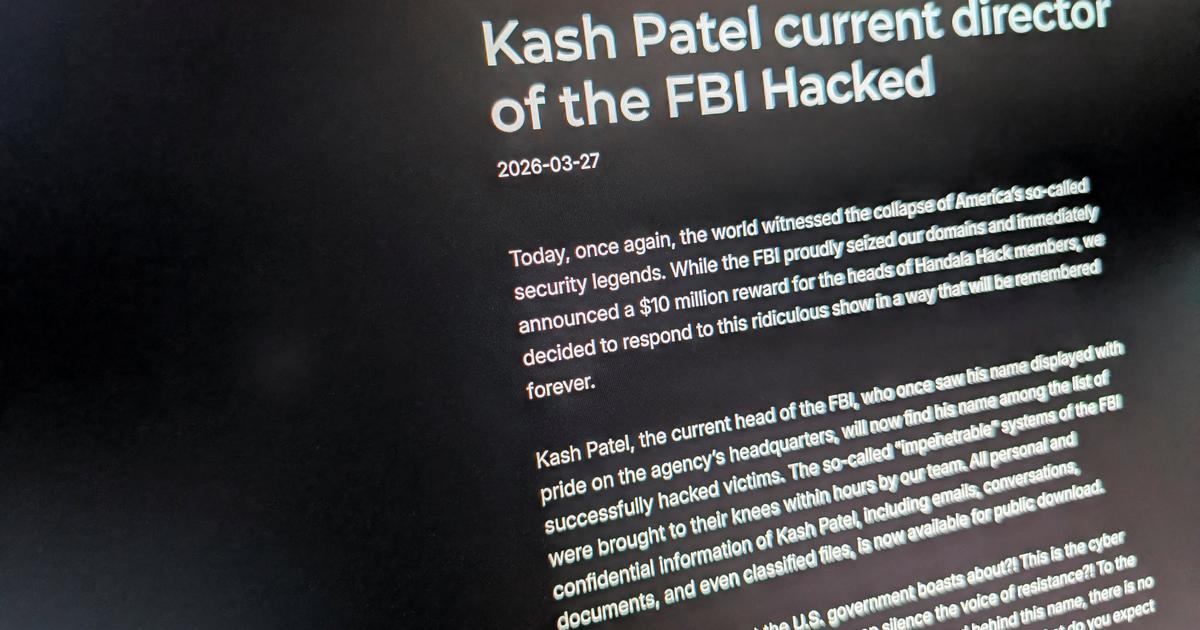
Recent reports concerning unauthorized access to a personal email account belonging to the Director of the FBI serve as a stark reminder of this reality. While government systems are hardened with multiple layers of encryption and oversight, personal accounts often rely on standard consumer protections. For a sophisticated adversary, these private channels represent a path of least resistance to sensitive information.
This incident is attributed to a group known as Handala, a collective frequently linked to Iranian interests. Their methods do not always involve breaking through digital walls. Instead, they often exploit the simple fact that humans are the same people at home as they are at work, but with fewer tools to defend themselves after hours.
How Personal Data Becomes a Strategic Asset
You might wonder why a personal email is valuable if it does not contain classified government memos. To a digital intruder, a personal inbox is a map of a person's life. It contains travel itineraries, family contacts, private health data, and recovery addresses for other accounts. This information allows an attacker to build a profile for social engineering—the practice of manipulating people into giving up confidential information.
- Pattern Recognition: Attackers study when a target is active, who they trust, and their writing style to impersonate them later.
- Credential Stuffing: If a user reuses a password from a personal site on a professional one, the personal breach becomes a key to the office.
- Psychological Pressure: Access to private photos or family conversations can be used for extortion or to damage a reputation.
The group involved in this specific case has a history of targeting infrastructure and high-profile individuals across the Middle East and the West. By focusing on a figure as prominent as the FBI Director, they are not just looking for data; they are sending a message about the reach of their capabilities. It demonstrates that no amount of professional authority can fully shield an individual if their private digital habits are exposed.
The Lesson for Founders and Teams
For those running startups or managing sensitive data, this event serves as a blueprint for risk management. Security is not a feature you turn on for your product; it is a habit you maintain across your entire digital existence. When the boundaries between work and home blur, the risk follows the individual, not the device.
Addressing this requires a shift in how we think about operational security. It is no longer enough to secure the company server if the CEO’s personal Gmail is protected only by a simple password. High-value targets must assume that their private lives are part of the professional attack surface. This means using hardware security keys, distinct identities for different services, and a mindset of constant vigilance.
Now you know that personal digital hygiene is not just a private matter—it is the first line of defense for the organizations you lead and the data you protect.

Convertir PDF en Word — Word, Excel, PowerPoint, Image