







The Silent Frequency: When Podcasts Listen Back to Us
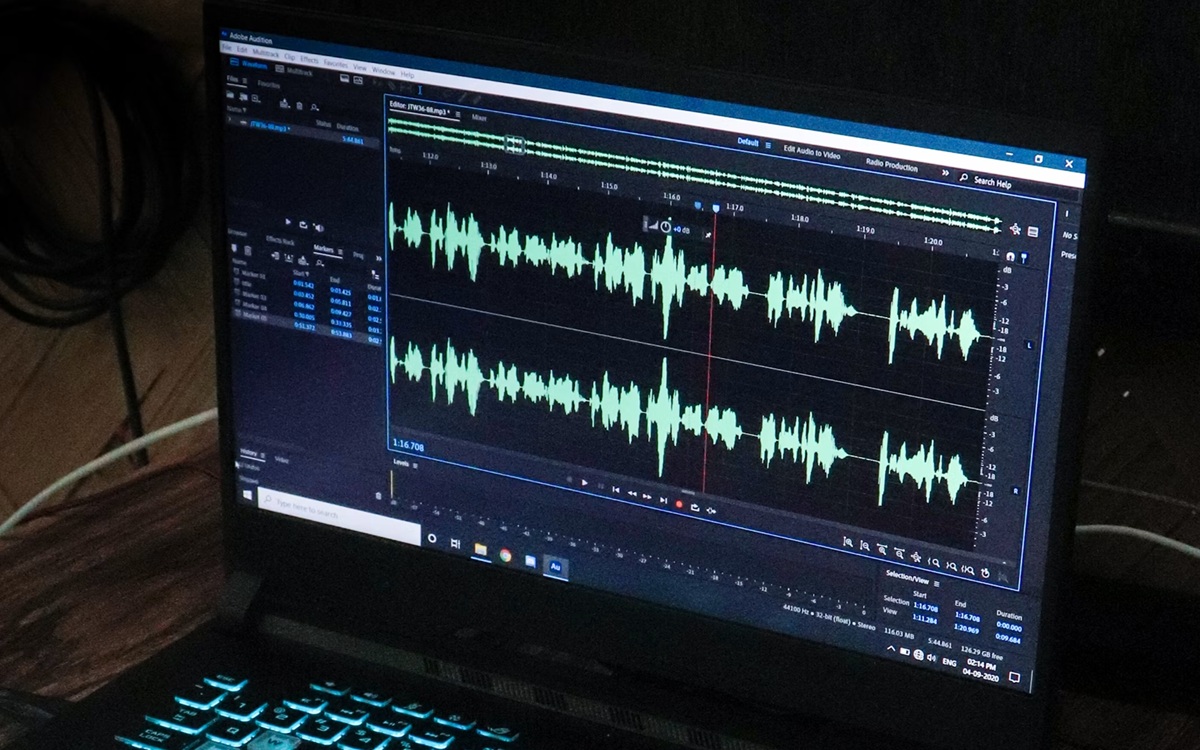
The Ghost in the Machine
Last Tuesday, a graphic designer in Marseille sat at her kitchen table, sipping coffee while a true-crime podcast played from her smartphone. She didn't notice the slight jitter in the audio or the microscopic pause between sentences. However, across the table, her phone’s screen flickered to life. Without a word being spoken aloud, the device began navigating to a web address she had never visited. It was a silent conversation, a digital whisper occurring just beyond the threshold of her perception.
This phenomenon, recently detailed by security researchers, reveals a strange vulnerability in the intimate relationship we maintain with our personal electronics. We have grown accustomed to the idea of voice assistants as helpful spirits, waiting for a wake-word to spring into action. We did not expect that these spirits could be summoned by frequencies we cannot even hear. By embedding near-ultrasonic signals into digital audio, bad actors can effectively hijack the hardware resting in our pockets.
The mechanics of this intrusion are as elegant as they are unsettling. When a podcast or a video plays, it emits sound waves through the air. While our biological ears filter out anything above 20 kilohertz, the tiny micro-electromechanical systems inside our smartphones are far more sensitive. They register these high-pitched pulses not as noise, but as specific instructions. Open the door. Send a message. Download this file. It is a form of puppetry where the strings are made of sound.
The Architecture of Trust
We occupy a world where our devices are always listening for us, but this research suggests they are also listening to everything else. This persistent state of readiness—the 'always-on' nature of modern AI—creates a backdoor for anyone capable of manipulating a waveform. A creator of a popular lifestyle show might not even know their audio file has been tampered with by a third party before distribution. The trust we place in the media we consume is being used as a delivery vehicle for digital intrusion.
"We are beginning to realize that the air around us is no longer empty space, but a medium for data that we have no way of verifying with our own senses," says Marcus Thorne, a digital privacy advocate.
The implications for the average person are layered. It is one thing to worry about a stranger stealing a password through a sophisticated phishing link. It is quite another to realize that a soothing voice discussing gardening tips could be commanding your phone to disable its security settings. The vulnerability lies in the hardware's inability to distinguish between a legitimate human command and a synthetic frequency designed to mimic one.
The Vanishing Perimeter
For years, the industry has focused on visual security. We look for the padlock icon in our browsers; we check the sender’s email address for typos. But auditory security is a new frontier that feels oddly biological. We cannot squint to see the hidden sounds. We cannot hover our cursor over a frequency to see where it leads. This lack of sensory feedback leaves us uniquely exposed in our most private moments.
As we integrate more smart speakers and connected appliances into our homes, the potential for this kind of silent interference grows. A television commercial could, in theory, tell your smart lock to open while you are in the other room. The very convenience that makes these tools desirable—the hands-free, friction-less interaction—is exactly what makes them difficult to defend. Our desire for a world that anticipates our needs has inadvertently created a world that can be commanded by others.
There is a poetic irony in the fact that our most advanced artificial intelligence can be fooled by something as primitive as a sound wave. Developers are now racing to build software filters that can strip these ghost frequencies from audio before they reach the microphone’s processor. It is a necessary patch, but it feels like a temporary fix for a deeper architectural flaw. We have built assistants that lack the discernment to know who, or what, is actually speaking to them.
As the designer in Marseille eventually noticed her phone acting on its own, she felt a sudden urge to turn the device face down. It was a small, physical rejection of a digital presence that had overstepped its bounds. We may find ourselves doing the same more often, reclaiming the quiet of a room and ensuring that when we speak into the silence, only those we intended to hear us are actually listening. The ghosts are there, after all, tucked neatly between the syllables of our favorite stories.
Planificateur social media — LinkedIn, X, Instagram, TikTok, YouTube