







The Silent Code: Inside the High-Stakes Diplomacy of Washington and Beijing’s AI Accord
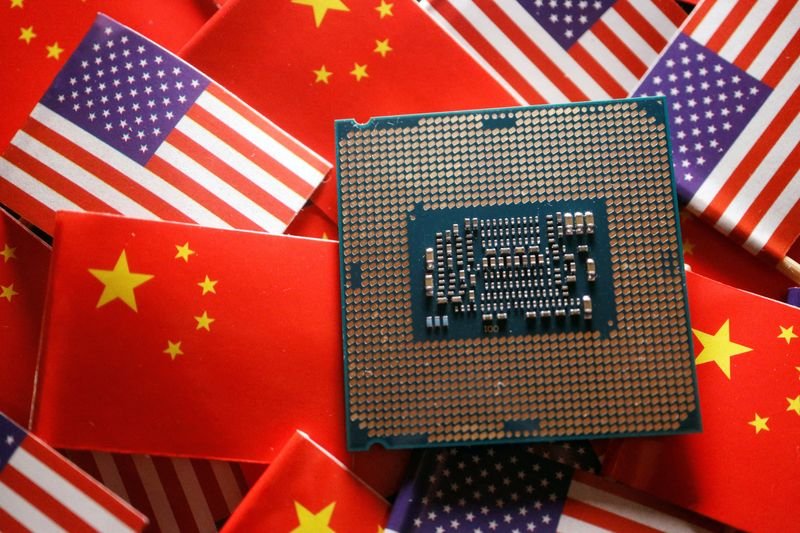
Jake Sullivan walked into a room in Bangkok earlier this year with a dossier that carried more weight than typical trade agreements. Across from him sat Wang Yi, China's top diplomat, for a meeting that lasted over twelve hours across two days. While the world watched for news on shipping lanes or semiconductor tariffs, a different, more invisible conversation was taking root.
The two superpowers are now moving toward a formal dialogue specifically focused on artificial intelligence. This isn't just a technical briefing; it is a recognition that the algorithms being written in Silicon Valley and Shenzhen are becoming the new language of global power. For years, the narrative has been one of pure friction, but the sudden acceleration of large language models has forced a moment of mutual pause.
The Architects of the Digital Truce
Behind the scenes, the White House is preparing for a spring meeting that marks a departure from the usual chest-beating rhetoric. The goal is to establish guardrails before the software gets ahead of the policy. Officials in Washington are increasingly concerned about how autonomous systems might behave in military contexts, while Beijing is focused on maintaining social stability as automation eats into the labor market.
The tension is palpable. On one hand, the U.S. continues to tighten the screws on the high-end chips that feed AI development. On the other, they are inviting the very people they are restricting to sit down and discuss the rules of the road. It is a delicate dance of keeping your rival close enough to hear them breathing, but far enough away to ensure they don't see your cards.
The most dangerous thing in the room isn't the weapon itself, but the algorithm that decides when to use it without a human in the loop.
Engineers at companies like OpenAI and Baidu find themselves in a strange position. Their work is no longer just lines of Python or C++; it is a matter of national security. The upcoming talks represent a realization that if both sides keep sprinting without a common set of safety protocols, the risk of a catastrophic technical error increases exponentially.
Navigating the Algorithmic Fog
The logistics of these discussions are fraught with complexity. How do you verify that an adversary is training their models ethically without granting them access to the proprietary data that provides a competitive edge? It is the modern version of arms control, but instead of counting nuclear warheads, diplomats are trying to quantify compute power and data sets.
Publicly, the rhetoric remains stiff. Washington maintains that its restrictions on technology exports are non-negotiable protections for national safety. Beijing views these same restrictions as a calculated attempt to stifle its economic rise. Yet, the agreement to even have a conversation suggests that both parties fear a wild, unregulated AI future more than they fear each other.
Marketers and developers are watching these developments with a mix of anxiety and hope. A standardized global framework for AI safety could mean more predictable markets and fewer sudden regulatory pivots. If the world’s two largest economies can agree on even the most basic definitions of 'safe' AI, it sets a template for the rest of the planet to follow.
As the spring sun begins to warm the Potomac and the Yangtze, the first groups of technical experts will begin their trek to a neutral table. They won't be talking about the latest consumer chatbots or image generators. They will be discussing the soul of the machine and who gets to hold the kill switch. The question remains: can two rivals share a roadmap when they are both trying to win the same race?
Createur de films IA — Script, voix et musique par l'IA