







The Post-Quantum Pivot: Why 2026 is the Year of Institutional Fragility
The Great Decoupling of Security and Compliance
In the mid-19th century, the adoption of the electric telegraph outpaced the creation of international wire standards by decades. This resulted in a chaotic patchwork of frequencies and signals that left sensitive state communications exposed to anyone with a copper wire. We are currently reliving this friction as the ANSSI highlights a growing friction between the velocity of software development and the static nature of institutional defense.
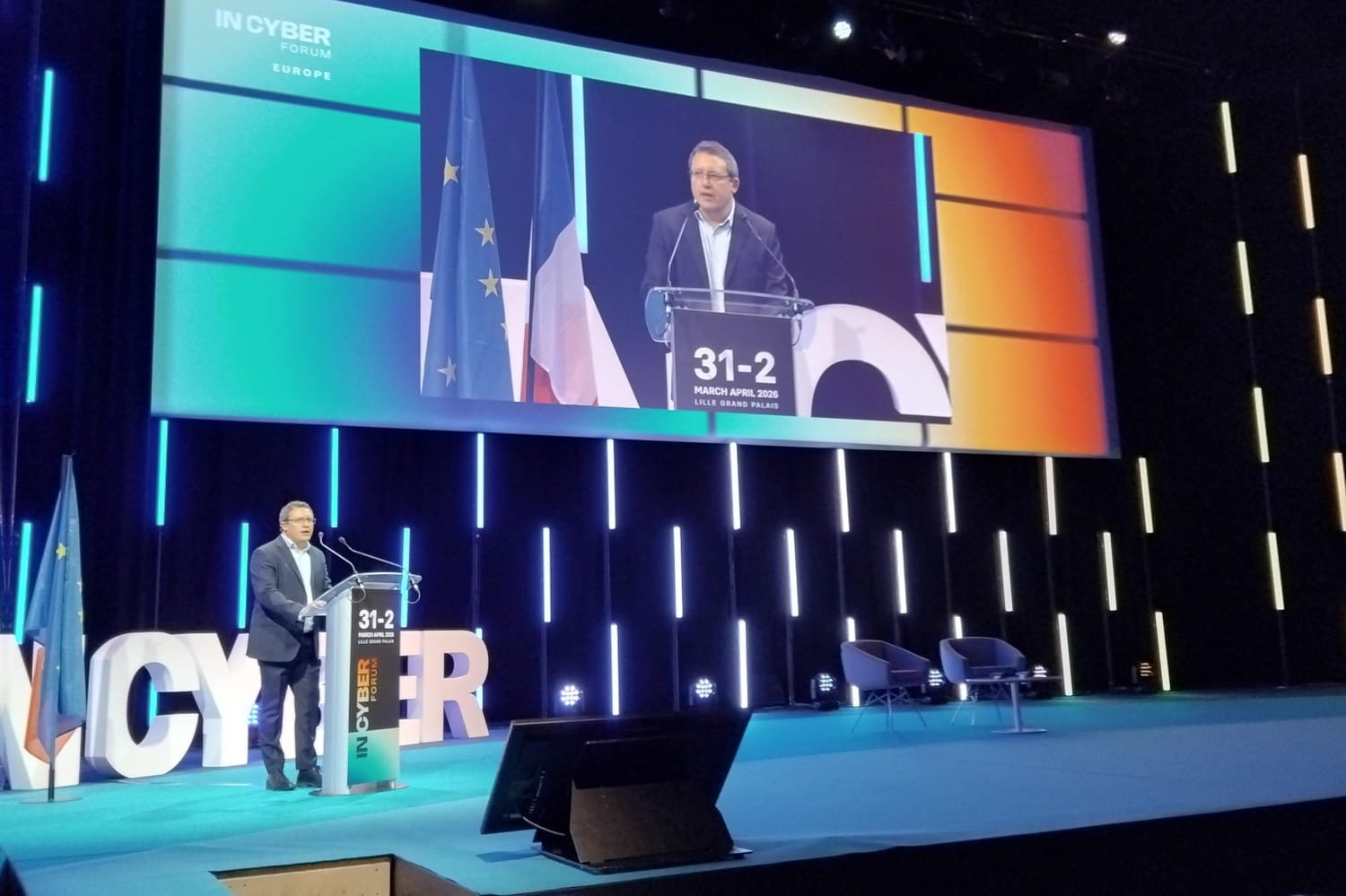
The recent discourse at Forum InCyber 2026 suggests that the grace period for digital transformation has officially expired. Vincent Strubel’s recent calls for immediate adherence to regulatory frameworks are not merely bureaucratic requests; they are warnings about a structural failure in how we perceive risk. Compliance is no longer a checklist for the legal department, but a foundational survival trait in an environment where the predators move at machine speed.
We are seeing a divergence where high-performance organizations treat security as a fluid operational cost, while laggards view it as a periodic tax. This gap is widening because the underlying technology is no longer linear. When the cost of an attack drops toward zero through automation, the cost of being 'almost secure' rises toward infinity.
The Symbiosis of AI Attacks and Quantum Shadows
The threat model has shifted from the 'hacker in a hoodie' to a decentralized, autonomous infrastructure that probes for weaknesses 24 hours a day. Artificial intelligence has turned vulnerability discovery into a brute-force commodity. This is not about smarter viruses, but about the sheer volume of attempts that a single actor can launch against a network perimeter.
The true danger of the quantum era is not the day the first large-scale computer turns on, but the decades of encrypted data already harvested and waiting for the key.
This 'harvest now, decrypt later' strategy means that the post-quantum threat is already historical. Organizations that are not currently implementing post-quantum cryptography (PQC) are effectively leaking their future secrets in real-time. The ANSSI’s emphasis on these emerging threats points to a reality where the encryption we rely on today is already a legacy system.
Furthermore, the rise of AI-driven social engineering has rendered traditional perimeter defense nearly obsolete. If an algorithm can perfectly mimic a CEO's voice and writing style based on three minutes of public footage, the human element becomes the weakest link in the stack. The boundary of the firm has evaporated; the employee’s identity is the new firewall.
Regulatory Gravity in a Borderless Market
Europe’s push for stricter digital sovereignty through frameworks like NIS2 represents a new kind of regulatory gravity. For a long time, tech companies operated in a friction-less environment where move-fast-and-break-things was the dominant religion. That era is ending as the physical consequences of digital failure—shut-down hospitals, frozen power grids, and compromised supply chains—become too great for states to ignore.
The mandate for compliance is an attempt to create a baseline of biological immunity for the body politic. When a major agency like ANSSI demands acceleration, they are signaling that the collective risk of the ecosystem is being held back by its weakest nodes. Systemic resilience is only as strong as the least compliant vendor in the supply chain.
This pressure will eventually force a consolidation. Small to medium enterprises that cannot afford the sophisticated defenses required by 2026 standards will likely migrate toward managed service providers who can offer security-as-a-service at scale. We are moving toward a world where 'running your own servers' will be viewed with the same skepticism as 'printing your own currency.'
By 2031, the concept of a 'cybersecurity department' will likely have vanished, fully absorbed into the core architecture of every digital interaction, leaving us with a world where trust is verified in the microseconds between a thought and a transaction.
Videos UGC avec avatars IA — Avatars realistes pour le marketing