







The Invisible Empire: How Digital Theft Became the World's Third Largest Economy
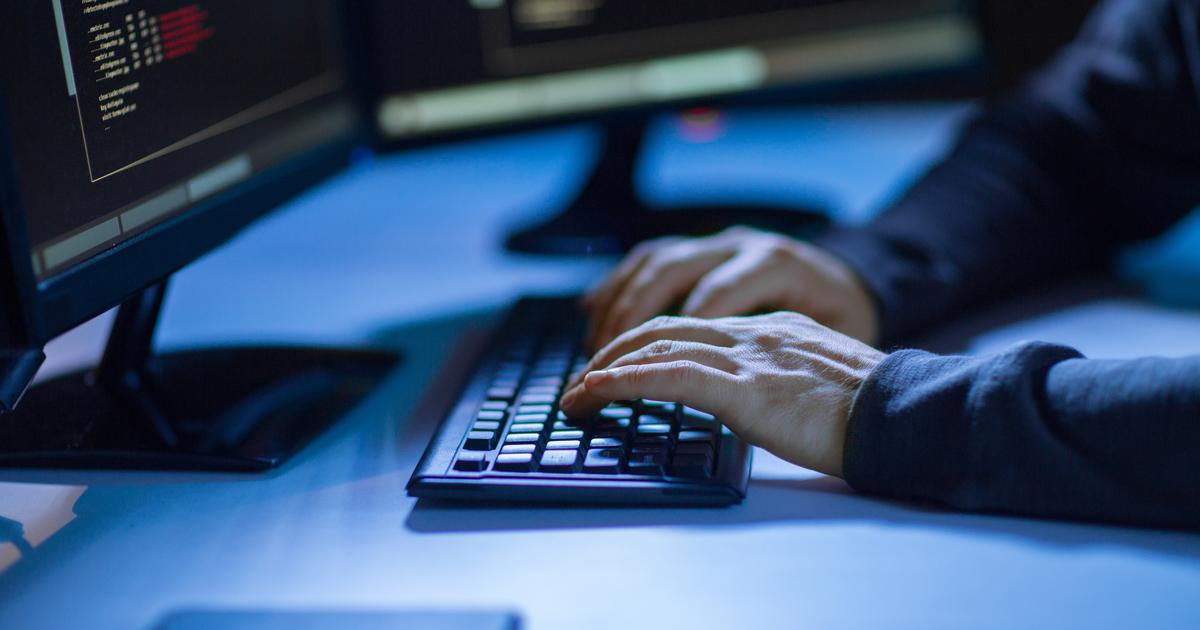
Stefan stood in his kitchen in Munich, watching his coffee machine boot up, unaware that half his company’s database was currently being auctioned on a forum he couldn't even find on Google. There was no broken glass, no tripped silent alarm, and no masked intruder on the security footage. There was only a single, clinical text file appearing on every workstation at the office: Your files have been encrypted for your own protection.
This scene plays out thousands of times every hour, across every timezone. It is no longer just a nuisance or a series of isolated incidents. According to Recent data from Munich Re, cybercrime has matured into a financial force so massive that if it were a country, it would be the third-largest economy on the planet. Its total wealth sits right behind the United States and China, fueled by a relentless stream of digital ransoms and stolen intellectual property.
The Silicon Underground
The dark web has moved past the era of the lone hacker in a basement. Today, cybercrime functions like a Fortune 500 corporation, complete with HR departments, customer support for victims, and specialized software developers. They operate with a level of efficiency that would make a Silicon Valley startup blush.
This shadow economy thrives on a model known as Ransomware-as-a-Service. You no longer need to know how to write a single line of code to hold a hospital or a school district hostage. You simply subscribe to a platform, share a percentage of the loot with the developers, and use their pre-built tools to launch your attack. It is the democratization of chaos.
The digital underground has built a mirror version of our economy, one where destruction is the primary export and trust is the only currency they refuse to trade in.
The sheer scale of the money involved is staggering. We are talking about trillions of dollars flowing through encrypted wallets and shell companies. This capital isn't just sitting idle; it is being reinvested into better technology, more persuasive phishing campaigns, and more aggressive infrastructure.
The Intelligence War
Artificial Intelligence has changed the math of the break-in. In the past, a phishing email was easy to spot—crippled by bad grammar or suspicious links that felt slightly off. Now, large language models allow attackers to generate perfectly phrased, culturally nuanced messages in any language, targeting specific employees with frightening precision.
Automation means a single attacker can knock on a million digital doors at once. They are looking for the one that was left slightly ajar by a tired IT staffer or an unpatched piece of legacy software. Once they are in, they don't just lock the door; they sit quietly, studying the network, finding the backups, and ensuring that when they finally strike, there is no easy way out.
This has forced insurance companies and reassurers to rethink the entire concept of risk. When the threat evolves every few hours, a static insurance policy feels like bringing a paper shield to a drone fight. The cost of protection is rising because the cost of failure has become existential for many businesses.
The Human Variable
Despite the high-tech sheen of AI and encryption, the most vulnerable point in any system remains the person sitting in the chair. We are social creatures, wired to be helpful or curious. Attackers exploit this biological code, using deepfake audio to mimic a CEO's voice or creating fake LinkedIn profiles that look identical to a new hire.
Security is becoming less about firewalls and more about psychology. Companies are spending millions to train staff to be professionally paranoid, yet the gap between the attackers' tools and the defenders' budgets continues to widen. It is a race where the finish line keeps moving further into the distance.
As Stefan finally sat down with his coffee, the reality of the ransom note began to sink in. He wasn't just dealing with a glitch; he was a tiny, unwilling contributor to the world's fastest-growing economy. The question for the rest of us is no longer if we will be targeted, but how much we have already unknowingly contributed to that invisible GDP.

OCR — Texte depuis image — Extraction intelligente par IA