







The Glass Room and the Silent Clock: Preparing Privacy for a Post-Quantum World
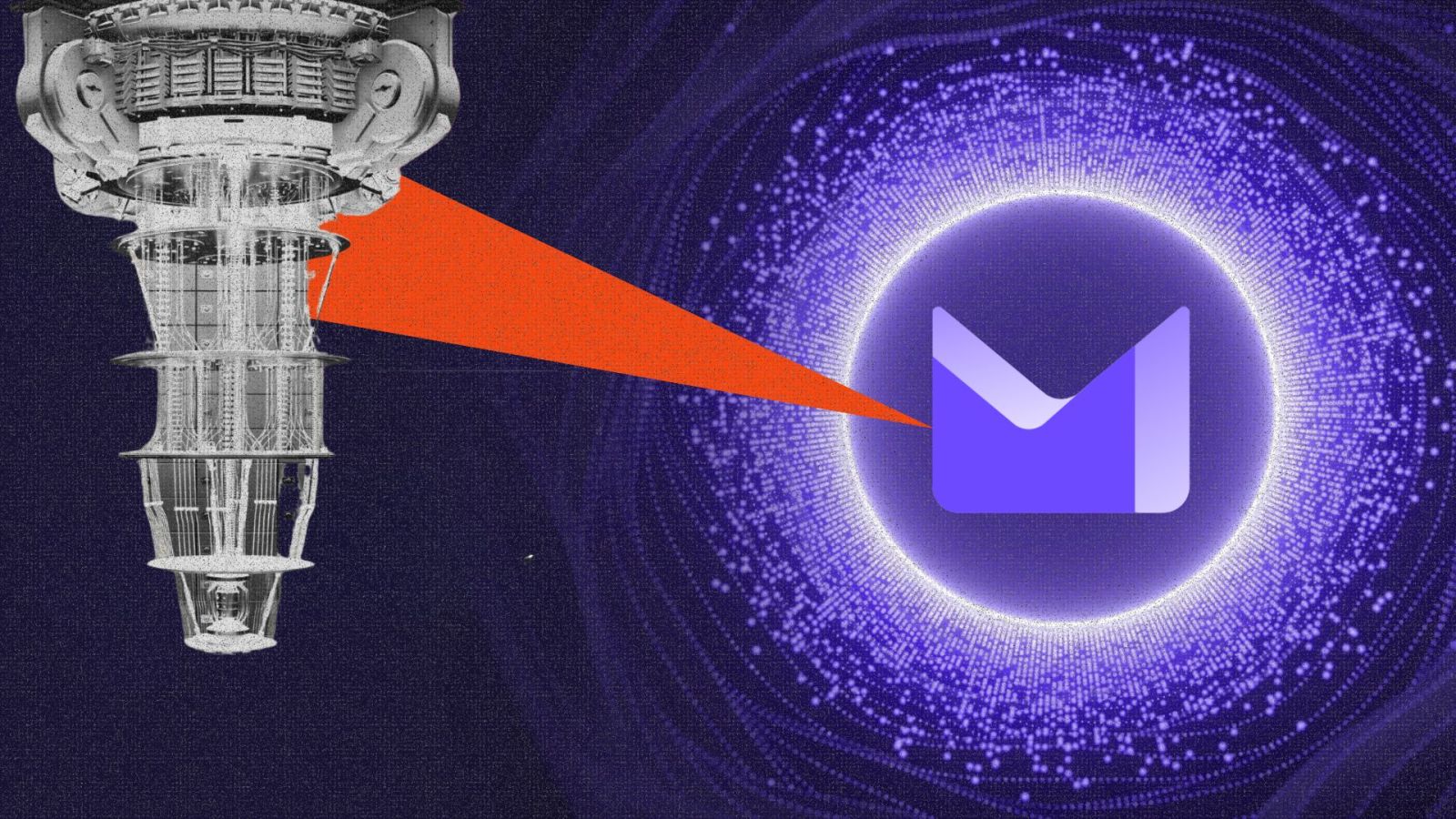
In a small office overlooking the quiet streets of Geneva, an engineer watches a progress bar move with agonizing slowness. It is not the speed of the internet that concerns him, but the speed of history. He is thinking about a computer that does not truly exist yet, at least not in a form that can do much more than shiver in a laboratory refrigerator. Yet, this phantom machine is already capable of reaching back through time to break the secrets we whisper today.
For most of us, encryption is a silent bodyguard. It is the mathematical padlock that keeps our medical records, our legal disputes, and our late-night confessions invisible to anyone but the intended recipient. We have grown used to the idea that some codes are simply too complex to crack within a human lifetime. We trust the math because the math has always been bigger than the machine.
But the arrival of quantum computing threatens to turn those sturdy padlocks into brittle glass. These machines operate on the strange, hazy logic of atoms, allowing them to solve problems that would take a traditional supercomputer a billion years. The danger isn't just in what happens when these machines are built; it is what happens to the data being stolen and stored right now, waiting for a future key to turn.
The Architecture of Forever
Proton, the company that built its reputation on the bedrock of Swiss privacy, has decided that waiting for the threat to materialize is a form of surrender. They have begun implementing a new standard of post-quantum cryptography. This is not a hardware change, but a fundamental shift in the geometry of the code itself. It is an attempt to build a wall that even a quantum breeze cannot blow over.
The strategy addresses a chilling concept known as harvest now, decrypt later. State actors and industrial spies are currently vacuuming up vast quantities of encrypted data, even if they cannot read it today. They are betting on the future. They are stockpiling the world's private correspondence, confident that in a decade or two, they will possess the computational power to retroactively strip away every layer of protection.
"We are engaged in a race against a machine that hasn't finished being born, yet it already threatens to rewrite our past."
To counter this, Proton is weaving new mathematical lattices into the fabric of their service. These lattices are high-dimensional structures that even a quantum computer finds indigestible. By updating the way keys are exchanged, they are ensuring that a message sent this morning remains a mystery in the year 2040. It is a form of digital preservation, a way of keeping the present moment private for the rest of our lives.
The Human Need for Secrets
There is something deeply human about the desire for a closed door. We act differently when we know we are being watched, thinning our personalities to fit the expectations of the observer. If every digital interaction is potentially public on a long enough timeline, the very nature of our honesty begins to erode. We become performers in our own lives, careful not to say anything that might look bad under the light of a future sun.
The engineers in Geneva aren't just protecting data points; they are protecting the right to be messy, complicated, and private. By integrating these new standards into their desktop apps, they are making the transition invisible to the person typing the email. Complexity is the enemy of adoption, so the math stays hidden beneath a clean, familiar interface. The user sees a sent folder; the mathematician sees a fortress.
This shift is part of a broader movement toward cryptographic agility. It is the recognition that no security measure is eternal. We are moving away from the idea of a single, permanent solution toward a more fluid, adaptive stance. We must be ready to swap out our defenses as quickly as the tools of intrusion evolve. It is a perpetual motion machine of protection and parity.
As the sun sets over the lake, the engineer finally closes his laptop. The updates are live, and the first few million messages are now wrapped in this new, strange math. We may never see the machines that were meant to break these codes, but we can feel the quiet relief of a door that finally clicks shut. In a world that wants to record and analyze every heartbeat, the most valuable thing we can own is a moment that belongs only to us.
Generateur d'images IA — GPT Image, Grok, Flux