







The Ghost in the Trailer: How Digital Thieves Are Vanishing with Entire Fleets
The Weight of Empty Air
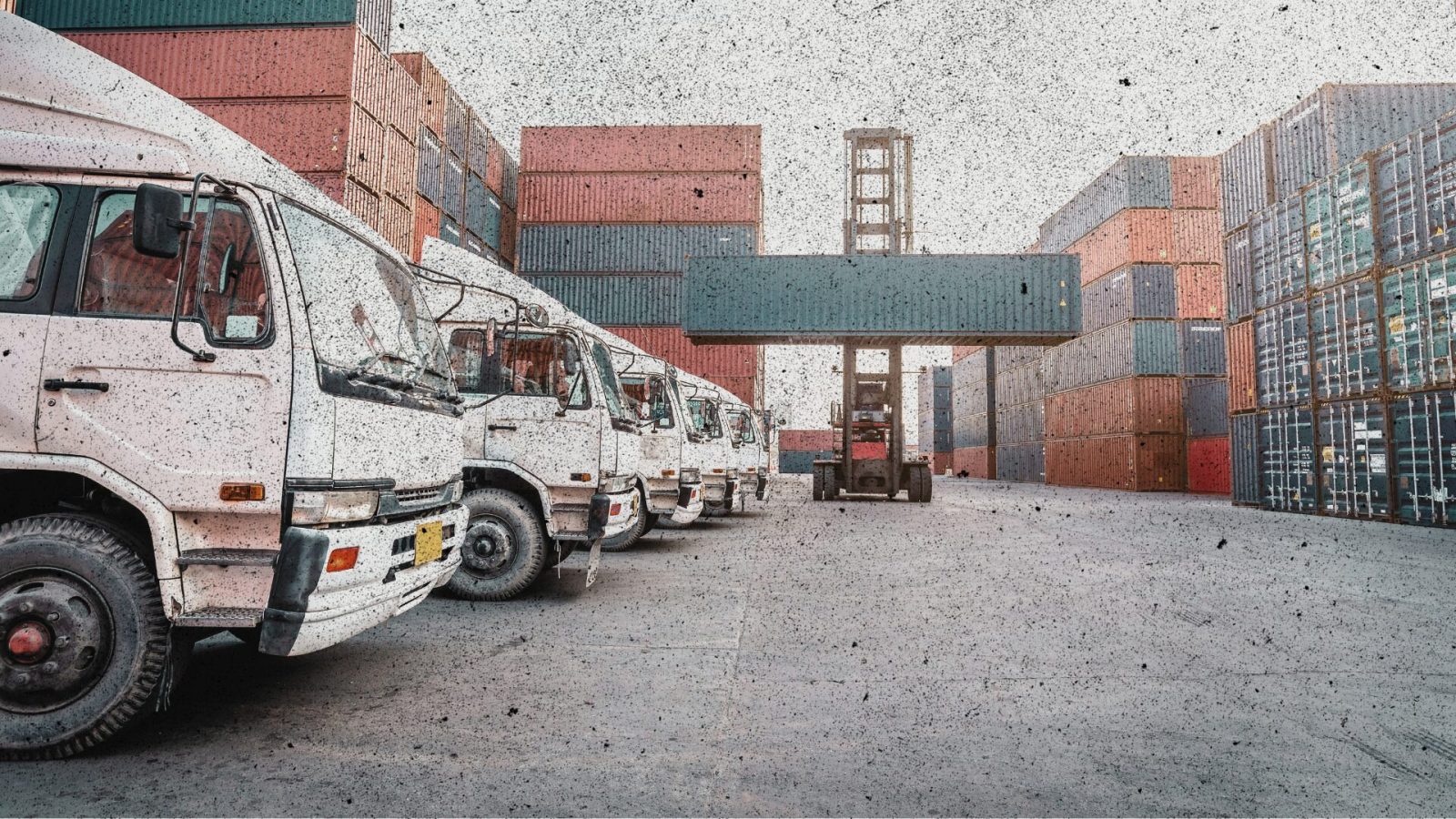
In a rain-slicked parking lot outside of Lille, a logistics manager named Marc stood staring at a shipping container that should have been halfway to Berlin. He checked his tablet three times, comparing the driver's digital signature with the log on his screen. The credentials were valid, the face on the security camera matched the ID provided, and the truck had departed exactly on schedule. By the time Marc realized the driver was a ghost, the four tons of electronics were already being unloaded in a warehouse three hundred miles in the opposite direction.
This is the quiet mechanics of modern cargo theft, where the crowbar has been replaced by carefully crafted lines of code. Researchers at Proofpoint recently spent months tracking a criminal entity that operates less like a gang of highwaymen and more like a boutique software firm. They do not break locks; they break trust. By infiltrating the digital nervous systems of transport brokers, these groups are able to insert themselves into the supply chain as legitimate actors, turning the very tools of global commerce against those who rely on them.
The deception begins with a simple email, often mimicking the mundane bureaucracy of a billing dispute or a routine software update. Once a single employee clicks, the attackers gain access to the private load boards where shipments are auctioned. From there, it is a matter of patience. They wait for a high-value shipment to appear, then use stolen credentials to bid on the job under the name of a reputable, long-standing carrier. The brilliance of the scheme lies in its invisibility, as the true owner of the company never knows their identity is being used as a shield.
The Architecture of an Invisible Heist
When we talk about cyberattacks, we often think of flickering screens and encrypted servers held for ransom. But this specific brand of crime has a physical density that feels strangely tactile. It involves the coordination of real trucks, hired drivers who may not even know they are working for a criminal enterprise, and the precise timing of warehouse schedules. The attackers have mastered the art of administrative friction, knowing exactly which forms to forge to ensure a warehouse guard waves a truck through without a second thought.
One researcher noted that the group they monitored seemed to have an intimate understanding of the exhaustion that defines the logistics industry. They strike on Friday afternoons, when dispatchers are hurried and the desire to clear the docks outweighs the instinct to double-check a driver's license plate. It is a psychological exploit that treats human fatigue as a vulnerability no different than an unpatched operating system. They are not just stealing goods; they are exploiting the cracks in our collective attention.
The most dangerous part of this evolution is that the attackers understand our systems better than the people who built them, turning our protocols into a roadmap for their getaway.
The scale of these operations suggests a level of professionalization that is chilling. These groups maintain their own internal support structures, including translators who can navigate the linguistic nuances of different European markets and technical specialists who can spoof GPS coordinates. This ensures that a manager tracking a stolen truck sees it moving along its intended route, even as the cargo is being stripped of its tracking devices in some anonymous industrial park across the border.
The Fragility of the Handshake
Our global economy is built on a series of digital handshakes, a web of automated trust that we have grown to take for granted. We assume that the name on the screen corresponds to the person at the gate. As these attacks become more frequent, they expose the thinness of that veneer. The logistics world is now forced to confront a reality where every verification is a potential trap and every vetted partner is a potential disguise. This is not a problem that can be solved by simply adding more passwords.
There is a specific kind of anxiety that comes with losing something so massive as a shipping container to the ether. It lacks the immediate violence of a physical robbery, replacing it with a lingering sense of paranoia. If the systems we built to ensure efficiency can be so easily inverted, the very speed of our modern world becomes our greatest liability. We have optimized for a frictionless experience, only to find that friction was the only thing keeping us safe.
As the sun sets over another busy port, thousands of drivers are pulling onto highways, their movements tracked by satellites and recorded in databases. Somewhere in a quiet room, a person with a laptop is watching those same screens, looking for the next name to borrow. We are left to wonder if we will ever truly know who is behind the wheel, or if we are simply watching a play of shadows across a digital map. The cargo moves, the data flows, and the humans in the middle try to spot the difference between a partner and a predator.

Convertir PDF en Word — Word, Excel, PowerPoint, Image