







The Economics of Synthetic Deception: Why AI Scams Are a Scale Business
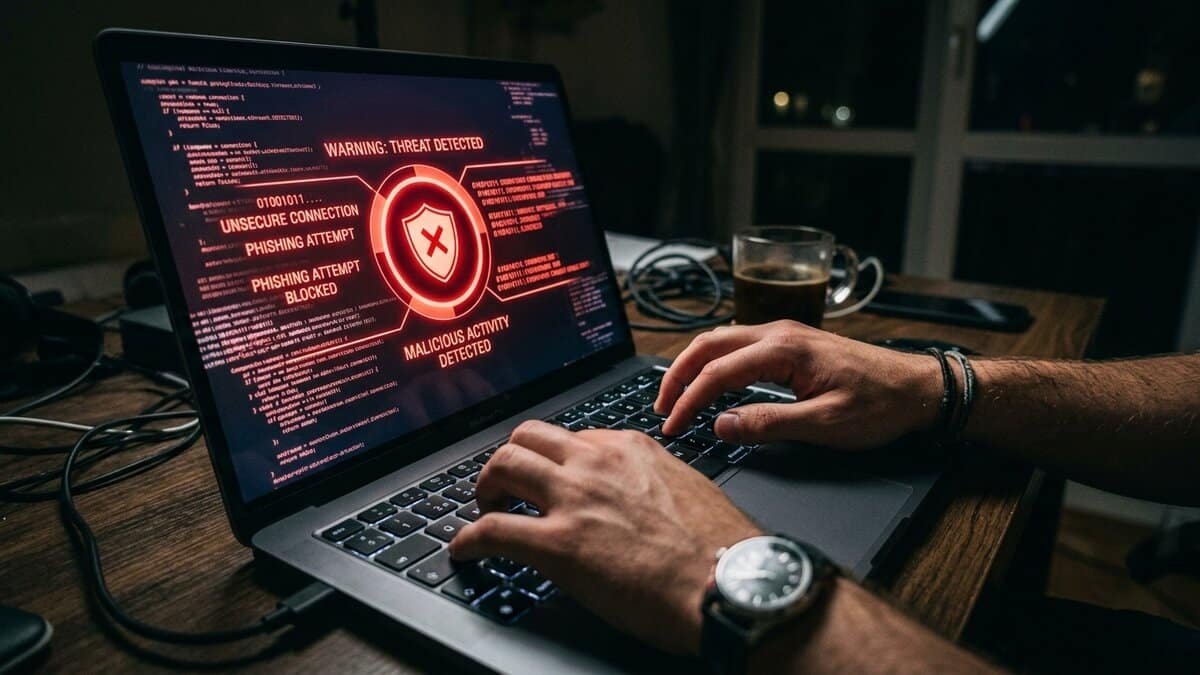
Cybercrime is experiencing its first true Software-as-a-Service moment. The unit economics of deception have shifted permanently. For decades, social engineering was a labor-intensive services business requiring manual outreach, basic translation skills, and significant time. Generative artificial intelligence has turned it into a software business with near-zero marginal cost.
This is not a temporary wave of clever internet tricks. It is a fundamental realignment of how malicious actors exploit trust at scale. When the cost of generating highly convincing human interaction drops to zero, the volume of attacks increases exponentially. The defensive playbook we have built over the past twenty years is suddenly obsolete.
The Economics of Asymmetric Warfare
The math behind traditional phishing was self-limiting. Bad grammar and spelling errors were actually natural filters, weeding out all but the most gullible targets to save human scammers time. AI removes this bottleneck. Large Language Models generate flawless, context-aware, and culturally nuanced communication at scale, eliminating the telltale signs of fraudulent outreach.
For a malicious actor, the customer acquisition cost of a victim has plummeted. A single bad actor can now orchestrate thousands of highly personalized, multi-channel campaigns—combining targeted emails, synthetic voice clones, and deepfake video—for the price of a cheap API subscription. This is asymmetric warfare. Defense requires continuous capital expenditure, while offense enjoys infinite scalability.
We are seeing the industrialization of social engineering. Fraud-as-a-Service platforms on the dark web now offer turn-key, AI-powered suites with subscription pricing models, complete with customer support and regular software updates. The barrier to entry has vanished, turning script kiddies into sophisticated cyber syndicates overnight.
The Devaluation of the Human Firewall
Corporate security strategies have long relied on the human firewall. We trained employees to spot typos, suspicious domains, and awkward phrasing. This training is now a liability. When an email looks identical to a CFO’s writing style, references a real ongoing acquisition, and is followed by a synthetic voice note that perfectly matches the executive's cadence, human intuition fails.
"The era of relying on visual and auditory cues to verify identity is officially over," says cybersecurity researcher Marcus Fowler.
This dynamic shifts the competitive moat from software detection to physical validation. The market is dividing into those who can cryptographically prove identity and those who will get breached. Here is how this disruption shakes out across the enterprise sector:
- Identity verification platforms are dead in the water. Startups relying on simple selfie-verification and video checks are facing an existential crisis as real-time video injection attacks easily bypass their biometric sensors.
- The insurance industry will aggressively reprice cyber risk. Underwriters cannot accurately model risk when the threat vector is dynamic, highly targeted, and automated, leading to skyrocketing premiums and stricter exclusion clauses.
- Enterprise communication must decentralize. Email is fundamentally broken as a trust mechanism; companies will be forced to migrate to closed, cryptographically verified networks for internal operations.
The Cryptographic Pivot
The solution to automated deception is not better search filters or more intensive employee training. You cannot train a human to distinguish a high-quality voice clone from a real human over a crackly phone line. The only viable path forward is the systematic elimination of trust from the communication stack.
This means the security industry must pivot from detection to authentication. If a message, voice call, or document cannot be cryptographically signed and verified back to a physical hardware key, it must be treated as hostile. This creates a massive market opportunity for hardware-bound identity solutions and zero-trust architecture.
We are moving toward a world where every outbound corporate communication will require a digital signature, much like SSL certificates secured the web two decades ago. The companies that build the infrastructure for this multi-factor physical verification will capture the bulk of security budgets over the next decade.
I am betting against any cybersecurity startup raising capital on the promise of using AI to detect AI-generated phishing. These systems are playing a losing game of whack-a-mole against rapidly mutating models. Instead, my money is on hardware-bound identity keys and localized, zero-knowledge proof protocols. The future of trust is not smarter software; it is unforgeable mathematical proofs.
Createur de films IA — Script, voix et musique par l'IA