







The Boy Behind the Screen and the Fragility of the Digital Commons
The Quiet Hum of Disruption
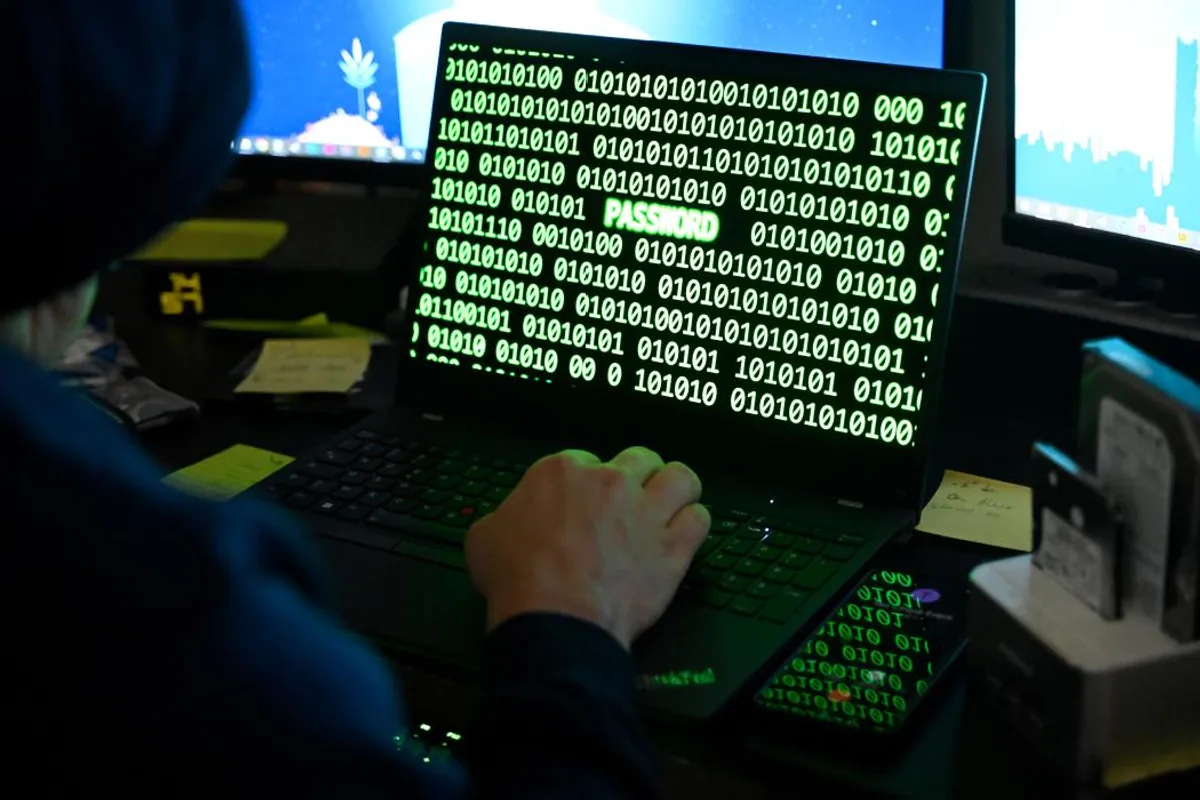
In a small apartment in a unremarkable corner of the French countryside, a young man sat before a screen, his face illuminated by the clinical blue light of a workstation. He was twenty-one years old, an age where the boundary between adolescent rebellion and adult consequence remains dangerously porous. When he clicked a final sequence of keys, he wasn't just testing a script; he was effectively locking the doors of the national education system from the inside.
The silence that followed was not one of peace, but of a sudden, jarring disconnection. Teachers across the country opened their laptops to find their lesson plans vanished and their communication channels severed. It was a digital eviction, executed by someone who, just years prior, would have been sitting in the very classrooms he was now dismantling. I just wanted to see if I could do it, he might have whispered to the empty room, a sentiment often found in the transcripts of those who trade social participation for digital notoriety.
The Aesthetics of the Outlaw
The digital world has a peculiar way of flattening history into a series of defiant poses. This young man adopted the moniker of a historical narco-trafficker, a choice that reveals more about the poverty of modern myth-making than any actual organized crime ambition. By styling himself as a digital successor to a violent ghost, he draped the mundane act of coding in the borrowed robes of an anti-hero. It is a specific kind of performance, common among those who feel small in the physical world but find a terrifying, intoxicating agency through a fiber-optic cable.
The screen acts as a mirror that only reflects who we want to be, while the keyboard serves as a lever that can move the world without us ever having to leave our chairs.
Those who investigated the breach found a trail that was both sophisticated and startlingly naive. There is a specific rhythm to this kind of work—a mixture of deep technical obsession and a complete lack of foresight regarding the human weight of the fallout. The schools were not just data points; they were places where parents coordinated childcare and students turned in the essays that would determine their futures. To the hacker, these were merely nodes in a network to be manipulated for the sake of a high-score or a moment of misplaced pride.
The Weight of the Intangible
As the legal system begins to parse the actions of a person who saw the world through a terminal window, we are forced to reckon with the fragility of our shared infrastructure. We have moved the essential functions of our society—our schools, our hospitals, our civic records—into a space that can be held hostage by a bored twenty-one-year-old with a chip on his shoulder. The vulnerability is not just technical; it is social. We have built a world where the quiet labor of thousands can be undone by a single individual's desire for attention.
There is a peculiar loneliness in this kind of disruption. Unlike traditional protest, which requires bodies in the street and a collective voice, digital sabotage is an isolated act. It is a scream into a vacuum that echoes through the lives of millions. The young man now faces a reality that cannot be bypassed with a line of code or a clever alias. He is no longer a ghost in the machine, but a person sitting in a room, waiting for the heavy, physical knock of the law on his door.
The glow of the monitor eventually fades, leaving only the reflection of a person who must now live in the world they tried so hard to circumvent. We are left wondering how many others are currently staring at their own screens, fingers hovering over keys, waiting for the momentary thrill of watching a city go dark just to feel alive in the silence that follows.

Generateur d'images IA — GPT Image, Grok, Flux