







The Alsace Experiment: Why a French High School Is Training the Next Generation of Industrial Drone Operators
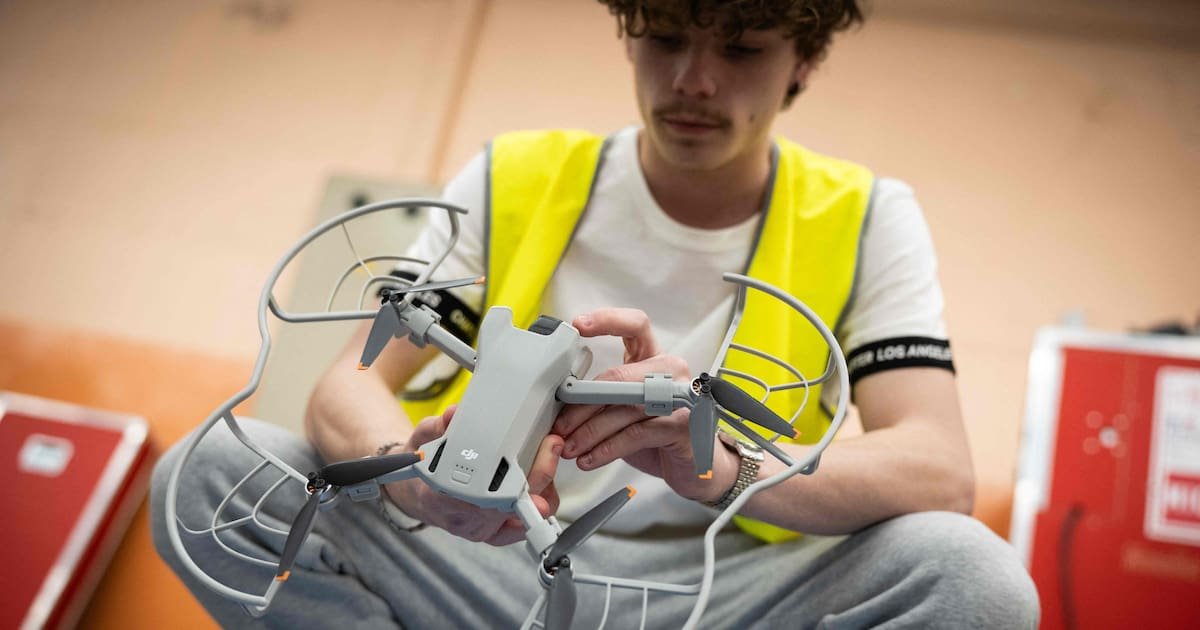
While commercial drone consulting firms in Europe charge up to €150 per hour for specialized aerial surveys, a public vocational high school in Sainte-Marie-aux-Mines is quietly building a subsidized talent pipeline. Eleven students in the Haut-Rhin region of Alsace have become the first in France to enroll in a specialized drone-piloting curriculum within a vocational baccalaureate (Bac Pro) program. This pilot program represents a critical shift in how public education approaches automated industrial labor.
The global commercial drone market is projected to reach $54 billion by 2030, driven not by hobbyists, but by agriculture, infrastructure inspection, and forestry. Historically, enterprises acquired drone capabilities through two expensive routes: hiring external agencies or retraining existing engineers through short-term, private certification courses that cost upwards of €3,000 per week. By integrating drone systems directly into secondary vocational education, this French initiative treats unmanned aerial vehicles (UAVs) not as a novelty, but as standard industrial machinery.
Industrial drone demand is outpacing traditional vocational training structures
Modern forestry and agricultural management increasingly rely on precise spatial data. In the Vosges mountain region, where the school is located, managing dense forests requires constant monitoring for disease, storm damage, and topography changes. Traditional manual surveying of a 100-hectare forest plot can take several days; an enterprise-grade drone equipped with multispectral sensors can complete the same task in under forty minutes.
To meet this demand, the Alsace program does not focus on recreational flight maneuvers. Instead, the curriculum emphasizes the technical integration of hardware and software. Students learn to calibrate thermal cameras, program autonomous flight paths, and interpret complex data outputs. This transition from manual physical labor to high-precision digital oversight defines the modern evolution of blue-collar technical roles.
The program's instructor highlighted the precision required for these industrial operations:
"Là, le but c’est d’être capable d’arriver sur une cible précise"
This level of accuracy is essential when drones are deployed to apply targeted agricultural treatments or inspect high-voltage power lines where a deviation of a few centimeters can result in catastrophic equipment failure.
The economics of micro-credentials versus a structured technical path
Most commercial drone operators enter the industry through accelerated private training programs. While these micro-credentials teach basic piloting rules and safety regulations, they often fail to cover the deeper mechanical and software engineering principles needed to maintain a fleet. The three-year Bac Pro structure addresses this gap by combining piloting with fundamental engineering disciplines.To understand why a long-term educational format holds an advantage over short-term certifications, we must look at the operational requirements of enterprise drone deployments:
- Hardware maintenance and diagnostics: Commercial drones operate in harsh environments, requiring operators to troubleshoot sensor failures, motor degradation, and battery chemistry issues on-site.
- Regulatory compliance and airspace management: Navigating complex European Union Aviation Safety Agency (EASA) regulations requires a deep understanding of air law, risk assessment, and flight authorizations.
- Data post-processing: Raw aerial footage is useless without the ability to convert it into 3D orthomosaics, elevation models, or thermal maps using specialized GIS software.
- Autonomous mission planning: Modern industrial pilots rarely use manual joysticks; they write and execute precise programmatic flight paths optimized for battery efficiency and sensor coverage.
By embedding these four pillars into a multi-year curriculum, the Alsace model produces graduates who are functional systems administrators rather than mere remote-control operators. For local businesses, this reduces the onboarding period from six months to zero.
How localized educational experiments scale into regional tech ecosystems
The choice of Sainte-Marie-aux-Mines as the incubator for this program is strategic rather than accidental. Regional industries in northeastern France are facing acute labor shortages in forestry, surveying, and infrastructure maintenance. By placing this high-tech curriculum in a rural vocational school, educational authorities are attempting to retain young talent in regions historically affected by industrial decline.
This strategy aligns with broader European efforts to build sovereignty in autonomous systems. As geopolitical tensions highlight the vulnerabilities of relying on imported drone hardware, Europe is pushing to develop its own industrial drone manufacturing and operational standards. Developing a highly skilled local workforce is the first step toward reducing dependence on external service providers.
Furthermore, the proximity of Alsace to Germany and Switzerland opens up cross-border employment opportunities. The standardized European drone regulations introduced by EASA mean that a student trained in Sainte-Marie-aux-Mines can legally operate commercial flights across the entire European Union, multiplying their market value upon graduation.
The success of the Alsace experiment will likely trigger a broader rollout across France. By 2027, expect at least fifteen similar vocational schools to adopt the drone curriculum as standard technical options. As industrial automation accelerates, the line between physical labor and software management will continue to blur, making the high-school-trained drone technician one of the most cost-effective hires for infrastructure and agricultural enterprises across the continent.

Generateur d'images IA — GPT Image, Grok, Flux