







Quantum Resistance and the End of Digital Secrecy as We Know It
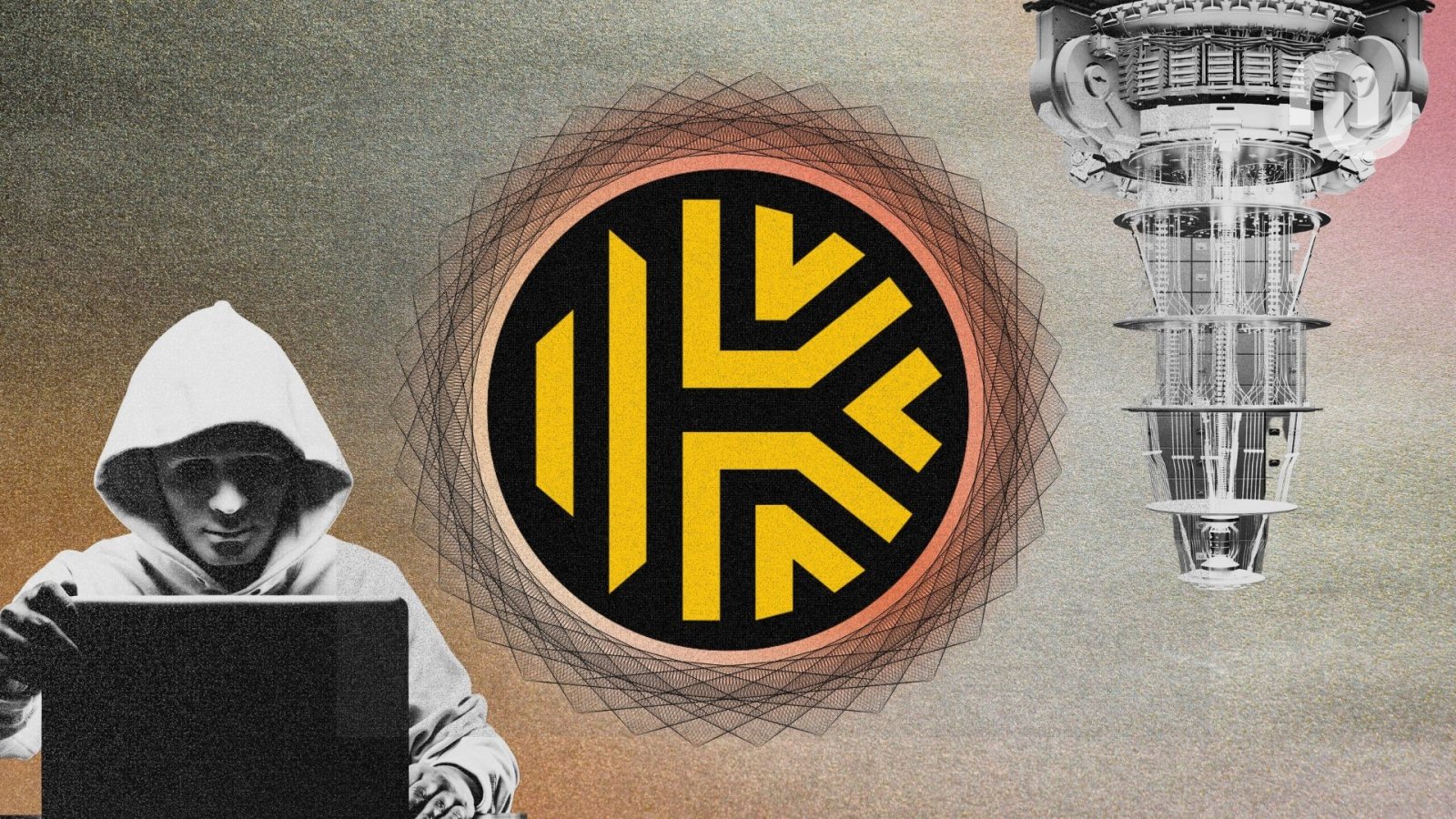
The Great Sunder: When History Becomes Transparent
In the mid-19th century, the Great Exhibition in London showcased the 'unpickable' locks of Bramah and Chubb. These brass marvels were the physical guardians of the era's greatest secrets until a mechanic named Alfred Hobbs proved they could be opened in minutes. We are approaching a similar inflection point in the digital world, where the mathematical locks securing our modern existence are about to meet their master key.
For decades, our privacy has relied on the immense difficulty of factoring large prime numbers. It is a system that works because classical computers would take billions of years to guess the right combination. However, the arrival of quantum computing turns this temporal safety net into a sieve. This is why Keeper’s recent integration of post-quantum cryptography (PQC) matters far more than a simple software update; it is the first masonry being laid for a dam against a coming flood.
The threat is not merely theoretical. State actors and sophisticated entities are currently practicing what intelligence experts call 'Harvest Now, Decrypt Later.' They are vacuuming up encrypted data today, betting that the quantum hardware of 2030 will be able to peel back the layers of 2024’s secrets. By adopting the NIST-approved CRYSTALS-Kyber algorithm, Keeper is effectively retrofitting its vault to ensure that today’s data remains opaque even in tomorrow’s light.
The Logistics of Invisible Fortification
Securing a password manager against quantum intrusion is fundamentally different from adding a new layer of biometric skin. It requires replacing the very foundations of how keys are exchanged between a user’s device and the cloud. Modern encryption is less like a physical wall and more like a complex dance where both parties must agree on the rhythm without an eavesdropper learning the steps.
The shift to quantum-resistant secrets isn't just a security patch; it is the realization that 'long-term' in tech now means surviving the transition to a new physics.
The technical challenge lies in the size and complexity of these new cryptographic primitives. Post-quantum algorithms often require larger keys and more computational overhead, which can slow down the user experience on mobile devices. Keeper has opted for a hybrid approach, layering traditional elliptic curve cryptography with newer lattice-based methods. This ensures that even if the new quantum-resistant math has an undiscovered flaw, the existing classical protections remain intact.
This dual-layered defense reflects a broader trend in strategic engineering: redundancy as a hedge against scientific progress. As developers, we often optimize for the present, but the move toward PQC demands we optimize for a future where our current logic is obsolete. It is a rare moment where software must outlive the hardware generation it was born into.
From Protection to Resilience: The New Digital Standard
We are moving away from an era of static security toward one of cryptographic agility. In the past, companies could choose an encryption standard and leave it untouched for a decade. Those days have ended. The transition Keeper is leading suggests that the ability to swap out fundamental security protocols without breaking the user experience will be the hallmark of successful platforms in the 2030s.
Marketing teams often focus on the features users can see, but the most vital innovations of the next five years will be the ones that occur in the silent basement of the tech stack. If a password manager fails to adapt now, it isn't just a risk for the current year; it is a permanent vulnerability for every piece of data stored during its tenure. Security is no longer a state of being, but a continuous race against the increasing velocity of calculation.
This shift will eventually permeate every layer of the internet, from the way your car talks to the manufacturer to how your bank verifies your identity across a distributed ledger. We are witnessing the birth of a 'cold war' in mathematics, where the prize is the continued existence of private thought and commercial confidentiality. By the end of this decade, the distinction between 'secure' and 'quantum-secure' will disappear, as the latter becomes the only definition of safety that carries any weight in a world of near-infinite processing power.
Videos Faceless — Shorts viraux sans montrer son visage