







North Korean Hackers Deploy NarwhalRAT via Fake Microsoft Security Alerts
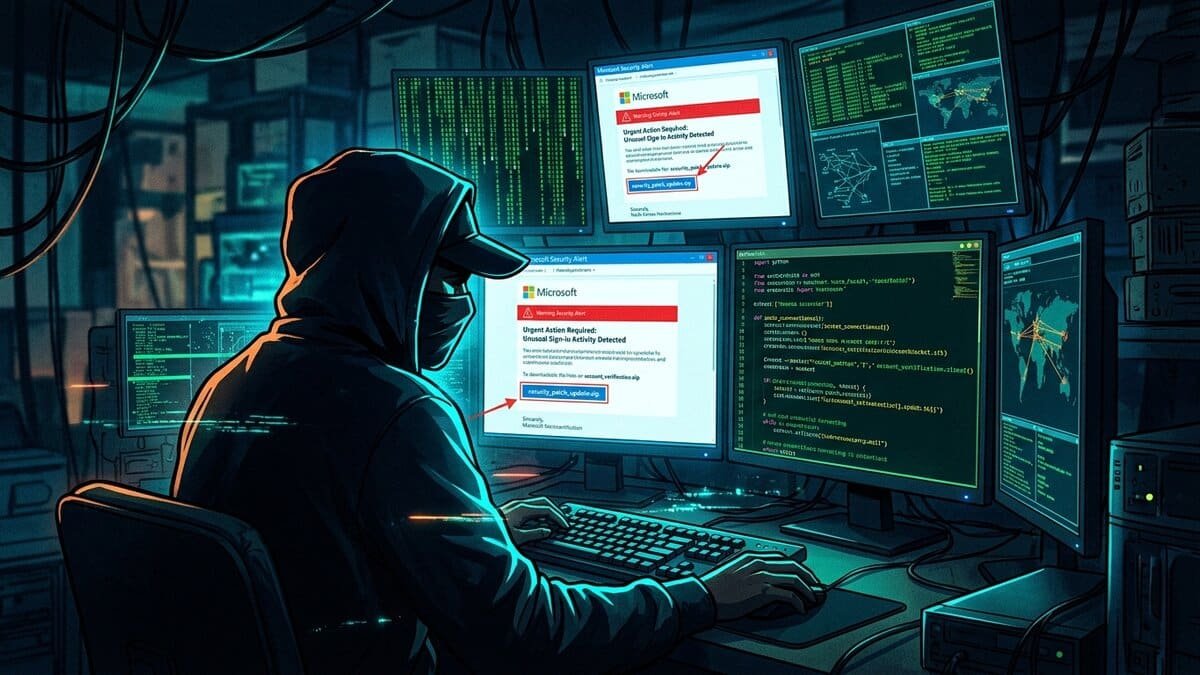
North Korean state-sponsored hackers are deploying a new remote access trojan named NarwhalRAT that exploits fabricated Microsoft security warnings to compromise corporate networks. The campaign uses highly targeted phishing emails to trick victims into executing malicious payloads under the guise of urgent system updates. This shift highlights a growing trend of attackers weaponizing user trust in legitimate operating system alerts.
Anatomy of the Attack
The attack chain begins with a carefully crafted phishing email designed to mimic official IT support communications. When a user opens the attachment, the malware generates fake Microsoft Windows security pop-ups. These warnings claim the system is compromised and instruct the user to run a diagnostic tool.
This simulated urgency forces quick decisions. The fake interface looks identical to legitimate Windows User Account Control prompts. Once the user clicks the approval button, the actual payload executes in the background silently.
Key technical features of NarwhalRAT include:
- Evasion techniques: The malware delays execution to bypass automated sandbox detection environments.
- Credential harvesting: It targets local browser databases to extract saved usernames and passwords.
- System persistence: It modifies registry keys to ensure it runs automatically upon system reboot.
- Command and control: The trojan establishes an encrypted connection to remote servers to receive operator commands.
Technical Delivery and Evasion
The delivery mechanism relies heavily on DLL side-loading, a technique that runs malicious code disguised as a legitimate dynamic link library. Attackers bundle the malware with a clean, signed executable from a well-known software vendor. When the clean program runs, it automatically loads the malicious library.
This method effectively blinds standard antivirus solutions that rely on file reputation. Since the main executable is signed and trusted, security tools often overlook the accompanying malicious library.
Furthermore, the command-and-control infrastructure utilizes compromised legitimate websites. By hosting control servers on hacked blogs and corporate sites, the traffic blends in with normal web browsing. This makes detection via network monitoring significantly more difficult for internal IT teams.
Strategic Targeting and Attribution
Security researchers trace the malware to threat groups operating out of North Korea. These operators historically target defense, finance, and government sectors to gather intelligence and secure funding. NarwhalRAT represents a refinement in their social engineering tactics, moving away from simple macro-enabled documents.
By mimicking native operating system alerts, the attackers bypass traditional email security filters. Security filters often struggle to flag emails containing links to compromised but legitimate hosting services. The reliance on human error during a simulated crisis remains a highly effective entry vector.
Organizations must update their endpoint detection rules to identify unauthorized registry modifications and unexpected outbound connections. Regular training on verifying native operating system prompts can also mitigate this threat.
Security analysts expect these threat actors to integrate deepfake audio elements into future phishing campaigns to increase psychological pressure on targets.

Createur de videos IA — Veo 3, Sora, Kling, Runway