







NATO’s Pyrrhic Victory in the Digital Trenches
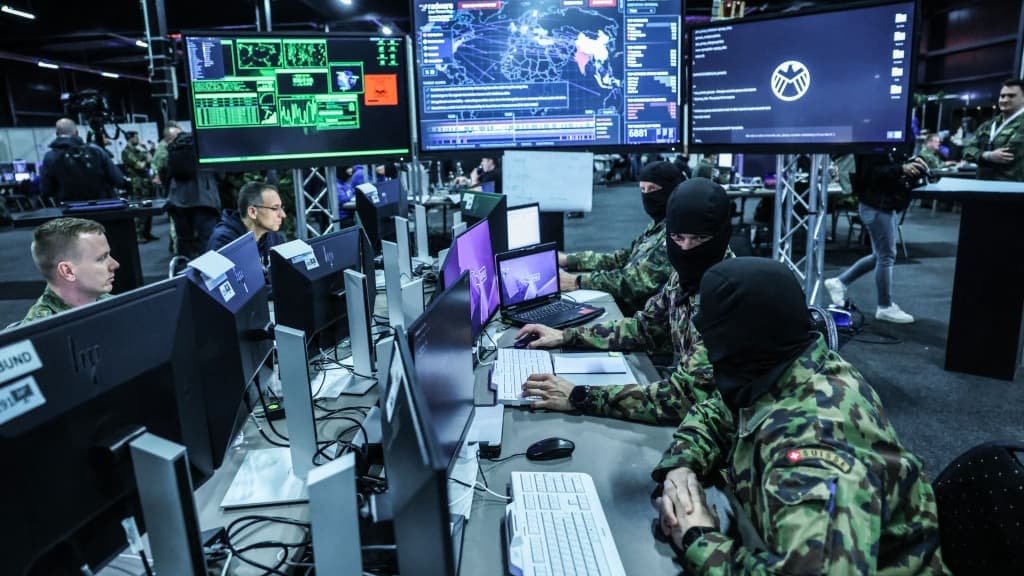
The Simulated Collapse of the Social Contract
The official report suggests a successful defense, but the margins tell a more concerning story. During the recent Locked Shields exercise, NATO forces narrowly fended off a coordinated assault involving power grid failures, massive data breaches, and a flood of AI-generated disinformation. While the scoreboard reflects a technical win, the friction between member states and the speed of the offensive suggests that victory was more a product of the simulation's constraints than an actual strategic dominance.
The adversary in this scenario was not a fictionalized mystery, but a thinly veiled proxy for Russian tactics, played with uncomfortable precision by Ukrainian cyber experts. This choice of opposition removed the usual academic abstractions of military war games. Instead, it forced participants to face the reality of hybrid warfare where the goal is not just to disable a server, but to dismantle the public's trust in institutional reality. The alliance claims to be ready for the next generation of conflict, but the exercise exposed a critical lag in how rapidly these nations can verify truth when deepfakes hit the wire.
The exercise demonstrated our ability to integrate technical defense with strategic communication to protect our democratic processes and infrastructure from sophisticated state actors.
The quote above, derived from the post-exercise briefing, paints a picture of seamless integration that participants on the ground might not recognize. In reality, the technical teams focused on restoring power grids were often siloed from the communications teams trying to counteract viral falsehoods. This structural divide is where the real danger resides. When a city loses electricity and the internet simultaneously fills with AI-generated videos of government officials surrendering, the technical fix for the grid becomes secondary to the social collapse.
We are seeing a shift where the code is no longer the primary weapon; it is the delivery mechanism for psychological disruption. NATO’s current framework treats disinformation as a secondary concern, a nuisance to be managed by PR departments. However, the Ukrainian controllers playing the 'red team' showed that these elements are inseparable. If you cannot secure the narrative, securing the hardware provides little more than a well-lit stage for your own defeat.
The Vulnerability of Interdependence
One of the most glaring issues revealed was the fragility of cross-border cooperation under pressure. NATO operates on the principle of collective defense, but digital borders are more porous and less defined than physical ones. During the simulation, the speed at which the 'enemy' moved through commercial cloud providers and private sector infrastructure caught several national teams off guard. They were looking for tanks at the border while the intruder was already sitting in the billing software of their regional utilities.
Capitalism creates efficiencies that warfare exploits. The shared software stacks used by all member states mean that a single vulnerability in a common tool can bypass billions of dollars in traditional hardware. The exercise highlighted that while the military might be prepared to defend its own encrypted networks, the civilian infrastructure it relies on remains a soft target. The financial cost of maintaining this level of readiness is skyrocketing, yet the return on investment is difficult to quantify when the threat changes faster than procurement cycles.
Furthermore, the use of generative AI by the attacking force changed the math of the conflict. In previous years, creating convincing phishing campaigns or fake news sites required human labor and time. Now, these assets are generated in milliseconds, allowing the adversary to overwhelm defenders with sheer volume. NATO's response remains largely manual and bureaucratic, requiring human sign-offs that are too slow for a machine-speed battle. The alliance is bringing a legal brief to a calculation fight.
The ultimate success of NATO’s digital strategy will not be measured by how many pings it can block in a controlled environment. It will be determined by whether it can develop a unified, automated response system that decentralizes decision-making. Until the alliance can match the speed of AI-driven disruption with its own autonomous defensive protocols, these 'narrow victories' in simulations will likely translate to significant losses in the real world.
Chat PDF avec l'IA — Posez des questions a vos documents