







Molecular Cryptography: Why Synthetic DNA is the Ultimate Vault for the Quantum Age
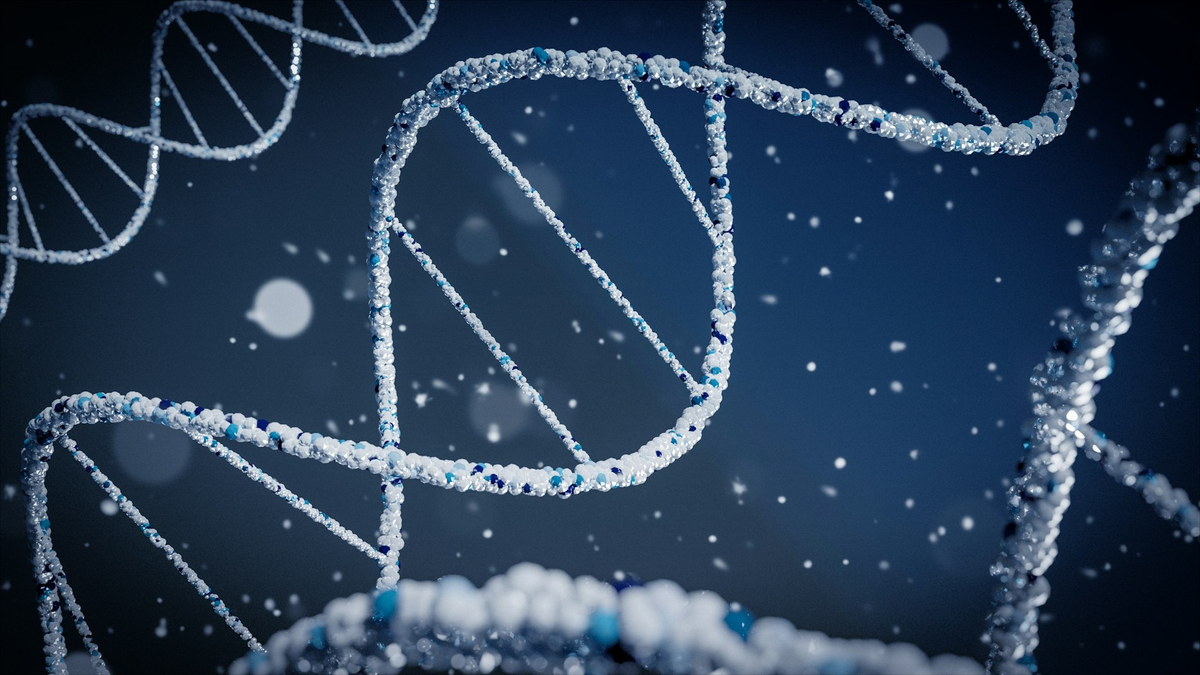
The Biological Hard Drive: Beyond Binary Logic
In the mid-19th century, the Great Exhibition in London showcased the 'unpickable' locks of Jeremiah Chubb and Joseph Bramah. For decades, these mechanical marvels represented the absolute ceiling of security, until a locksmith named Alfred Charles Hobbs proved that any physical mechanism could be defeated with enough time and specialized tools. We are currently approaching a similar 'Hobbs moment' in digital history. Our current encryption methods, built on the mathematical difficulty of factoring large prime numbers, are facing an existential threat from the impending arrival of quantum computing.
The joint breakthrough by researchers in France and Japan suggests that the solution to this looming crisis will not be found in more complex math, but in the fundamental building blocks of life itself. By utilizing synthetic DNA as a medium for encryption, they have moved the goalpost from electronic vulnerability to biological complexity. While a silicon chip processes data through volatile gates, DNA stores information in a physical structure refined by billions of years of trial and error. This is not merely a faster way to hide data; it is a shift from securing the transmission to securing the matter itself.
The move from silicon-based logic to molecular storage represents the transition from hiding a key under a mat to weaving the key into the very fabric of the house.
The Chemistry of Absolute Privacy
Our digital infrastructure has always been haunted by the ghost of entropy. Hard drives fail, magnetic tapes degrade, and servers require constant cooling and power. DNA, however, is remarkably stable. When stored in the right conditions, it can preserve complex information for thousands of years, as evidenced by our ability to sequence the genomes of long-extinct species. The Franco-Japanese experiment utilizes this stability to create a form of encryption that defies brute-force attacks.
In this system, data is translated from the binary language of 0s and 1s into the quaternary code of DNA: adenine, cytosine, guanine, and thymine. To decrypt the information, a specific biological 'key'—a precise sequence of synthetic DNA—is required to initiate the sequencing process. Without this chemical primer, the data remains a meaningless soup of molecules. It requires a lab, not just a laptop, to even begin an attempt at a breach. This physical barrier introduces a cost-to-attack ratio that makes traditional hacking economically and technically unfeasible.
The End of the Invisible Heist
For the last thirty years, the primary threat to data has been its invisibility. A hacker in one hemisphere can strip the assets of a bank in another without ever touching a physical object. DNA encryption reintroduces physical presence into the security equation. To steal a biological key, an adversary cannot simply send a phishing email; they would need to intercept a physical sample, a feat that belongs more to the world of high-stakes espionage than script-kiddie exploits.
This development mirrors the way containerization changed global trade in the 1950s. By standardizing the physical 'box' and making it difficult to access without specialized machinery, it made the contents secondary to the system of transport. Molecular cryptography does the same for high-value data. It creates a standardized, incredibly dense, and nearly indestructible 'container' that remains opaque to any observer lacking the specific biological catalyst. We are witnessing the birth of a cold-storage tier for human knowledge that survives even if our electricity-dependent networks do not.
As we move toward a decade defined by the tension between open AI models and the need for radical privacy, the biological route offers a third way. It suggests that the most sensitive secrets of states, corporations, and individuals will eventually move off the grid and into the test tube. Five years from now, your most precious digital assets will not be behind a password, but suspended in a drop of liquid, silent and unreadable to any machine ever built.

Createur de videos IA — Veo 3, Sora, Kling, Runway