







Hardening Infrastructure Against the Rise of Hybrid Threats
Why should you care about infrastructure security now?
The assumption that neutral ground or civilian infrastructure remains off-limits during geopolitical tension is dead. Recent intelligence reports from the Swiss Federal Intelligence Service (FIS) confirm that critical systems—energy grids, communication hubs, and transport networks—are now primary targets for foreign interference. This isn't just about state-sponsored hacking; it is about a coordinated strategy to exploit technical and physical vulnerabilities to destabilize a nation's core functions.
For developers and founders, this means the 'threat model' for any product touching physical systems or public data just got significantly more complex. You are no longer just defending against script kiddies or ransomware gangs. You are operating in an environment where foreign actors view your uptime as a strategic liability. If your software manages resources, handles sensitive logistics, or interfaces with the power grid, you are part of the attack surface.
What does the shift to hybrid threats actually look like?
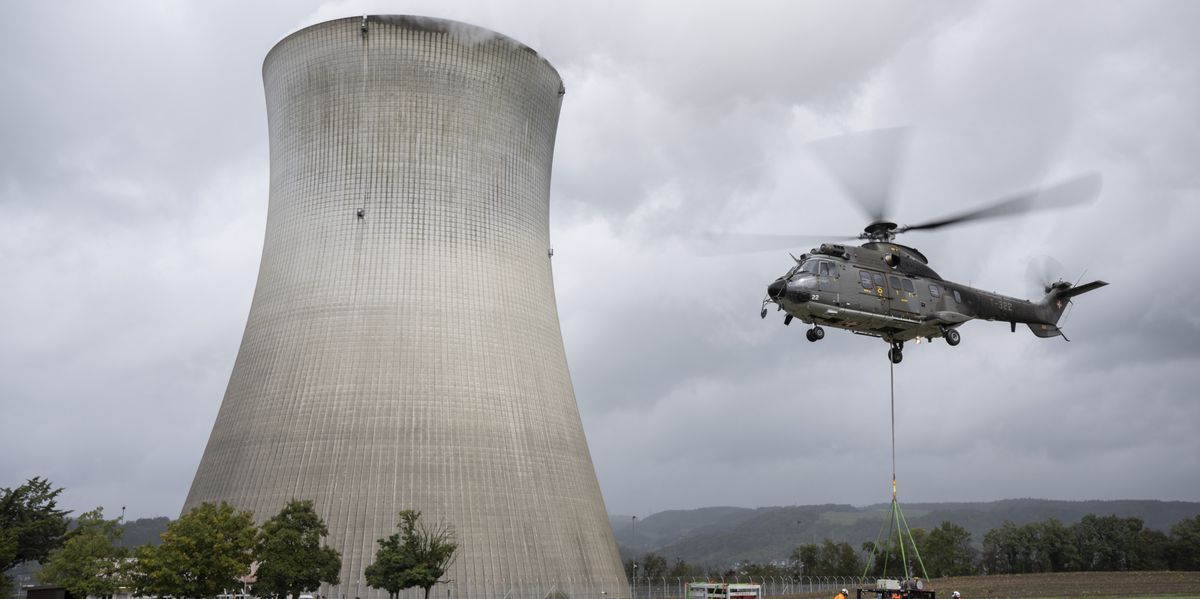
Hybrid warfare is the intentional blurring of lines between peace and conflict. It combines cyberattacks, disinformation, and physical sabotage to achieve a goal without a formal declaration of war. In Switzerland, the focus has shifted toward the vulnerability of nuclear power plants and data centers, particularly in regions like Aargau. The goal isn't always to destroy; often, it is to gain persistent access or demonstrate the ability to cause chaos at will.
- Supply Chain Poisoning: Attackers target the small vendors that the larger utility companies rely on. This is the path of least resistance.
- Espionage via Infrastructure: Using maintenance access or remote monitoring tools to gather intelligence on energy consumption and logistics patterns.
- Influence Operations: Using data leaks to fuel public distrust in government institutions or public safety protocols.
The FIS report highlights that the risk is highest where digital systems meet physical hardware. Industrial Control Systems (ICS) and SCADA networks, which were often designed for longevity rather than security, are the weakest links. Many of these systems are being connected to the internet for the first time to enable remote management, creating entry points that didn't exist five years ago.
How can builders respond to these vulnerabilities?
Security can no longer be a checkbox at the end of a sprint. It must be baked into the architecture of how we build and deploy tools for the public sector and critical industries. The goal is to move from a defensive posture to a resilient one. Resilience means assuming a breach will happen and ensuring the system can fail gracefully or operate in a degraded state without total collapse.
- Air-gapping and Micro-segmentation: Stop treating your network as a single entity. Isolate critical control logic from the management layer. If the dashboard is compromised, the hardware shouldn't automatically follow.
- Zero-Trust Architecture: Remove the concept of an 'internal' trusted network. Every request, whether it comes from a local terminal or a remote VPN, must be authenticated and authorized.
- Vendor Auditing: If you use third-party libraries or hardware, you need to know where they come from. The provenance of your stack is now a security metric.
This is not just a government problem. Private companies manage the vast majority of the infrastructure we rely on. When the FIS warns of a 'volatile' security situation, they are signaling to the private sector that the standard operating procedures of the last decade are insufficient. You need to audit your physical access points and your digital dependencies with the same rigor.
What are the immediate red flags to monitor?
Keep a close watch on unusual patterns in network traffic that suggest reconnaissance rather than an immediate exploit. Foreign actors often spend months mapping a network before they act. Look for unauthorized attempts to access legacy protocols or lateral movement between non-critical and critical segments of your infrastructure. The next phase of this threat involves more sophisticated 'living off the land' techniques, where attackers use your own administrative tools against you to avoid detection by standard antivirus software.
Start by conducting a thorough audit of all internet-facing assets connected to physical systems. If a device doesn't absolutely need to be online, take it off the public web. The window for easy security is closing, and the cost of being the weak link is rising.
Createur de films IA — Script, voix et musique par l'IA