







Why the Business of Cultural Identity is Testing Design Limits
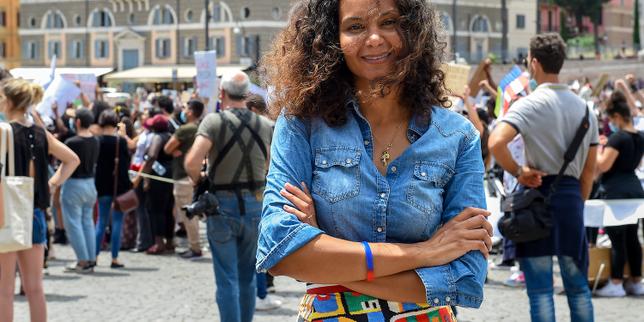
When you build a brand around cultural identity, you eventually hit a wall where aesthetics meet politics. Stella Jean, a designer known for merging high fashion with deep historical narratives, recently faced this reality while outfitting the Haitian delegation for the Winter Olympics. For builders and creators, the takeaway isn't just about clothes; it is about how you manage brand integrity when your platform grows.
Jean attempted to feature Toussaint Louverture, a central figure in the Haitian Revolution, on the official team uniforms. The move was intended to celebrate heritage, but it was flagged as being too political for the global stage. This forced a last-minute pivot that every product lead has experienced: stripping away a core feature because of external compliance requirements.
How do you balance brand authenticity with platform restrictions?
Every creator wants to ship a product that feels authentic. However, the larger the stage, the more stakeholders you have to satisfy. In this case, the International Olympic Committee's rules on political expression acted as a hard constraint on the creative vision.
- Define your non-negotiables: Before starting a project with high visibility, know which parts of your story are essential and which are decorative.
- Anticipate compliance friction: If your product touches on sensitive social or historical data, expect a pushback from gatekeepers.
- Build for modularity: Jean had to remove the imagery at the last minute. Designing your work so that specific elements can be swapped or removed without breaking the entire aesthetic is a survival skill.
What makes the Stella Jean approach a model for niche branding?
Despite the forced edits, Jean's work remains a case study in how to use storytelling to differentiate a brand in a crowded market. She doesn't just sell fabric; she sells a narrative that resonates with a specific community. This creates a level of loyalty that generic luxury brands cannot match.
For developers and founders, this is the equivalent of building a product for a specific vertical rather than trying to please everyone. You solve a specific problem for a specific group of people, and you use their shared history or language to build trust. Even when the broader platform forces you to tone things down, your core audience still recognizes the intent.
Why should you care about the intersection of design and politics?
We are seeing a shift where users expect the products they buy to stand for something. Whether you are building an app or a clothing line, your design choices are interpreted as statements. If you ignore this, you risk looking out of touch; if you lean too hard into it, you risk being de-platformed or restricted.
The goal is to find the middle ground where your brand voice is clear but your execution is resilient. Jean’s ability to navigate these waters—even with the setbacks—shows that the value of a brand often lies in its willingness to push boundaries, even if it has to retreat occasionally to stay in the game.
Watch how your own industry handles heritage and identity over the next year. As global platforms become more homogenized, the creators who successfully bake specific, local narratives into their work will be the ones who actually stand out in the feed.

Convertir PDF en Word — Word, Excel, PowerPoint, Image