







Tracing the Antifa Brand from Cold War Police to Modern French Activism
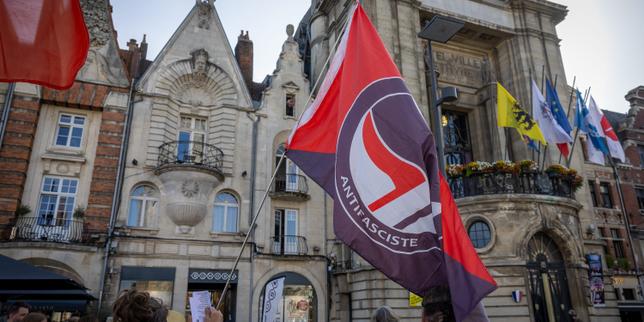
The Semantic Shift from State Power to Street Combat
The term antifa currently dominates French headlines following a fatal confrontation in Lyon, but its linguistic roots are far removed from the decentralized street movements of the 21st century. While modern activists view the label as a badge of resistance against rising right-wing sentiment, history suggests the word was originally a tool of state-sanctioned authority. The branding has undergone a complete inversion: what began as a mechanism for government control has morphed into a symbol of anti-establishment defiance.
Data from historical archives indicates that the term first surfaced in major French media on June 7, 1950. At that time, it was not describing a ragtag group of protesters or student organizers. Instead, it referred to the Volkspolizei, the people's police of East Germany. This linguistic inheritance is rarely discussed by those currently adopting the moniker, yet it reveals a persistent tension between the word’s literal meaning and its political application.
The term appeared for the first time in the evening daily on June 7, 1950, in an article about a 'people's police' in the GDR.
The GDR used the 'antifascist' label to legitimize a surveillance state, positioning itself as the moral antithesis to the newly formed West Germany. By branding its police force with this prefix, the East German government attempted to shield its authoritarian tactics from international criticism. For a journalist tracking the evolution of political jargon, this represents a masterclass in how a single word can be repurposed to serve diametrically opposed power structures.
The Privatization of Political Violence
Today, groups like the Jeune Garde in France have reclaimed the shorthand, distancing it from its bureaucratic origins in the Soviet bloc. The modern iteration of the movement operates without a central command, relying instead on a shared aesthetic and a common enemy. This shift from 'state antifa' to 'street antifa' reflects a broader trend in political organization where legacy institutions are replaced by fluid, digital-first networks.
Critics argue that the ambiguity of the term allows it to be used as a catch-all for any activity that falls outside of mainstream civic discourse. When a fight in Lyon results in a fatality, the label becomes a lightning rod for both political condemnation and internal recruitment. The Jeune Garde positions itself as a defense force, yet the historical parallels to the 1950s police units suggest that the claim to moral high ground often relies on who controls the narrative of the 'fascist' threat.
Analyzing the media coverage over the last seven decades shows a clear pattern: the word 'antifa' gains traction during periods of institutional instability. In the 1950s, it was used to define a new border; in the 2020s, it is being used to define the boundaries of acceptable political expression in the French Republic. The money trail behind these modern groups is intentionally opaque, unlike the state-funded budgets of their Cold War predecessors, making it harder to determine where grassroots passion ends and organized provocation begins.
The current saturation of the term in the French press may indicate a looming legislative crackdown. As the state looks for ways to categorize and potentially ban these associations, the history of the word serves as a reminder that political labels are rarely neutral. The ultimate fate of the 'antifa' movement in France will likely depend on whether the public continues to see it as a reactionary force or if it becomes synonymous with the very civil unrest it claims to combat.
Createur de films IA — Script, voix et musique par l'IA