







The Silent Margins: Why Guido Guidi’s Ordinary Spaces Challenge the Visual Economy
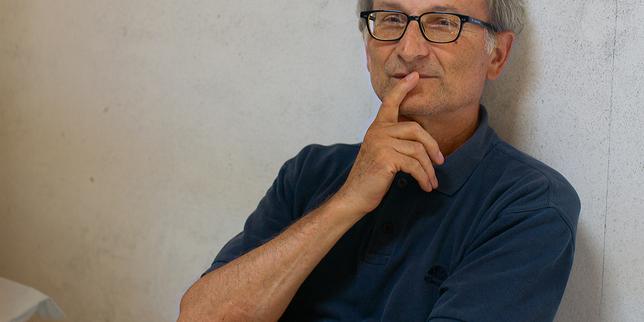
The Myth of the Decisive Moment vs. The Reality of Decay
The marketing machine of contemporary photography suggests that value is found in the extraordinary, the high-contrast, and the immediate. However, the retrospective of Italian photographer Guido Guidi at Le Bal in Paris, titled Col Tempo, suggests a different investment strategy for our attention. Guidi has spent nearly seven decades ignoring the city centers and the landmarks that drive tourist revenue, focusing instead on what he calls the marginal spaces.
This is not a romanticization of poverty or a simple aesthetic choice. It is a rigorous, almost forensic documentation of the built environment as it exists when no one is trying to sell it. While tech giants spend billions building digital twins of cities that look perfect, Guidi’s work captures the inevitable friction of reality. His lens tracks the slow degradation of concrete and the way sunlight hits a nondescript wall in the Italian suburbs, challenging the idea that a photograph must provide a narrative payoff.
The photographer’s work is focused on peripheral spaces, far from any artifice, tracing an experimental path from 1956 to 2024.
This official statement frames Guidi as a minimalist, but it ignores the radical quietness of his protest. In a world where every pixel is optimized for engagement, Guidi’s refusal to provide a 'subject' in the traditional sense is an act of defiance. He isn't just looking at the periphery; he is documenting the failure of urban planning and the persistence of the ordinary. The 1956-2024 timeline shows a consistency that is rare in an industry prone to chasing trends. He has watched the post-war industrial dream crumble in real-time, one frame at a time.
The Data of the Dull and the Cost of Observation
Developers and designers often talk about user experience as a path of least resistance, yet Guidi’s work is intentionally resistant. His photographs require a slow burn of attention that modern social media algorithms are designed to prevent. By focusing on the terzo paesaggio or 'third space'—the neglected areas between urban and rural—he forces the viewer to confront the physical consequences of our economic cycles. These are the spaces where the money stopped flowing, and Guidi treats them with the same reverence others reserve for cathedrals.
The technical execution of his work, often using large-format cameras, introduces a deliberate friction into the process. This is the antithesis of the 'point and shoot' culture that dominates our current visual stream. Each image is a high-resolution map of a place that society has largely agreed to ignore. When we look at his series on the Tomba Brion or his long-term study of the A14 motorway, we are seeing a record of how time actually moves, rather than how we wish it to appear in a polished presentation.
Investors and founders often overlook the 'boring' infrastructure that keeps their systems running. Guidi makes that infrastructure the protagonist. His work suggests that the real story isn't in the shiny headquarters, but in the gravel, the power lines, and the weathered siding of the buildings that house the workers. It is a reminder that the most durable parts of our world are often the least photogenic by conventional standards.
The ultimate test for this exhibition is whether a modern audience, conditioned for instant gratification, can sit with the silence of these images. Success for Guidi isn't measured in viral reach, but in the viewer's ability to recognize the value in a blank wall or a dusty road. The true metric of his impact will be found in whether we start to see the margins of our own lives with the same depth of field he has maintained since the fifties.

Convertir PDF en Word — Word, Excel, PowerPoint, Image