







The Samarkand Gambit: How Uzbekistan is Re-Engineering the Intellectual Production Line
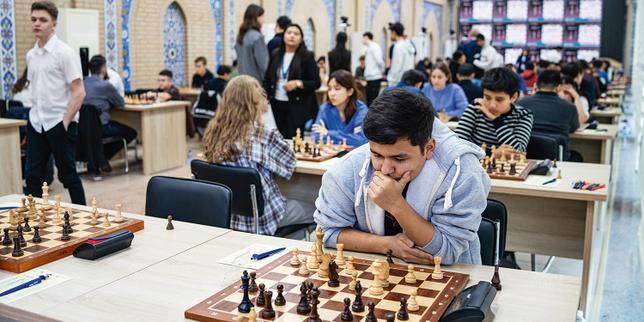
The Silicon Valley of the 64 Squares
In the mid-20th century, the world witnessed the 'Sputnik moment,' an event that forced nations to reconsider how they identified and cultivated scientific talent. Today, a similar concentration of cognitive resources is gathering in Central Asia. Uzbekistan is not merely teaching its youth how to move wooden pieces; it is building a high-throughput factory for strategic thinking. By treating chess as critical infrastructure rather than a leisure activity, the nation is positioning itself as a central hub for the next era of intellectual competition.
This is not a story about hobbies. It is a story about the deliberate orchestration of human capital. The government has integrated the game into the national curriculum, viewing the chessboard as a sandbox for logical rigor and risk management. Where other nations focus on digital literacy through screens, Uzbekistan is focusing on the fundamental mental architecture that makes such literacy effective.
The chessboard is the only laboratory where we can observe the raw mechanics of human decision-making under absolute pressure, without the noise of external luck.
The upcoming 46th Chess Olympiad in Samarkand serves as the biological proof of this concept. Hosting this event is a signal to the global markets that the country is ready to export its most valuable resource: a generation of young minds trained in the art of long-term planning and tactical execution. The investment is massive, but the expected return is not measured in medals alone, but in the creation of a workforce capable of navigating the complexities of a volatile global economy.
The Logistics of Genius
Success in any competitive field is rarely an accident of geography; it is a result of optimized logistics. In the Soviet era, chess was a tool of soft power, but the Uzbek approach leans closer to the startup model of rapid scaling. They have decentralized elite coaching, ensuring that a child in a remote province has the same path to mastery as one in the capital. This democratic distribution of opportunity reduces the 'talent waste' that plagues most developing nations.
We are seeing the emergence of what might be called 'Cognitive Special Economic Zones.' By flooding the system with resources, the state creates an environment where high-performance outcomes become the statistical norm. When every school child understands the concept of a positional sacrifice for a long-term advantage, you are no longer just building chess players; you are building a society of strategists.
The shift from an agrarian or resource-based economy to one powered by high-level reasoning requires a cultural anchor. For Uzbekistan, chess provides that bridge. It links the storied history of the Silk Road—where Samarkand was once the center of the known intellectual world—to a future where competitive advantage is found in the ability to process information faster and more accurately than an opponent. This is a deliberate re-claiming of a historical identity through a modern lens.
The Compounding Interest of Thought
Economic observers often overlook the compounding nature of intellectual discipline. A ten-year-old who masters the Sicilian Defense today is a twenty-year-old who understands complex system dynamics tomorrow. The rigorous feedback loops inherent in the game—where every mistake leads to an immediate and measurable loss—serve as a potent antidote to the shortened attention spans of the social media age.
As we approach the Olympiad, the focus will be on the grandmasters and the scoreboards. However, the real data point to watch is the sheer volume of participation. Modern power is increasingly defined by the ability to solve non-linear problems. If the 20th century belonged to those who could mass-produce steel, the 21st belongs to those who can mass-produce clarity.
Five years from now, the peak of the global grandmaster rankings will be dominated by names from Tashkent and Samarkand, signaling to the world that a new epicenter of human intelligence has successfully been engineered from the ground up.
Createur de films IA — Script, voix et musique par l'IA