







The Salvador Discovery and the Myth of Historical Erasure
The Price of Institutional Blindness
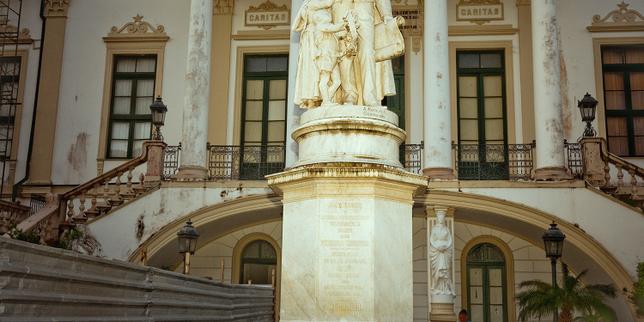
The recent discovery of a massive burial site in Salvador de Bahia, containing the remains of up to 100,000 enslaved individuals, is being treated as a surprise by the Catholic institution that owns the land. It shouldn't be. In a city that served as the primary port of entry for the transatlantic trade, the ground isn't just soil; it is a ledger of human lives that the state preferred to keep off the books. The presence of tens of thousands of bodies beneath a charitable foundation is not a coincidence of geography, but a consequence of convenience.
For centuries, the narrative of Brazilian history has leaned heavily on a polished version of social integration. This discovery shreds that veneer. When you find a mass grave of this magnitude, you aren't looking at a historical footnote; you are looking at an organized effort to manage the remains of a workforce that was treated as disposable capital. The fact that this site sat beneath a 'respected' charitable organization for decades adds a layer of irony that even the most cynical observer would find hard to ignore.
Data as the New Tool for Reparation
The activists and descendants of the Afro-Brazilian community are not just asking for apologies; they are demanding a reckoning that is increasingly backed by forensic and genealogical data. This is no longer just about oral tradition or ancestral memory. The movement has shifted into a sophisticated campaign for institutional accountability that uses the physical evidence of the past as a weapon for the future.
The discovery of this cemetery is not just a discovery of bones, but a discovery of our stolen history that can no longer be paved over by modern development.
This sentiment, echoed by community leaders, highlights the fundamental friction in modern urban development. As Salvador expands, the tension between economic progress and historical preservation becomes a zero-sum game. Modernity wants to build upward, but the truth is buried deep enough to halt the cranes. The religious and social groups mobilizing today are using this physical proof to force a conversation about reparations that the Brazilian political class has avoided for generations.
The Failure of Selective Memory
Every time a discovery like this occurs, the script is the same: shock from the authorities, followed by a slow-walk of the investigation. But the scale of the Salvador site—potentially 100,000 people—makes the standard playbook of 'unintentional oversight' impossible to maintain. You do not lose track of a hundred thousand human beings by accident. You lose them through a systematic process of devaluation that continues to inform how urban space is allocated in Brazil today.
Wait long enough, and every injustice becomes a museum piece. That seems to be the quiet hope of the institutions involved. However, the current digital climate ensures that these stories don't just stay in local newspapers. They circulate, they gain momentum, and they attract international scrutiny. The Catholic Church and the Brazilian state are finding that the old methods of containment—building a chapel or a school over the evidence—no longer work in an age where information is decentralized and the marginalized have gained a platform.
True accountability will not come from a plaque or a commemorative service. It will come when the institutions that profited from this silence are forced to cede more than just words. The ground in Salvador has spoken, and it has rendered the official history of the city obsolete. Time will tell if the current administration has the courage to rewrite the books, or if they will simply wait for the next development project to bury the truth once again.
Chat PDF avec l'IA — Posez des questions a vos documents