







The Paris Prototype: Decoding Robert Frank’s Lost Portfolio
The Myth of the Overnight Success
The institutional narrative of Robert Frank usually begins in 1958 with the publication of The Americans. Critics treat that book as a sudden rupture in the history of the medium, a moment where the Swiss photographer miraculously discarded the polished aesthetics of the era for something raw and jittery. However, a newly surfaced artifact from 1949 suggests the revolution was engineered nearly a decade earlier in the backstreets of Paris.
While the official story frames this period as a romantic interlude—a young man compiling a scrapbook for his fiancée, Mary—the technical evidence points to something more calculating. This was not a tourist’s diary; it was a controlled experiment in dismantling the postcard-perfect image of Europe. Frank was already hunting for the mundane, ignoring the Eiffel Tower to document the psychological weight of flower sellers and damp pavement.
The Architecture of the Unseen
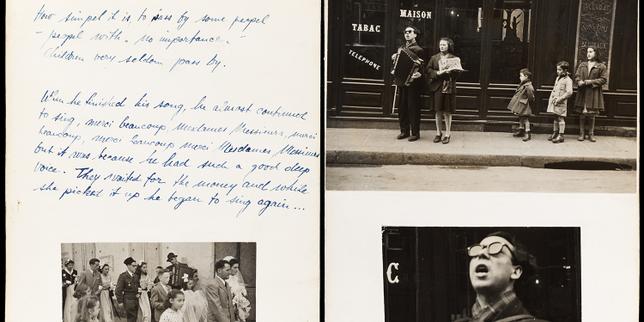
The collection, recently published by Delpire, consists of roughly 80 prints that feel less like memories and more like surveillance. Frank was testing the limits of layout and sequence, a skill that would later become his primary weapon. He wasn't just taking photos; he was building a visual language that prioritized mood over information.
"In some 80 prints freely laid out, he captures the streets, the inhabitants and the ordinary objects of the city."
This official description undersells the tension present in the work. Frank’s Paris is remarkably lonely for a city known for its crowds. By focusing on ordinary objects, he was rejecting the humanist photography championed by his contemporaries like Henri Cartier-Bresson. There is no "decisive moment" here, only a series of lingering stares at things others would find insignificant.
Critics often overlook how much of Frank's later skepticism toward the American Dream was actually forged in the post-war fatigue of France. The frames are tight, the shadows are heavy, and the subjects seem unaware they are being observed. This was the laboratory where he learned that a blurred figure or a tilted horizon could convey more truth than a sharp, centered portrait.
The Long Game of Visual Sabotage
The 1949 album serves as a technical bridge between European tradition and the gritty realism that would eventually define the 1960s. It reveals a photographer who was already bored with beauty. While his peers were chasing the sublime, Frank was obsessing over the texture of the sidewalk. This wasn't a lack of skill; it was a deliberate pivot toward the uncomfortable.
Founders and creators often talk about finding a unique voice as if it happens in a vacuum. Frank’s Paris portfolio proves that the most influential work is usually the result of a long, quiet gestation period spent rejecting the status quo. He spent years practicing the art of the "wrong" photo before he ever stepped foot on a cross-country Greyhound bus.
The real value of this archive isn't in its nostalgia, but in its display of early-stage conviction. Frank was betting that the world was tired of being lied to by perfect compositions. Whether this bet would pay off was still a decade away from being settled, but the blueprint was already hidden in a gift for his girlfriend.
The ultimate test of an artist's longevity isn't their final masterpiece, but whether their earliest, most private experiments hold up under modern scrutiny. For Frank, the Paris work confirms that his cynicism was never a gimmick—it was his original lens. The success of this release will be measured by whether it forces a total rewrite of the history books regarding the origins of the New Wave aesthetic.

Editeur PDF gratuit — Modifier, fusionner, compresser