







The Memory Merchant: Dismantling the Cinema of René Chateau
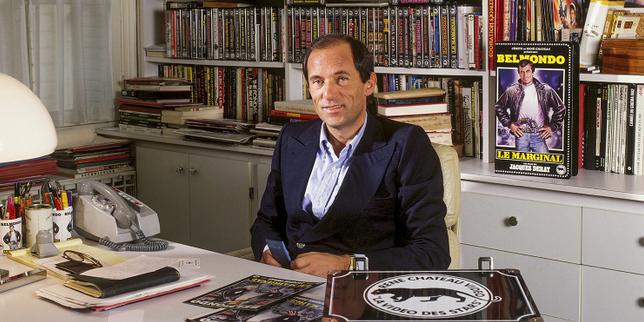
The Architect of the Living Room Screen
In a quiet corner of Paris, a man once sat surrounded by the smell of aging paper and the heavy scent of celluloid. René Chateau did not just watch movies; he owned the memory of them. When he passed away, he left behind a labyrinth of artifacts that chronicled a specific, gritty era of French culture.
Long before digital streams turned cinema into an invisible utility, Chateau understood that a film was something you could hold. He was the man who brought the kinetic fury of Bruce Lee to French neighborhoods. He recognized that the tactile nature of a VHS box was as important as the light hitting the screen.
Working closely with Jean-Paul Belmondo, he helped construct the image of the rogue, the charmer, and the everyman hero. Their partnership was not merely a business arrangement but a shared understanding of what the public craved. They gave the audience a reflection of themselves that was slightly more daring and infinitely more stylish.
The Weight of Paper and Ink
The upcoming auction at Drouot represents more than a liquidation of assets. It is the dispersal of a singular, insatiable obsession. Thousands of posters, some printed on fragile paper that feels like dried leaves, tell the story of a man who could not stop collecting the visual identity of the twentieth century.
Chateau was an authentic cinephile who operated with the precision of a merchant. He amassed one of the most significant private film libraries in existence. His company became the gateway for millions of people to discover the dark corners of film noir and the bright explosions of action cinema.
I spent my life chasing the shadows on the wall, only to find that the most beautiful part was the machine that projected them,
reflected an associate of the late distributor when considering the sheer scale of the archive. This sentiment captures the duality of Chateau’s life: he was a businessman who dealt in dreams, yet he remained grounded in the physical reality of his inventory.
The Ghost in the Machine
Walking through the rows of items prepared for sale, one feels the silence of an industry that has moved on. The vhs tapes, once the pride of every French household, are now relics. They represent a time when choosing a film required a physical journey to a store and a commitment of space on a shelf.
There is a specific melancholy in seeing a collection of this magnitude broken apart. Each poster and each reel was a choice made by a person who believed that cinema was worth preserving in its most material form. Now, collectors will carry away fragments of this empire, scattering the fragments across the globe.
As the gavel falls on the final lot, the physical manifestation of Chateau’s vision will vanish. We are left to wonder what happens to the soul of a medium when its physical anchors are removed. Perhaps the true value was never in the paper or the plastic, but in the way one man’s passion forced a nation to stop and look at the screen.
Outside the auction house, the sun sets over the Seine, casting long shadows that look remarkably like the flickering frames of an old projector. In the end, the films remain, but the hands that held them are finally letting go.

Generateur d'images IA — GPT Image, Grok, Flux