







The Lens of Return: Akínolá Davies Jr and the Architecture of Memory
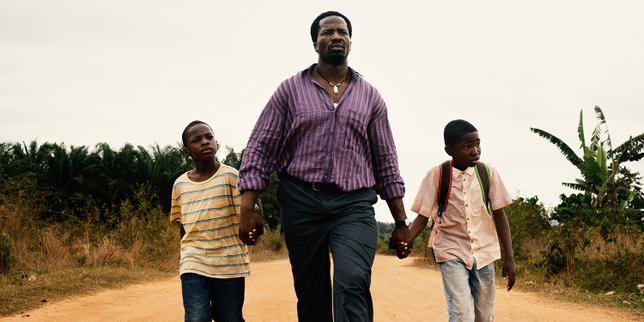
The Weight of a Second Glance
In a small studio tucked away from the humidity of Lagos, a man focuses a lens on a specific shade of ochre dust settling on an old dashboard. Akínolá Davies Jr does not see a city of statistics or chaotic transit; he sees the precise choreography of survival and the soft geometry of his own childhood. Before he was an acclaimed filmmaker, he was a DJ sensitive to the shifts in a room’s temperature, a skill he later brought to commercials for luxury fashion houses. Now, he has turned his gaze toward the distance between a father and a son.
His debut feature, A Day with My Father, functions less as a traditional narrative and more as a sensory map. It is a work of patience that earned him recognition at Cannes and a BAFTA, signaling a departure from the frenetic pace of his earlier music videos. He seems less interested in the spectacle of the metropolis and more concerned with how a person carries their history inside a crowded bus or during a quiet walk through a familiar neighborhood.
I spent years trying to create images that felt perfect, only to realize that the most beautiful things in Nigeria are the ones that have been weathered by time and touch.
The film follows a path that feels almost like a haunting. By choosing to release this work now, Davies invites us to consider what happens when a migrant returns home not as a tourist, but as a witness. He captures the specific light of West Africa—the kind that flattens shadows and makes every color feel like a memory beginning to fade.
The Textures of a Shared Past
Watching the movement on screen feels like eavesdropping on a private conversation between generations. Davies uses the camera to bridge the gap between his British identity and his Nigerian roots, finding a middle ground in the quiet rituals of daily life. The film is a physical experience, saturated with the sounds of a city that never stops talking to itself, yet it remains intensely focused on the two men at its center.
There is a particular rhythm to how he portrays Lagos, one that avoids the clichés of tropical sprawl. Instead, he lingers on the way a shirt collar is pressed or the specific tension in a handshake. These small gestures serve as an anchor for a story that could easily have drifted into the abstract. For Davies, the personal is the only reliable way to talk about history without losing the human element.
His transition from the polished world of high fashion to this raw, intimate storytelling suggests a filmmaker who has found his true frequency. He is no longer concerned with selling a dream or a brand; he is occupied with the task of preserving a feeling. The result is a piece of cinema that breathes, occasionally faltering in its pace like a real human breath, which only makes it more believable.
As the film prepares for its theatrical release, it stands as a quiet defiance against the digital noise of the present. It asks the viewer to slow down and notice the dust, the light, and the silence. When we look at our own origins, we rarely see a straight line, but rather a series of overlapping circles. Davies has simply decided to trace those circles until they lead him back to the man who gave him his name.

Generateur d'images IA — GPT Image, Grok, Flux