







The Laboratory at Sea: Why the Ocean Surface is the New High-Tech R&D Floor
The Great Decoupling of Observation and Reality
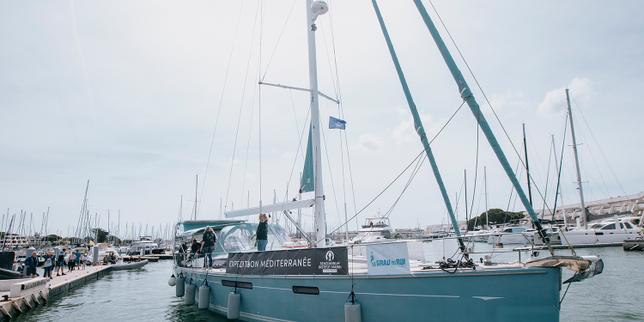
In the mid-19th century, the Victorian craze for glass aquariums attempted to bring the mystery of the deep into the drawing-rooms of London. It was the birth of a containment culture, where we understood nature by pinning it behind glass or under a microscope. We were spectators of the wild, not participants in its preservation. Today, that dynamic is undergoing a silent reversal. The recent initiative at Seaquarium in Grau-du-Roi, where aquarium staff exchange their filtered tanks for the unpredictable swells of the Mediterranean, reflects a broader organizational shift from maintenance to active field exploration.
This transition mirrors the way software engineering evolved from siloed development to DevOps. Just as engineers now must live with the code they deploy in production, marine biologists are increasingly required to bridge the gap between artificial ecosystems and the raw data of the open sea. By sending employees on multi-year tracking expeditions, the institution acknowledges that expertise is no longer a static asset stored in a building. Expertise is a flow state that requires constant contact with the source material.
The future of environmental work belongs to those who view their office not as a destination, but as a portal to the field.
From Curators to Field Agents: The Knowledge Economy of the Mediterranean
The Mediterranean has long been a victim of the 'empty sea' myth—a body of water so heavily trafficked by industrial shipping and tourism that we assumed its biological stories were already written. However, data-driven expeditions show that we are merely at the beginning of mapping its genetic and behavioral complexity. When aquarium specialists step onto a boat, they bring a unique eye for detail that generalist researchers might lack. They understand the nuances of stress, growth, and interaction in ways that only comes from daily caretaking.
This movement represents a pivot from the spectacle of the aquarium to the utility of the laboratory. The institution is no longer just a place where families go on a Sunday; it is becoming a node in a decentralized network of marine data collection. Each employee returning from sea carries back more than just observations; they bring a shift in organizational culture. They move from being curators of a collection to being agents of an ecosystem.
This shift is economically significant. In a digital economy where attention is the primary currency, authenticity is the scarcity. A facility that can prove its staff are actively identifying new biodiverse hotspots in the Gulf of Lion commands more authority than one that simply displays imported species. Science-as-a-Service is becoming a viable model for private institutions seeking to justify their existence in an environmentally conscious market.
The Proliferation of the Citizen Scientist
We are witnessing the democratization of high-level field research. When a local institution invests in its own maritime expeditions, it bypasses the traditional bottlenecks of academic funding. This is the industrialization of curiosity. By equipping staff with the tools to document Mediterranean biodiversity, the Seaquarium is effectively running a distributed sensor network. The boat is the hardware, the staff are the sensors, and the biodiversity data is the valuable output.
This model will eventually scale beyond professional biologists. We are approaching a moment where the boundary between a 'tourist' and a 'researcher' blurs into a single category of participant. If an aquarium employee can become a field agent, so can the digital marketer or the founder who visits the coast. The technology to track migration patterns or water acidity is becoming as portable as a smartphone, turning every nautical mile traveled into a potential data point.
Five years from now, our relationship with the ocean will not be defined by what we see through a glass pane, but by the real-time streams of data we contribute to while traversing its surface. The aquarium of the future will not be a building in a coastal town, but a global, interconnected map of life where every human on a boat is an active contributor to the planet's survival manual.
Planificateur social media — LinkedIn, X, Instagram, TikTok, YouTube