







The Guéant Pivot: Why Sarkozy’s Gatekeeper Just Became the Prosecution’s Best Asset
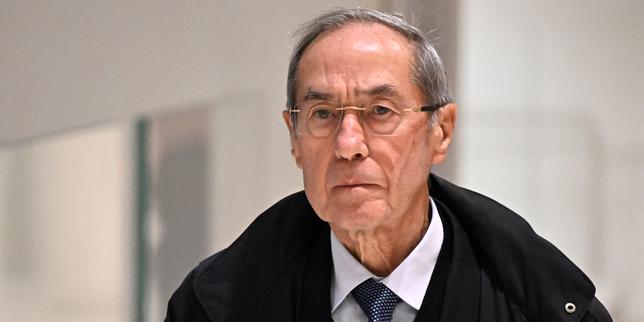
The Architect Becomes the Wrecking Ball
The institutional memory of the French right is currently undergoing a painful self-correction. For years, the narrative surrounding the alleged Libyan financing of Nicolas Sarkozy’s 2007 campaign was one of total denial, framed as a conspiracy of disgruntled foreign actors. Claude Guéant, the man often described as the former president's 'brain,' was the primary enforcer of this silence.
His recent appearance in the appeals court suggests a fracture in that historical record. Guéant is no longer playing the role of the loyal lieutenant. Instead, his testimony has introduced fresh complications for a defense strategy that previously relied on a unified front. The shift is not just a personal betrayal; it is a structural failure of a political machine that once seemed impenetrable.
The defense argues that no such funds ever existed, yet the testimony from the inner circle now points toward financial movements that remain unaccounted for in official ledgers.
The discrepancy lies in the details of logistics. Guéant was the individual who managed the day-to-day operations of the interior ministry and the presidency. He didn't just see the policy; he saw the plumbing. When a man who knows where every pipe is located starts pointing at leaks, the entire infrastructure is at risk of collapse.
Tracing the Long Arc of Institutional Power
To understand why this testimony carries such weight, one must look past the 2007 campaign and into the deep history of the French administrative state. Guéant first appeared in the public record in August 1976, working as a regional secretary for economic affairs in Guadeloupe. He spent forty years mastering the art of the bureaucratic paper trail, making him the most dangerous witness possible.
His career was built on the meticulous management of crises. This experience makes his current 'difficulty' in supporting the former president's version of events particularly damning. If a professional record-keeper cannot find a way to align his memory with the official defense, it suggests the facts have become too rigid to bend.
Observers of the trial note that Guéant’s shift likely stems from a pragmatic assessment of his own legal exposure. In the high-stakes environment of French judicial inquiries, loyalty is often the first casualty of a prison sentence. By providing testimony that challenges Sarkozy’s stance, Guéant is essentially performing a forensic audit of his own career in real-time.
The Cost of Selective Memory
The prosecution is now focusing on the gaps in Guéant’s previous statements. They are questioning why certain financial arrangements are only now coming to light after years of strategic ambiguity. The money trail in the Libyan case has always been obscured by layers of intermediaries and diplomatic fog.
Guéant’s new positioning acts as a flashlight in that fog. He is providing context to meetings and memos that were previously dismissed as routine statecraft. This is not a sudden epiphany of conscience; it is a calculated response to a prosecution that has gradually tightened its grip on the paper evidence.
The defense is currently scrambling to frame Guéant as an unreliable narrator, but this is a difficult sell. You cannot spend twenty years characterizing a man as the most competent official in France only to label him confused when he speaks against you. The contradiction is becoming the central theme of the proceedings.
The ultimate resolution of this case will not depend on grand speeches or political theater. It will hinge on whether the court chooses to believe the man who spent four decades filing the reports, or the man who merely signed them.

Createur de videos IA — Veo 3, Sora, Kling, Runway