







The Ghost in the Schoolyard: Brittany’s Old War Over the Desk and the Altar
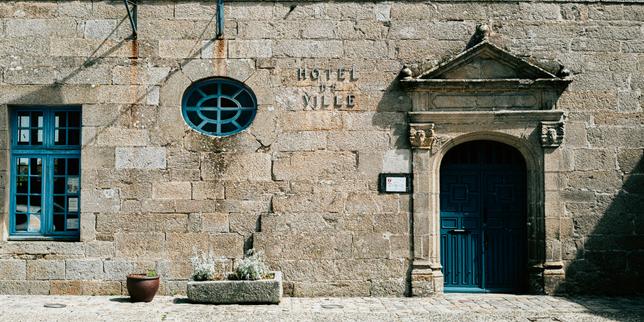
The Anatomy of a Resignation
In the quiet commune of Moncontour, nestled within the Côtes-d’Armor, the air usually carries the scent of damp stone and woodsmoke rather than political rebellion. Yet, not long ago, a newly elected mayor sat in his office and realized that a few lines in a ledger had made his position untenable. He wasn't dealing with a financial scandal or a criminal investigation, but with something far more ancient: the price of a child’s chair in a Catholic classroom.
When he stepped down, it wasn't just a local administrative hiccup; it was a surrender to a cultural tension that has defined this corner of France for centuries. He found himself caught between the secular mandates of the republic and the deep-rooted tradition of parochial education. In Brittany, the school is never just a school; it is a monument to an identity that predates the modern state.
The Weight of the Parish Ledger
For the residents of these granite villages, the choice of where to send a child for primary school is often more about lineage than curriculum. The école privée, almost always Catholic, stands as a rival to the école publique, the secular symbol of the French nation. This dual system has existed in a delicate, often uncomfortable balance, kept upright by a complex web of state subsidies and local tax contributions.
The friction begins when the municipal council must decide how to divide the communal purse. Every euro sent to a private establishment is viewed by some as a betrayal of the secular ideal, a crack in the foundation of the laïcité that defines French civic life. For others, withholding those funds is an act of hostility against a community pillar that has educated their families for generations. It is a zero-sum game played out in the fluorescent light of community halls.
The ledger doesn't just show numbers; it shows where our loyalties lie, and in a small town, everyone is watching the pen.
This struggle is not merely academic. In smaller communes where the population is aging and the number of young families is shrinking, the survival of a school is the survival of the village itself. If one school closes, the bakery follows, then the pharmacy, and eventually the town becomes a museum. The competition for funding is, in many ways, a desperate fight against the encroaching silence of rural depopulation.
The Secularism of the Stone
To understand why a mayor would resign over a school subsidy, one has to look at the geography of Brittany. The region has the highest density of private education in France, a legacy of a time when the church was the primary provider of literacy and moral instruction. Even as the pews have emptied, the school gates have remained crowded. The institution has outlived the fervor of the faith it once taught.
Modernity was supposed to smooth over these old divisions, replacing sectarian loyalties with a unified, digital-first citizenship. Instead, the scarcity of resources has sharpened the blades of the old conflict. When a council meets to discuss roof repairs or canteen prices, they are debating the very soul of the commune. The local politics of Brittany serve as a reminder that history is rarely buried; it is merely waiting for a budget meeting to resurface.
As the sun sets over the medieval walls of Moncontour, the schools sit empty for the night, their playgrounds silent. A new administrator will eventually take the mayor's seat, and the same ledger will be waiting on the desk. The children will return in the morning, unaware that their presence in a particular classroom is an act of historical persistence, a tiny flicker in a fire that has burned since the revolution. We are often told that technology and globalization have made these old borders irrelevant, yet here, the distance between a public desk and a private altar remains the most significant span in the village.
Createur de films IA — Script, voix et musique par l'IA