







The Ghost in the Projection Room: Corinne Luchaire and the Price of Fame
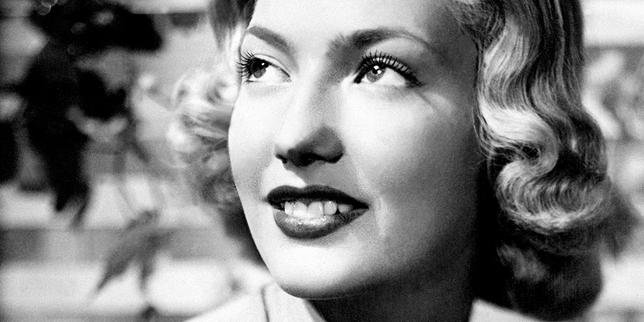
In the dim warmth of a Parisian screening room, the flickering light of a projector used to find a face that looked like the future. Corinne Luchaire had that rare, translucent quality that cameras adore. At seventeen, she wasn't just an actress; she was a sensation, a girl who seemed to carry the morning sun in her eyes even as the shadows of 1939 began to stretch across the continent.
By the time the tanks rolled into the capital, the sun hadn't set on her career. Instead, it grew unnervingly bright. While the rest of the city learned the grim arithmetic of rationing and curfews, Luchaire moved through a gilded world of champagne and jazz. She was the daughter of Jean Luchaire, a journalist who chose to align himself with the occupying forces, and that connection turned her life into a high-stakes performance played out in the most exclusive salons of the Occupation.
The Gilded Cage of Collaboration
Life for the young star became a whirlwind of social obligations that felt like a dream but acted like a trap. She was the face of a specific, dangerous kind of normalcy. In the eyes of the elite, she was a symbol of continuity, proof that the party didn't have to end just because the world was at war. She danced with officers and dined with diplomats, her youth acting as a shield against the reality outside the velvet curtains.
She seemed to move through those years with a strange, detached lightness. It was the insouciance of someone who believed the music would never stop. While others risked everything in the shadows of the Resistance, Luchaire was busy being seen. Her presence at a party was a political statement, whether she understood the gravity of it or not. She was no longer just a girl who could act; she was the aesthetic of an era that much of France was desperate to forget.
The screen captures a beauty that has no conscience, leaving the audience to decide where the performance ends and the betrayal begins.
When the liberation finally came, the music didn't just stop; it was silenced with a violent finality. The same crowds that might have cheered her at a premiere now looked at her with a chilling coldness. The grace that once made her a star was now viewed as a mark of complicity. She found herself caught in the purge, stripped of her national dignity, a legal status that essentially erased her from the society she had once charmed.
A Final Act in the Shadows
The transition from the spotlight to the courtroom was a brutal awakening. The glamour evaporated, replaced by the sterile reality of a prison cell and the crushing weight of public hatred. She was no longer the ingenue of French cinema; she was a pariah, a living reminder of a period that the nation wanted to scrub from its memory. But the physical toll was even swifter than the legal one.
Tuberculosis, a slow and patient killer, began to hollow her out. By 1950, the woman who had once been the toast of Paris was gone at the age of twenty-eight. She died in a world that had moved on, her name relegated to the footnotes of history books and the occasional mention in film archives. Her story is now the heartbeat of Xavier Giannoli’s new film, Les Rayons et les ombres, which attempts to peel back the layers of her complicated legacy.
Giannoli doesn't look for easy answers or simple villains. Instead, the film explores the gray space where ambition meets apathy. It asks what happens when a person treats a historical catastrophe as nothing more than a backdrop for their own social rise. Luchaire’s life wasn't a tragedy in the classical sense, but a series of choices that led to a wall.
As we watch her story retold on screen this March, the ghost of Corinne Luchaire lingers in the air. She remains a haunting figure, a girl who wanted to be loved by everyone and ended up being claimed by no one. It leads one to wonder: if the cameras were turned on us during our darkest moments, would we be the hero of the story, or just another face in the crowd, trying to stay in the light?
Planificateur social media — LinkedIn, X, Instagram, TikTok, YouTube