







The Ghost in the Machine: How Digital Grief Became a Political Weapon
Late on a Tuesday evening in July, a local reporter in the Eure-et-Loir region checked his phone to find a silence that felt heavier than usual. The news of Olivier Marleix’s death began as a whisper in a few private group chats before it erupted into the digital equivalent of a wildfire. By the time the sun rose, the tragic reality of a politician’s final struggle had been stripped of its privacy and repurposed into a sprawling, participatory mystery.
The Architecture of an Online Obsession
In the quiet corners of the internet where skepticism is a badge of honor, the official record is rarely viewed as a ceiling. It is seen as a floor—something to be dismantled and searched for trapdoors. Within hours of the announcement, the grief surrounding the Les Républicains deputy began to mutate into something far more clinical and cold. Every public statement he had ever made was mined for hidden signals, a process of digital archaeology that sought to find a conspiracy where there was only a human tragedy.
This phenomenon isn't merely about the people involved; it is about the mechanics of our attention. Platforms are designed to reward the most friction-filled content, and few things provide more friction than the suggestion of a state secret. The digital architecture we inhabit doesn't just host these theories; it nourishes them by suggesting the next video, the next thread, and the next suspicious coincidence to those already predisposed to doubt.
The screen creates a distance that makes us forget we are dissecting a life; we treat these tragedies like we are solving a puzzle in a video game rather than mourning a neighbor.
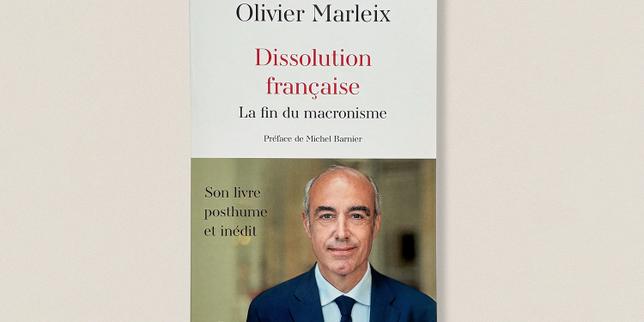
The human impulse to find patterns is a survival mechanism, but in the hands of a thousand anonymous accounts, it becomes a weapon. We see this in the sudden, sharp spike in interest for his posthumous work, Dissolution française. A critique of the current political order that might have once been read as a standard policy argument was suddenly being treated as a desperate, final testimony, a message from beyond the grave for those clever enough to decode it.
The Commerce of Skepticism
There is a specific kind of economy that develops around these moments of collective confusion. It is an economy of engagement where the currency is the 'hidden truth.' When the book climbed the sales charts, it wasn't just reflecting a sudden interest in French legislative history. It was a physical manifestation of a digital fever, a way for people to feel they were participating in a resistance against an imagined silence.
We often think of book sales as a metric of intellectual curiosity, but here they served as a gateway to membership in a secret club. To buy the book was to buy a piece of evidence. This transition from reader to investigator is a hallmark of how we consume politics now, where every document is a potential 'smoking gun' and every silence is a confirmation of a cover-up.
Behind the data points and the viral hashtags, there is a family mourning a man who was more than a headline or a symbol of legislative pushback. The tragedy of the modern public life is that even in the finality of death, one is not allowed to rest. The digital ghost of the statesman is forced to perform forever in a play written by strangers who never knew the sound of his voice or the weight of his burdens.
As we scroll through the endless updates and the grainy screenshots, we might ask ourselves what we are actually searching for. Perhaps it is easier to believe in an elaborate, sinister plot than to accept the fragile, quiet reality of human suffering. In the end, the most uncomfortable truth isn't found in a secret file, but in the mirror—watching as we refresh the page, waiting for a story that will never have a satisfied ending.

OCR — Texte depuis image — Extraction intelligente par IA