







The Ghost in the Editing Suite
The Weight of a Forgotten Name
In a small, dimly lit café on the outskirts of Paris, a retired script supervisor traces the rim of her espresso cup with a trembling finger, recalling a man she swears she once knew. She speaks of Alexandre Trannoy not as a legend, but as a presence—a nervous energy behind a camera lens during the height of the French New Wave. For her, he was as real as the smell of celluloid, yet the history books have remained stubbornly silent about his contributions.
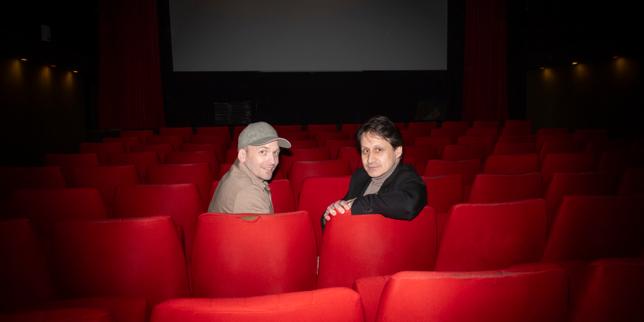
This quiet erasure is the starting point for L’Œuvre invisible, a documentary by Vladimir Rodionov and Avril Tembouret that functions more like a seance than a traditional biography. The filmmakers embark on a journey to find the traces of a director who allegedly produced fifteen films between the 1950s and the 1970s. Despite his supposed collaborations with titans like Anouk Aimée and Claude Lelouch, Trannoy exists now only in the fragile architecture of human memory.
We live in a time obsessed with digital permanence, where every minor creative act is indexed, tagged, and archived for eternity. The idea that a man could spend two decades creating art alongside the most famous faces of his generation, only to vanish into the cracks of time, feels like a structural failure of our collective record. It suggests that identity is far more precarious than we would like to admit, built on the shifting sands of public recognition rather than the work itself.
The Architecture of Absence
Rodionov and Tembouret do not rely on dusty canisters of film found in a basement, because those canisters do not seem to exist. Instead, they build a portrait of Trannoy through the testimonies of living witnesses who describe a man of immense talent and even greater misfortune. These interviews create a strange friction; the more people speak of him, the more he feels like a phantom limb of French cinema—something felt but no longer there.
There is a specific kind of melancholy in watching icons like Jacques Perrin talk about a colleague who fell through the floorboards of history. When Perrin speaks, his eyes search the middle distance as if trying to pull a face out of a fading photograph. He isn't just remembering a man; he is mourning a version of the past that refused to solidify into a legacy.
"He was the one who saw the light differently, but the world wasn't looking at him when it mattered most."
The documentary forces us to confront the digital anxiety of being forgotten. In our current era, we assume that if something isn't on a server, it never happened. Trannoy becomes a symbol for every artist who worked in the shadows, every developer whose code was rewritten, and every creator whose name was omitted from the credits. He is the patron saint of the invisible worker, the ghost in the machine of the cultural industry.
The Fragility of the Digital Archive
As the film progresses, the search for Trannoy begins to feel less like a mystery and more like a meditation on the nature of truth. The directors meticulously piece together fragments of stories, yet the central figure remains blurred. This ambiguity is intentional, reflecting the way we curate our own lives in a world that demands constant visibility. We are so busy documenting our existence that we have forgotten how to simply exist without a record.
The creators of L’Œuvre invisible use the absence of footage as a creative constraint, turning a lack of evidence into a haunting visual language. They show us empty streets, quiet editing bays, and the expectant faces of those waiting for a film that might never play. It is a reminder that the most profound stories are often the ones that leave no footprints, the subterranean rivers of influence that shape the surface of our world without ever breaking through.
Ultimately, the search for Alexandre Trannoy is a search for ourselves. We look for him because we fear his fate; we want to believe that our efforts, our late nights, and our creative sparks will leave a lasting mark. By documenting a man who was nearly erased, Rodionov and Tembouret perform a radical act of reclamation. They suggest that even if the work is lost, the fact that it was made—and that it touched others—is enough to justify a life.
As the screen fades to black at the end of the film, one is left with the image of an old film projector humming in an empty room. The light hits the dust motes in the air, creating shapes that look, for a brief second, like a human profile before drifting away into the dark. It is a quiet, shimmering reminder that some of the most important things we do will always remain invisible, tucked away in the hearts of those who happened to be watching when the light was just right.

OCR — Texte depuis image — Extraction intelligente par IA