







The Geometry of Exile: Why a 45-Year-Old Claim to Power is Reactivating in Paris
The Persistence of Symbolic Capital
In the late nineteenth century, European salons were often the quiet birthplaces of distant political upheavals. Today, an eerily similar phenomenon is taking shape within the limestone facades of Paris. Reza Pahlavi, the heir to a throne discarded in 1979, has begun a sophisticated recalibration of his international influence, moving from a figure of historical memory to a practical piece on the geopolitical chessboard.
This is not merely a story of nostalgia or the yearning for a lost crown. It is a study in the endurance of political legitimacy and how it can be stored, like potential energy, for decades before being converted into kinetic action. The recent escalation of regional tensions has served as the catalyst, turning an exiled prince into a focal point for Western interests looking for a post-theocratic blueprint.
He is utilizing a modern infrastructure of power that his ancestors would scarcely recognize. Instead of secret societies, Pahlavi is supported by high-stakes legal minds and strategic communication specialists who translate ancient dynastic claims into the modern language of democratic transition. Legitimacy, once inherited through blood, is now being audited by policy wonks and international law experts.
The most potent political movements are often those that survive long enough to see their previous failures forgotten and their previous stability remembered with fondness.
The Infrastructure of Influence
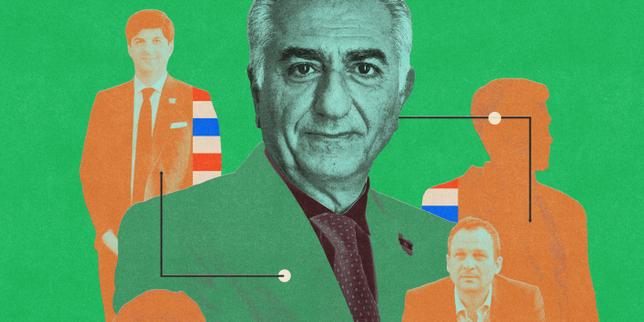
Paris has always functioned as a laboratory for Iranian political thought, having hosted both the catalysts of the 1979 movement and now its most vocal critics. Pahlavi’s current maneuverings represent a pivot toward the center of European decision-making. By building a network that spans the Atlantic—connecting the American conservative right with the French political establishment—he is creating a pincer movement of diplomatic recognition.
This network operates with the precision of a corporate merger. His advisors are not just courtiers; they are architects of optics. They understand that in a digital age, a government-in-exile must function like a startup, focusing on brand equity and strategic partnerships. They are betting that the current state structure is brittle, and that a ready-made alternative is the only way to prevent a vacuum.
The move to France is a tactical choice. While Washington offers military and economic muscle, Paris provides the intellectual and diplomatic veneer necessary to satisfy the global community. It is a sophisticated game of geopolitical positioning where the objective is not just to be seen, but to be seen as inevitable.
The Long Tail of Dynastic Continuity
History suggests that the return of a monarchy is rarely about the individual wearing the crown; it is about the restoration of a perceived social contract. Pahlavi is positioning himself as the guardian of that contract, a bridge between a pre-ambitious past and a secular future. This strategy relies on the collective memory of an era that, despite its flaws, represented a more integrated version of national identity.
Critics often mistake this for a simple desire to reclaim a palace. However, the depth of the current networking suggest a broader ambition: to act as the unifying thread for a fragmented opposition. By engaging with the French power structure, he is signaling to internal Iranian factions that a credible, internationally-backed alternative exists outside their borders.
As the friction between regional powers continues to increase, the value of a 'king-in-waiting' rises. He represents a predictable outcome in an unpredictable theater of war. Stability is the most valuable currency in international relations, and Pahlavi is marketing himself as the ultimate hedge against chaos.
By 2029, we may look back at these Parisian meetings as the moment when the theoretical future of the Middle East was mapped out in a drawing room, proving that in the world of power, zero-sum games are rarely finished until the last heir stops speaking.
Createur de films IA — Script, voix et musique par l'IA