







The Funeral Edit: How the Attention Economy Optimized Our Final Goodbyes
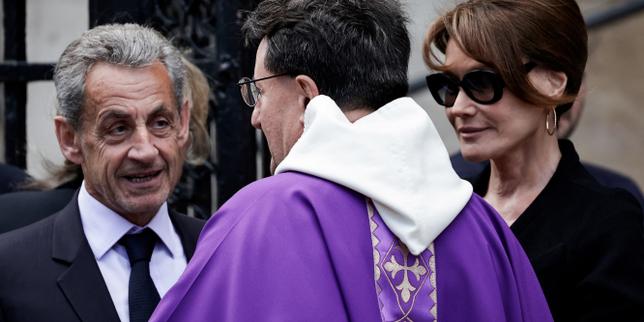
Maxime sat in a dimly lit apartment, pinching his fingers on his phone screen to zoom in on a split-second frame. The video on his feed was somber, capturing the heavy atmosphere of a high-profile funeral in Paris. But Maxime was not looking at the weeping relatives or the floral arrangements. Instead, his eyes were locked onto the ankle of former French President Nicolas Sarkozy, who was walking slowly toward the church entrance.
He wanted to see if he could spot the outline of an electronic monitoring bracelet beneath the politician’s dark dress socks.
This bizarre moment of digital detective work is not an isolated obsession. It is part of a rapidly growing, highly lucrative, and deeply strange subgenre of social media content: the funeral edit. Across TikTok, Instagram Reels, and YouTube Shorts, videos documenting the final farewells of celebrities, politicians, and cultural icons are racking up millions of views.
What used to be a solemn, heavily mediated television broadcast has been decentralized. Now, ordinary smartphones capture every micro-expression of the grieving elite, turning moments of profound human vulnerability into fuel for the algorithmic fire.
The Great Decoupling of Dignity
To understand how we arrived at a place where people zoom in on a mourner's socks, you have to look at how these platforms reward attention. In the digital economy, watch time is the only currency that never devalues. Creators have discovered that death, when packaged correctly, is an incredibly potent retention hook.
These videos are rarely shared out of genuine historical interest. Instead, they are engineered to keep a viewer's thumb from sliding upward. Typically, they feature slow-motion footage of VIP guests arriving at a cathedral, set to melancholic piano chords or slowed-down pop ballads. The text overlays are simple, often asking viewers to look closer.
This format strips away the context of the life being celebrated and replaces it with a gamified hunt for detail. Commenters debate whether the widow looked too composed, why a rival politician sat in the third row, or if an actress wiped away a real tear for the cameras.
The comment sections beneath these videos operate like amateur forensics labs. Users dissect facial expressions, analyze the body language of former heads of state, and debate the authenticity of tears. It is a highly interactive form of voyeurism that transforms private grief into a collective puzzle.
How the Algorithm Feeds on Solemnity
For digital marketers and platform developers, this trend reveals a fascinating and somewhat chilling truth about modern user behavior. The algorithm does not distinguish between joy and grief; it only measures engagement. When a user pauses to check if a disgraced politician is wearing an electronic tag at a funeral, the system registers that pause as high interest.
Consequently, more funeral clips are pushed into that user's feed. What begins as a passing curiosity quickly becomes a habit. The platform’s code learns that solemnity sells, and creators respond by churning out more of it.
"We have built systems so sensitive to human curiosity that they will happily monetize our instinct to stare at a car crash, or in this case, a casket."
This loop creates a strange aesthetic shift. Creators who once focused on fashion, travel, or beauty are now repurposing their editing skills for the cemetery gates. They use the same jump cuts, color grading, and audio trends that you would find in a high-end travel vlog, applying them to the black-clad figures walking up the steps of Saint-Sulpice.
The result is an eerie hybridization of luxury lifestyle content and memorial service. The mourners are dressed in designer coats, wearing dark sunglasses that hide their eyes, stepping out of sleek black sedans. To a teenager scrolling through TikTok, this looks less like a tragedy and more like a moody fashion show.
The Death of the Private Exit
This hunger for close-up footage changes how public figures must behave during their lowest moments. When every phone in the crowd is a potential camera, and every viewer is a potential detective looking for a hidden ankle monitor, mourning becomes a performance. There is no room for an unscripted moment.
If a public figure looks too sad, they are accused of acting for the cameras. If they look too stoic, they are labeled cold and unfeeling. The boundaries of what we consider private have shrunk to almost nothing, pushed back by the relentless demands of the vertical screen.
The challenge for developers building these platforms lies in designing systems that respect the gravity of human death without outright censoring the news. If the systems are built solely to maximize time spent on screen, they will inevitably gravitate toward these gray zones of human emotion.
The trend shows no signs of slowing down. As long as there are high-profile passings, there will be creators standing outside churches with their phones raised, and millions of users sitting in the dark, pinching their screens, looking for something hidden under a sock.
Perhaps the most revealing part of this phenomenon is what it says about the viewers themselves. We live in a time when we can access almost any piece of information instantly, yet we find ourselves searching for meaning in the grain of a compressed video clip.
As Maxime closed the app, his screen went black, reflecting his own face in the dark. He didn't find the ankle monitor, but he had spent forty minutes looking for it. The next time he opens the app, the algorithm will be waiting, ready to offer him another glimpse into the private lives of strangers who have no idea he is watching.

OCR — Texte depuis image — Extraction intelligente par IA