







The Editor in the Quiet Eye of the Storm
The Homecoming and the Heavy Air
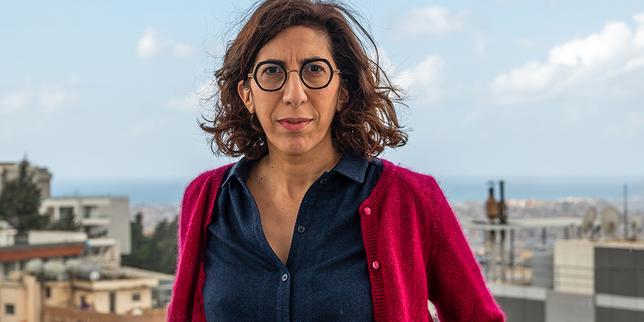
Rima Abdul Malak sat in a cafe in the heart of Beirut not long ago, watching the light catch the Mediterranean. After years in the sterile, gilded corridors of the French Ministry of Culture, she had returned to the city she fled as a child. She had come to lead L’Orient-Le Jour, the venerable French-language daily that serves as both a record and a conscience for Lebanon. At the time, the air felt thick with hope, or perhaps just the temporary absence of gravity.
She believed then that the cycle of violence had finally looked away from her birthplace. There was a sense of arrival, a feeling that the long arc of her career in Paris had been a preparation for this specific homecoming. She was no longer a minister managing the heritage of a colonial power; she was a daughter returning to a house she barely remembered but always missed. The transition from the Elysee to the editorial desk seemed like a natural progression of her own internal geography.
Then the skies changed. By early March, the distant thrum of aircraft became a rhythmic constant, a staccato pulse that defined the workflow of the newsroom. The optimism that fueled her relocation was suddenly forced to coexist with the grim reality of air strikes. Her daily life shifted from a search for cultural identity to a meditation on endurance.
The Weight of the Printed Word
The office of L’Orient-Le Jour is more than a workplace; it is a fortress of language. In a country where the political ground is constantly shifting, the act of publishing daily is a gesture of defiance. Abdul Malak found herself managing not just journalists, but survivors. The editorial meetings now involve coordinating coverage of the very plumes of smoke visible from the office windows.
"We are not merely reporting on the events; we are breathing them, and then trying to find the words that won't fail us," remarked a staff member during a particularly tense evening shift.
Writing in French in Beirut carries its own historical complexity. It is a language of diplomacy and literature, yet it must now stretch to describe the visceral sound of glass shattering three blocks away. Abdul Malak approaches this with the precision of a curator. She understands that when the physical infrastructure of a city is threatened, the intellectual infrastructure must become even more rigid and unyielding.
She moves through the newsroom with a calm that seems practiced, a remnant of her time navigating the high-stakes bureaucracy of the French government. But here, the stakes are not policy shifts or budget allocations. They are the preservation of a national narrative that is being chipped away by forces beyond the control of those who live within it. The newspaper becomes a map of what remains.
The Persistence of Recent Memories
Returning to a place of childhood trauma as an adult is often an exercise in reconciling two different ghosts. For Abdul Malak, the child who left during the civil war and the woman who returned to lead a newspaper are finally occupying the same space. She is experiencing the same sounds of conflict, but this time she holds the pen. This agency changes the nature of the fear, turning it into a form of fuel for the work at hand.
The city of Beirut has a way of absorbing its scars, of rebuilding on top of the ruins before the dust has fully settled. There is a frantic energy to the life there, a refusal to let the threat of destruction pause the pursuit of art or commerce. Abdul Malak has stepped into this flow, her presence a bridge between the Lebanese diaspora and those who never left. She represents a rare kind of return: one that is motivated by duty rather than nostalgia.
As night falls and the sounds of the neighborhood settle into an uneasy quiet, she remains at her desk. The flicker of the computer screen reflects in her eyes, a digital glow against a backdrop of ancient, precarious stone. She is waiting for the next edition to go to press, a witness to the fact that even when the earth shakes, the story continues to be written. The ink is still wet, and for now, that is enough to keep the darkness at bay.

Createur de videos IA — Veo 3, Sora, Kling, Runway