







The Diplomat Who Swapped State Secrets for the Silver Screen
The Scriptwriter in the Shadows
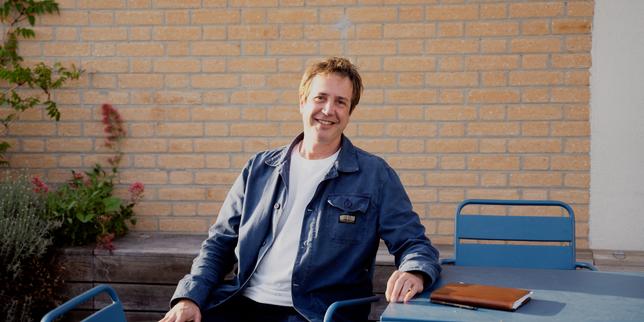
Antonin Baudry remembers the weight of the silence inside the Quai d’Orsay. Years ago, as the speechwriter for the French Foreign Minister, he moved through the gilded halls of power where every word was measured and every gesture was calculated for the history books. He was the invisible hand behind the podium, crafting the sentences that would define French identity on the global stage.
But the problem with history is that it often feels like a museum exhibit—cold, static, and untouchable. Baudry eventually walked away from the corridors of diplomacy, trading the pen of a bureaucrat for the director’s chair. He didn't just want to write the narrative; he wanted to see the sweat on the brows of the people who shaped it.
Breaking the Marble Statue
His latest project, La Bataille de Gaulle, is an ambitious two-part saga that aims to dismantle the rigid iconography of France’s most famous general. For decades, Charles de Gaulle has been a bronze monument in the public consciousness—a towering, stoic figure of the Resistance who exists more as a symbol than a man. Baudry found this version of history boring and, more importantly, inaccurate.
The filmmaker spent months digging through archives, not looking for the grand proclamations, but for the moments of doubt and the frantic energy of 1940. He wanted to capture the frantic pace of a man who was essentially a rebel starting from zero. Before he was the President, he was a soldier who decided to say 'no' when everyone else was nodding in agreement.
The goal was to strip away the myth and find the human pulse of someone who was making it up as he went along.
Baudry’s approach mimics the tension of a tech startup in its early days. There is no certainty of success, only a desperate conviction that the current system is broken. By focusing on the friction between De Gaulle and his contemporaries, the film highlights the isolation that comes with being the only person in the room who refuses to compromise.
A Cinematic Language of Urgency
The first installment of the saga, scheduled for release on June 3rd, abandons the slow pace typical of historical biopics. Instead, it pulses with a modern rhythm. Baudry uses his experience in the high-stakes world of diplomacy to ground the political maneuvering in reality. He knows how people talk when the cameras are off and the doors are shut.
He treats the liberation of France not as an inevitable victory, but as a series of high-risk gambles. This isn't a classroom lecture; it is a psychological thriller where the stakes happen to be the survival of a nation. The director insists that to understand the leader, you have to understand the outsider who was often dismissed by his peers as a nuisance or a dreamer.
This shift in storytelling marks a new chapter for French cinema, which has often treated its national heroes with a sense of religious reverence. Baudry is part of a growing movement of creators who believe that the only way to respect the past is to make it feel alive and dangerous again. He isn't interested in a hagiography; he wants to show the cracks in the armor.
As the lights dim and the first frame flickers to life this June, audiences won't see a legend descending from a mountain. They will see a man in a dusty office, clutching a radio microphone, trying to convince a fractured world to listen. It is a reminder that even the most permanent fixtures of our history were once just people standing on the edge of a cliff, wondering if they could fly.

Createur de videos IA — Veo 3, Sora, Kling, Runway