







The Diplomat of the Desert: Understanding Cardinal Jean-Paul Vesco’s Influence
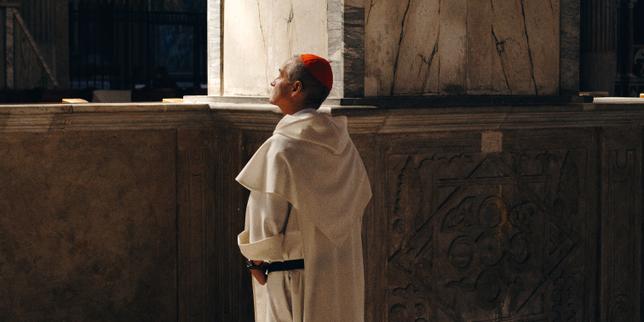
The Lawyer Who Chose the Altar
Most people view national identity as something they are born with, a fixed point on a map. For Cardinal Jean-Paul Vesco, identity is a deliberate choice. Before he was a high-ranking official in the Catholic Church, Vesco was a practicing lawyer in Lyon, France. He spent his early career navigating the intricacies of the French legal system, a background that gave him a unique perspective on justice and institutional structures.
His transition from the courtroom to the clergy was not just a change of profession, but a change of geography. After joining the Dominican Order, he found himself drawn to Algeria. This was not a temporary assignment or a brief missionary stint. Instead, he developed a deep, permanent connection to the country, eventually choosing to become an Algerian citizen in 2023. This act of naturalization was more than a legal formality; it was a signal of his total commitment to the people he serves.
Bridging Two Worlds Through Diplomacy
The upcoming visit of Pope Leo XIV to Algeria is not a random occurrence. It is the result of a specific invitation extended by Vesco shortly after the Pope’s election in May 2025. To understand why this matters, one must look at the role of a Cardinal in a country where the Catholic population is a small minority. Vesco does not just lead a religious group; he acts as a cultural translator.
- Dual Identity: Being a French-born Algerian allows him to speak to both European and North African sensibilities without being an outsider to either.
- Legal Precision: His background in law helps him navigate the complex administrative and political relationship between the Church and the Algerian state.
- Long-term Vision: By seeking citizenship, he positioned himself as a local stakeholder rather than a foreign representative.
Vesco’s approach is built on the idea of presence. In his view, the Church’s role in a predominantly Muslim nation is not to convert, but to exist as a peaceful neighbor and a partner in social progress. This philosophy has made him a trusted figure among Algerian officials, providing the necessary foundation for a papal visit to take place in a region that has often seen complicated relations with the Vatican.
What the Papal Visit Signals for the Region
When the Pope travels from Monday to Wednesday, the world will see the images of the meetings, but the substance lies in the years of quiet groundwork laid by Vesco. This trip represents a significant moment for Mediterranean diplomacy. It highlights Algeria’s role as a site of interfaith dialogue and suggests a move toward greater openness in regional international relations.
The Power of Local Leadership
Vesco’s influence stems from his refusal to remain a guest. By becoming a citizen, he removed the safety net of being a foreign expat. This creates a different kind of trust with the government in Algiers. When he talks about the future of the country, he is talking about his own home, not a place he is visiting for work.
The logistics of a papal visit are immense, requiring coordination between security forces, diplomatic corps, and religious leaders. That this visit is happening so soon after the Pope's election suggests that Vesco’s standing in the Vatican is just as strong as his standing in Algiers. He has become a vital link in a chain that connects the heart of the Catholic Church to the diverse realities of North Africa.
Now you know that the most effective diplomats are often those who are willing to change their own status to prove their sincerity. Cardinal Vesco’s story shows that understanding a culture requires more than study; it requires a willingness to belong to it.
Planificateur social media — LinkedIn, X, Instagram, TikTok, YouTube