







The Death of the 90-Minute Moat: Why Hollywood is Losing the War for Attention
The Unit Economics of Attention
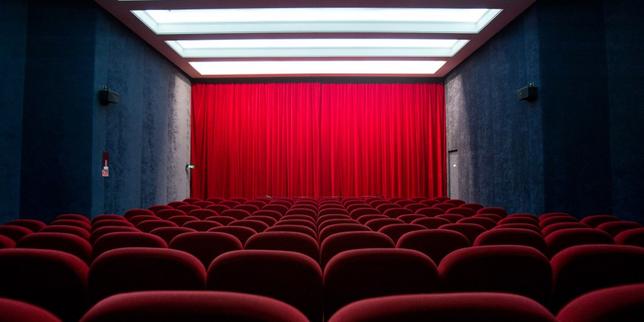
Hollywood is currently facing a liquidity crisis that has nothing to do with capital and everything to do with time-on-device. For decades, the theatrical window was a protected monopoly. You paid for a ticket, sat in a dark room, and the cost of exiting—both social and financial—was high enough to guarantee 120 minutes of undivided attention. That moat has evaporated.
The modern teenager operates on a high-velocity feedback loop. When a platform like TikTok or YouTube Shorts provides a dopamine hit every 15 seconds, a two-hour narrative arc feels like a bad investment. We are seeing a fundamental shift in the opportunity cost of entertainment. For a Gen Z or Gen Alpha consumer, committing to a full-length feature film is a high-risk trade they are increasingly unwilling to make.
This is not a content problem; it is a structural friction problem. The friction of traveling to a theater, sitting through trailers, and being unable to skip boring segments is a user experience failure in a world of instant gratification. The legacy studios are effectively trying to sell long-term bonds to a market that only wants day-trading.
The Multi-Screen Cannibalization
The family living room has become a battleground for share of eye. Even when parents manage to initiate a family movie night, the primary screen is rarely the only screen active. We are witnessing the rise of 'secondary consumption,' where the big-budget film becomes background noise for the primary interaction happening on a smartphone.
- The pacing gap: Traditional editing rhythms are too slow for users accustomed to 1.5x speed playback and instant jump-cuts.
- The feedback deficit: Cinema is a passive medium in an era where the most successful digital products are inherently interactive or social.
- The commitment penalty: The inability to 'exit' or 'swipe' creates a psychological friction that makes long-form content feel like a chore rather than a choice.
The data suggests that the 'forced viewing' model is broken. Parents are no longer just competing with other movies; they are competing with infinite, personalized feeds that require zero cognitive load to start and offer infinite exit points. When a child asks, 'Do we have to watch the whole thing?' they are performing a cost-benefit analysis in real-time.
The Distribution Disruption
The theatrical model relied on a captive audience to justify its Customer Acquisition Cost (CAC). If you can't keep the audience in their seats, the entire downstream value chain—from popcorn margins to international licensing—begins to crumble. Studios are forced to spend more on marketing to drag people into theaters, only to find that the product-market fit is declining.
The difficulty isn't just getting them into the theater; it's keeping their brains in the room once the lights go down.
We are seeing the unbundling of the narrative. Why watch a two-hour movie when you can watch the 'best parts' on a social feed in three minutes? The structural advantage of the narrative arc is being cannibalized by the efficiency of the highlight reel. This is a classic disruption play: a cheaper, faster, and 'good enough' alternative is stealing the bottom of the market and moving up.
I am betting against the recovery of the mid-budget family drama. The only theatrical winners will be high-spectacle IP-driven events that function more like theme park rides than films. For everything else, the 90-minute format is a legacy constraint that the market is actively rejecting. If you are building in the attention economy, bet on the micro-narrative or lose to the scroll.
Chat PDF avec l'IA — Posez des questions a vos documents