







The Brutal Economics of the Subjective Lens: Christopher Anderson and the Death of Neutrality
The Market Value of Subjective Truth
In an era where high-resolution sensors are a commodity, the financial premium on visual media has shifted from technical perfection to radical subjectivity. Christopher Anderson, a veteran of the Magnum Photos agency, recently released Index, a monograph spanning nearly 30 years of output. His career trajectory provides a data point for a larger trend: the migration of value from the objective reporting of war zones to the highly personal, often jarring interpretation of political power.
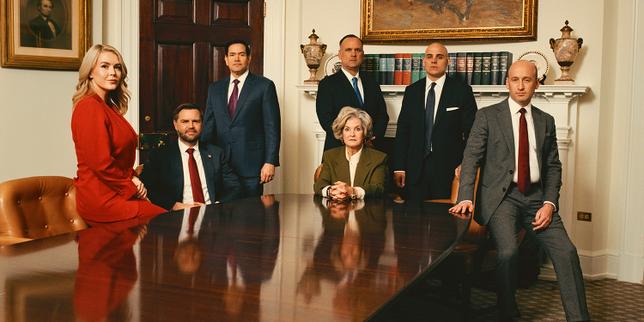
Anderson spent decades documenting conflict before pivoting to intimate portraiture, most notably his 2025 series on Donald Trump’s inner circle. These images did not aim for the balanced lighting of traditional editorial work; instead, they utilized harsh, raw aesthetics to convey a specific emotional weight. In the Attention Economy, this stylistic aggression serves as a differentiator. When every smartphone can capture a clear image, the professional must capture a perspective that a machine cannot simulate.
Quantifying the Shift from Conflict to Character
The transition from war photography to domestic portraiture is often framed as a search for peace, but the underlying mechanics suggest a strategic reallocation of creative capital. Anderson’s work in Index demonstrates a consistent methodology regardless of the setting. He prioritizes the internal state over the external event, a move that increases the lifespan of the content. Daily news photos depreciate to zero value within 24 hours; subjective art maintains its valuation over decades.
- Technical Scarcity: Anderson intentionally utilizes imperfections—blur, high contrast, and unconventional framing—to create a signature that is difficult to replicate with AI prompt engineering.
- Access as Asset: By moving into the private spaces of the White House, he converted his reputation into access, a non-fungible asset in the media industry.
- Emotional Arbitrage: He identifies the underlying tension in a room and amplifies it, creating a visual product that triggers higher engagement metrics than standard press pool photography.
Speaking on his philosophy, Anderson has been vocal about his rejection of the dispassionate observer role.
I want my photos to scream my point of view.This stance is a direct challenge to the mid-20th-century ideal of the 'invisible' photographer, signaling a new standard where the creator's bias is the primary selling point.
The Proximity Principle in Modern Media
The success of Anderson’s recent work relies on the Proximity Principle: the closer the lens gets to the subject, the more the viewer perceives authenticity. In his portraits of the Trump administration, the tight framing removes the surrounding context, forcing the viewer to confront the subject's humanity or lack thereof. This creates a high-friction experience for the audience, which is essential for breaking through the noise of digital feeds.
For developers and digital marketers, the takeaway is clear: the most efficient way to capture attention is not through broader reach, but through deeper specificity. Anderson’s Index serves as a case study in brand longevity. By refusing to be a neutral witness, he has built a catalog that functions as a historical record and a personal manifesto simultaneously. This dual-purpose content is more resilient to market shifts and technological disruption.
As AI tools begin to dominate the production of 'correct' imagery, we will see a surge in the valuation of 'flawed' human-centric perspectives. By 2027, the market for documentary photography will split entirely between automated, low-cost objective captures and high-premium, hyper-subjective visual essays that prioritize the artist's internal logic over external facts.
Chat PDF avec l'IA — Posez des questions a vos documents