







The Art of the Happy Accident: Johny Pitts and the Physics of Memory
The Beauty of the Blurred Line
Johny Pitts stood in a quiet room in Paris, watching a machine breathe life into his memories. The device wasn't a high-end digital printer capable of clinical perfection. It was a Risograph, a quirky piece of office equipment from the eighties that looks like a photocopier but acts like a silk-screen press. As the drums spun, the ink didn't always land where it was supposed to. Colors bled over edges. Textures appeared where the air was meant to be clear.
For Pitts, these imperfections weren't mistakes; they were the point. His latest exhibition, Black Bricolage, recently arrived at the Maison Européenne de la Photographie (MEP), and it challenges everything we think we know about the sharp, sterile world of modern photography. By choosing a medium that thrives on randomness, Pitts captures a version of the Black experience in Europe that is fluid, layered, and delightfully messy.
The images on the walls don't scream for attention with high-contrast gloss. Instead, they hum with the soft, grainy warmth of a story being retold by a friend. Every print carries the DNA of the machine that made it, ensuring that no two versions of the same photo are ever truly identical. It is a physical manifestation of how we remember: never quite the same way twice.
A Patchwork of Continental Identity
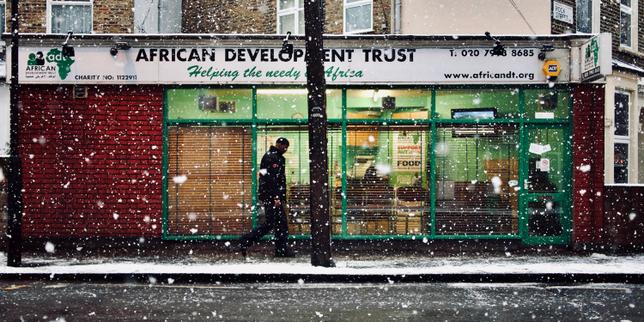
Pitts spent years traveling across Europe with a camera and a notebook, documenting a side of the continent that rarely makes it into travel brochures. He visited the high-rises of Paris, the docks of Marseille, and the quiet streets of Lisbon. He wasn't looking for monuments or grand political statements. He was looking for the quiet moments—the way someone leans against a wall or the specific shade of a neighborhood grocery store's awning.
The Risograph allows the image to become an object, a tangible piece of history that feels as fragile and resilient as the communities it depicts.
The term bricolage refers to the act of creating something new from a diverse range of available things. It is the art of the makeshift. In the context of his work, it describes how people in the African diaspora have stitched together identities from the fragments of different cultures, languages, and histories. The rough texture of the Risograph prints mirrors this process, showing the seams and the overlaps of a life built across borders.
Walking through the gallery feels like navigating a dreamscape where the geography is blurred. A street in London might sit next to a portrait from Berlin, connected only by the shared aesthetic of the ink and the common thread of the human spirit. Pitts invites the viewer to look past the technical stats of the camera and focus instead on the feeling of being present in a fleeting moment.
The Ghost in the Machine
In a world where every smartphone can capture a 48-megapixel image with perfect white balance, choosing a fickle printing method is a radical act of slowing down. The Risograph is notorious for its temperamental nature. If the room is too humid, the ink stays wet. If the paper feeds skewed, the entire composition shifts. This loss of control is exactly what gives the Black Bricolage collection its soul.
These photos feel authentic because they refuse to be polished. They acknowledge that life is often out of focus and that our surroundings are frequently composed of disparate parts that don't quite fit. By embracing the glitch, Pitts gives his subjects a sense of permanence that a digital file on a cloud server could never replicate. The physical ink sits heavy on the paper, tactile and real.
Founders and creators often obsess over the 'frictionless' experience, trying to smooth out every bump in the road. Pitts suggests that friction is where the character lives. His work at the MEP serves as a reminder that the most compelling stories are often found in the gaps between the lines, where the ink didn't quite reach and the light was just a little bit off.
As the sun sets over the Seine, the visitors leaving the MEP carry with them the quiet realization that perfection is perhaps the least interesting thing a person can strive for. The grain of the paper and the smudge of a thumbprint tell a story that a pixel never could. It leaves one wondering: in our own lives, which of our perceived flaws are actually the most beautiful parts of our design?

Editeur PDF gratuit — Modifier, fusionner, compresser