







Subverting the Lens: How Ramón Masats Reclaimed the Spanish Identity
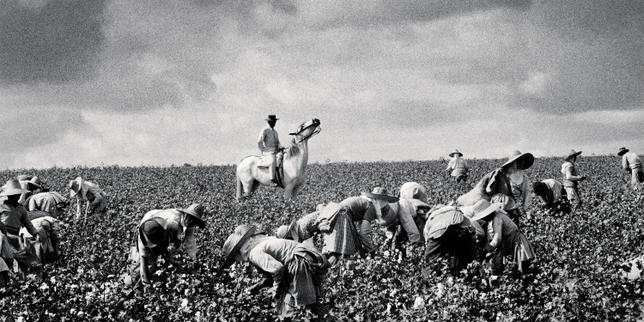
The Invisible Struggle for Authenticity
In the mid-20th century, the Spanish government launched an ambitious campaign to reshape the country's public image. The goal was simple: use photography to attract tourists and project an aura of stability. To do this, they hired a wave of talented young artists, including Ramón Masats, expecting them to produce polished, sanitized imagery of a nation under strict control.
Masats, however, had a different plan. Instead of following the script of state propaganda, he used his camera to document the quiet reality of everyday life. He looked past the grand monuments and focused on the weathered faces, the dusty streets, and the subtle gestures of a people living between tradition and modern pressure. This was not the version of Spain the authorities wanted to see, but it was the version that mattered.
The Language of Subtle Defiance
Masats practiced a technique that we might call visual subversion. He didn't take photos of protests or overt political acts; instead, he captured the human spirit in moments of vulnerability and grace. By shifting the focus away from the regime’s idealizations, he gave his subjects back their dignity. His work serves as a reminder that even under heavy censorship, an artist can speak volumes through what they choose to include—and exclude—from the frame.
- Composition as Commentary: He often used unconventional angles to make ordinary scenes feel urgent and heavy with meaning.
- Humanist Focus: His lens gravitated toward people rather than architecture, emphasizing the individual over the collective state.
- Irony and Contrast: He frequently juxtaposed symbols of authority with the gritty, unpolished reality of the working class.
A Legacy Rediscovered
For decades, much of this work remained hidden or overlooked, overshadowed by the official narratives of the time. A new collection published by La Fábrica is now bringing these photographs to light, offering a fresh perspective on a pivotal period in history. These images are not just historical artifacts; they are a masterclass in how to maintain artistic integrity when the stakes are high.
Why Masats Matters for Modern Storytellers
The challenges Masats faced are surprisingly relevant to anyone working in media or marketing today. We are often asked to follow a specific brand voice or adhere to a narrow brief that might feel restrictive. Masats proved that you can fulfill a professional obligation while still finding space for truth and personal expression. He didn't fight the system with noise; he fought it with nuance.
Understanding his work helps us see the difference between a curated image and a captured moment. While the government wanted a postcard, Masats gave them a mirror. He showed that the most powerful way to connect with an audience is not through perfection, but through the honest, messy reality of being human. Now you know that the most effective critique is often the one that speaks softly but looks closely.

OCR — Texte depuis image — Extraction intelligente par IA