







Jo Ractliffe Documents South Africa Through Scars of Conflict and Industry
Visualizing Political History Through Geography
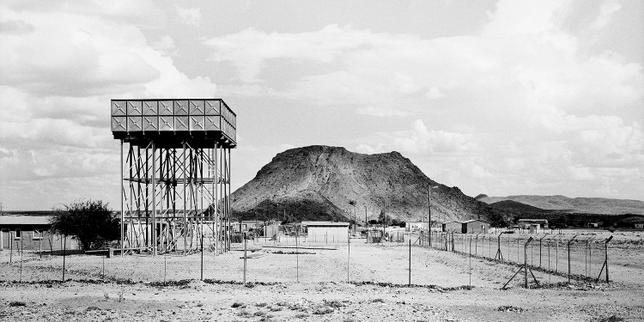
South African photographer Jo Ractliffe has spent four decades documenting how political violence and economic extraction reshape the physical environment. Her latest retrospective at the Jeu de Paume in Paris showcases a career dedicated to capturing the silent aftermath of apartheid and regional wars. Instead of focusing on direct human action, Ractliffe uses desolate landscapes to represent the trauma of historical events.
Her work operates on the premise that land carries memory. By photographing sites of former conflict and industrial degradation, she reveals the long-term impact of systemic inequality. These images serve as forensic evidence of a nation’s complex transition from a fractured past to an uncertain present.
The Intersection of War and Ecology
Ractliffe’s lens often turns toward the border regions and rural stretches where military presence was once absolute. Her photography highlights several critical themes in South African development:
- Military remnants: Abandoned structures and altered topographies from the Border War.
- Industrial exploitation: Landscapes physically hollowed out by mining and aggressive resource management.
- Displacement: Visual records of areas cleared during government-mandated removals.
The stark black-and-white aesthetic emphasizes textures of dust, stone, and ruin. This stylistic choice strips away the distractions of modern development to focus on the underlying structural damage. Each frame challenges the viewer to look beyond the surface of a space to see the historical ghosts residing within the soil.
A Forty Year Retrospective in Paris
The exhibition tracks her evolution from early experimental shots to her more recent, disciplined documentary style. It covers her extensive travels through South Africa and into Angola, following the paths of retreating armies and displaced populations. This geographic breadth provides a comprehensive look at how conflict ignores borders and leaves lasting ecological footprints.
Critics note that Ractliffe avoids the sensationalism often found in war photography. She opts instead for a quiet, persistent examination of what remains after the headlines fade. This approach forces a confrontation with the permanence of human intervention on the natural world.
The Jeu de Paume exhibition remains open to the public until May 24, offering a rare look at the intersection of photography and political geography.

Createur de videos IA — Veo 3, Sora, Kling, Runway