




Your Voice is Not Public Domain: The Legal Battle Over Audio Deepfakes
If you have ever listened to a video online and felt a sudden chill of uncertainty about whether the speaker was actually real, you are not alone. Synthetic audio has quietly crossed the threshold of believability. What used to sound like a robotic GPS navigation system can now mimic the subtle breaths, pauses, and emotional weight of a professional performer.
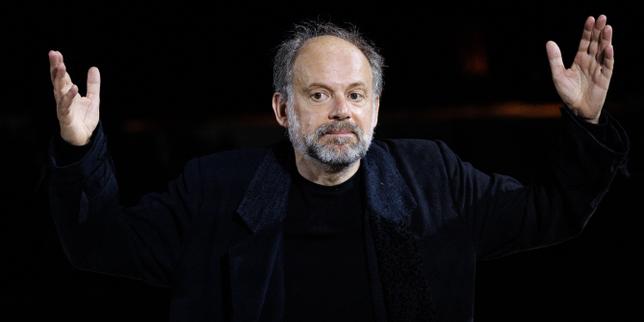
Recently, French actor Denis Podalydès discovered his voice was being used to narrate philosophy videos on a YouTube channel. He had never stepped into a recording studio for these projects. Instead, the channel creators had used an artificial intelligence model to clone his voice without his knowledge or consent. Rather than ignoring the incident, Podalydès filed a criminal complaint, marking the first major legal test of France's new laws targeting unauthorized digital replicas.
The mechanics of an audio clone
To understand why this case is a turning point, we have to look under the hood of modern voice synthesis. Traditional text-to-speech systems worked like digital collage artists. They sliced up audio recordings of a voice actor into tiny phonetic fragments and stitched them back together to form new words. The results were stiff, unnatural, and easily spotted.
Modern voice cloning relies on deep learning neural networks. Instead of cutting and pasting audio, these networks analyze the fundamental characteristics of a person's speech to build a generative mathematical model. The software requires two key elements to build a convincing replica: the acoustic profile and the prosody.
The acoustic profile maps the physical characteristics of the speaker's vocal tract. It analyzes nasal resonance, vocal cord vibration, and throat shape to capture the unique timbre of the voice. This is the biological fingerprint of the sound.
The prosody represents the style and rhythm of speech. It tracks how a speaker modulates their pitch, where they naturally pause for breath, and how they emphasize specific syllables to convey emotion. By combining these two elements, a neural network can generate entirely new sentences that carry the exact vocal signature of the original speaker.
The legal boundary of your voice
Protecting a voice under existing legal frameworks has historically been incredibly difficult. Copyright law was built to protect tangible expressions—like a written script, a musical recording, or a filmed performance. It was never designed to protect the abstract characteristics of a human voice itself.
If an impressionist mimicked a celebrity's voice on stage, they were not stealing property; they were delivering a performance. AI voice cloning, however, operates on an entirely different scale. It creates a reusable asset that can generate infinite new content without the creator's presence or continued participation.
In response to this technological shift, France introduced a specific criminal offense in 2024 to address hypertrucage, which translates to deepfaking. This legislation makes it a crime to publish or distribute synthetic audio or video of a person without their explicit consent, regardless of whether the intent was malicious or merely experimental.
The lawsuit filed

AI Video Creator — Veo 3, Sora, Kling, Runway