




Walter Chandoha and the Visual Architecture of the Viral Image
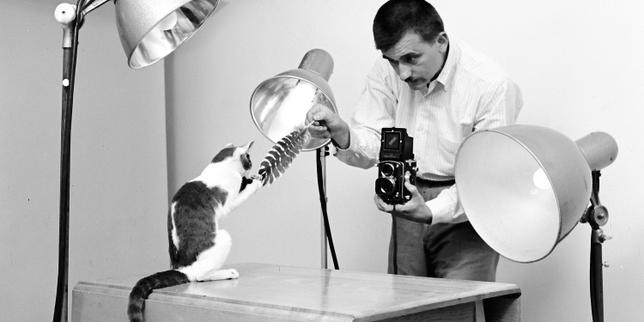
The Architect of the Pre-Digital Viral Loop
Silicon Valley likes to believe it invented the concept of the viral image. We are told that the internet, with its sophisticated feedback loops and algorithmic distribution, created the culture of the hyper-expressive feline. This is a convenient fiction. Half a century before the first server was plugged in, Walter Chandoha had already mapped the entire territory. A new retrospective of his work reveals that the mechanics of attention haven't changed; we just have faster delivery systems now.
Chandoha didn't just take pictures of animals; he engineered iconic clarity. His photographs appeared on hundreds of magazine covers, greeting cards, and puzzles, serving as the aesthetic foundation for what we now consider shareable content. While modern creators obsess over hashtags, Chandoha obsessed over backlighting and timing. He understood that a compelling image is a product of technical mastery, not digital luck.
Composition Over Connectivity
The tech industry often confuses distribution with quality. We think a photo is successful because it was posted at 9:00 AM on a Tuesday, ignoring the fact that the content itself is often derivative. Chandoha’s archive serves as a necessary rebuke to this mindset. He treated his subjects with the same formal rigor that Richard Avedon applied to high fashion. By elevating the domesticated cat to a subject of serious portraiture, he created a visual language that transcends the platform it lives on.
In his studio, Chandoha developed a unique lighting technique that made his subjects pop from the page, giving them a three-dimensional quality that felt alive.
This technical precision is exactly what is missing from the sea of mediocre content flooding our feeds today. We have democratized the camera, but we have devalued the craft. Chandoha’s work was ubiquitous not because it was free or easy to access, but because it was undeniably superior. He utilized high-contrast lighting and precise shutters to capture expressions that most people only see for a fraction of a second.
The Enduring Value of the Human Eye
There is a lesson here for every startup founder and digital marketer trying to cut through the noise. We are currently trapped in a cycle of optimization, trying to satisfy the whims of an AI-driven feed. Chandoha reminds us that the human response to beauty and humor is constant. If you build something that is visually arresting and emotionally resonant, the distribution takes care of itself. His career wasn't built on a data set; it was built on a deep understanding of what makes people stop and look.
The irony is that as we move toward a world dominated by AI-generated imagery, the authenticity of Chandoha’s work becomes even more valuable. You can sense the patience in every frame. You can feel the hours spent waiting for the exact moment a kitten tilted its head. Attention is a finite resource, and Chandoha earned it the hard way. He didn't need a social graph to make his work go global; he just needed a lens and a vision that was sharper than anyone else's in the room.
As we look at these images decades later, they haven't aged a day. That is the ultimate test of any creative endeavor. If your work relies on the current technical infrastructure to be relevant, it will vanish the moment that infrastructure changes. If it relies on fundamental human psychology and masterful execution, it becomes timeless. Chandoha’s legacy isn't just a book of cat photos; it is a masterclass in how to capture the world’s attention without ever asking for a click.

Free PDF Editor — Edit, merge, compress & sign