




Voltage and Vulnerability: The Invisible Front Line Extending to Berlin
Stefan sat in a dimly lit office in Berlin, watching a series of red spikes bloom across his monitor like digital ink blots. Outside, the city was waking up to a crisp morning, oblivious to the fact that a group of hackers thousands of miles away was trying to turn off the lights. This wasn't a scene from a spy novel; it was a Tuesday for Germany's cybersecurity defenders.
While the physical world remains fixated on the thunder of artillery in Zaporijia, a quieter, equally cold-blooded campaign is unfolding in the fiber-optic cables connecting Eastern Europe to the West. The Russian military intelligence unit known as 26307, or 'Fancy Bear' to those who track their digital footprints, has widened its scope. They are no longer just looking for secrets; they are looking for switches.
The Dual Reality of Modern Conflict
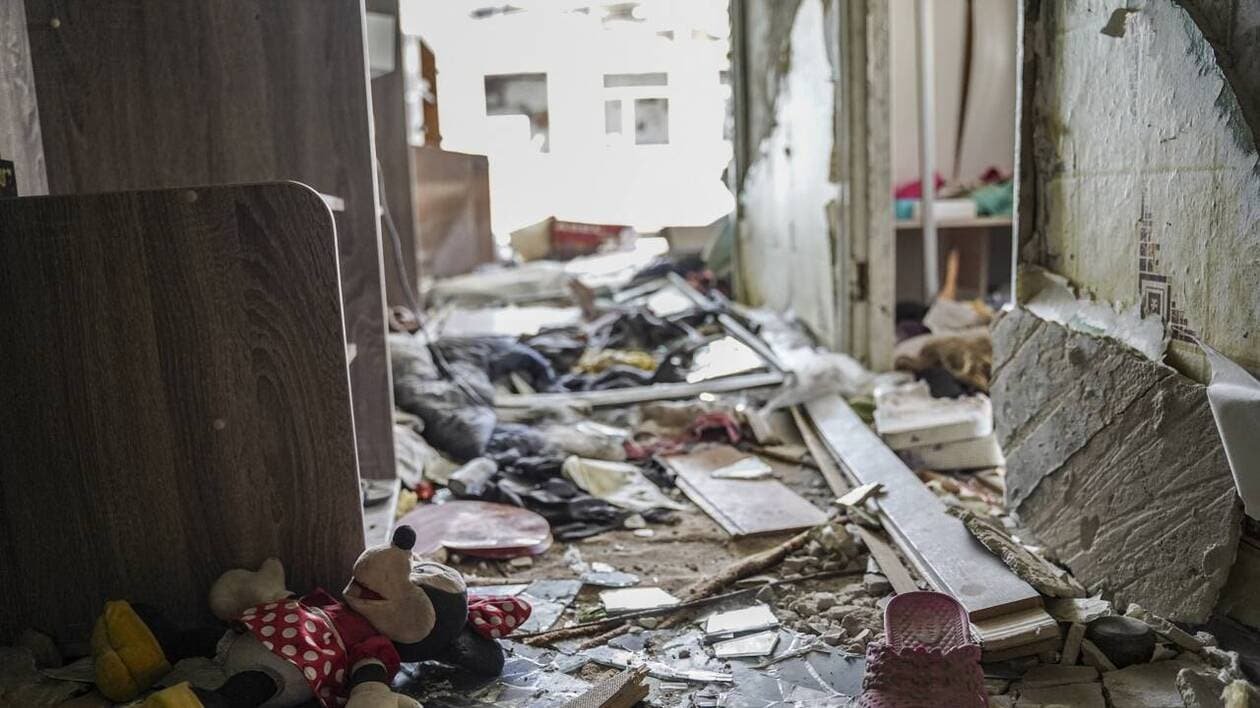
In the Zaporijia region, the impact of the conflict is visceral and heartbreaking. A single missile strike overnight claimed another life, a stark reminder that steel and explosives still dictate the rhythm of survival on the ground. The smell of burnt concrete and the sight of shattered glass are the primary witnesses to this localized devastation.
But as the smoke clears in Ukraine, the digital ripples reach far beyond the border. German intelligence officials recently sounded a sharp alarm, identifying a coordinated effort by Russian state actors to infiltrate critical infrastructure. They aren't just hacking for the sake of chaos; they are mapping the nervous system of a nation they view as a primary adversary.
The keyboard has become as lethal as the kinetic strike, capable of paralyzing a city without firing a single bullet.
This shift represents a collapse of the traditional battlefield. A developer in Munich or a logistics manager in Hamburg is now part of the geography of war. When a power grid is probed or a government server is breached, the distance between the front line and the living room evaporates.
Shadows in the Server Room
The hackers from Unit 26307 operate with a surgical patience that mirrors a long-term siege. They use phishing emails that look like mundane administrative updates and exploit tiny flaws in software that haven't been patched. Once inside, they wait, silently moving through the network to see how deep the rabbit hole goes.
Germany has become a focal point because of its role as a logistical and financial engine for European support. By targeting German systems, these actors aim to create a friction that slows down decision-making. It is a psychological game played with ones and zeros, intended to make the cost of involvement feel too high for the average citizen.
Security experts note that these digital incursions often spike after major physical setbacks on the ground in Ukraine. It is a form of asymmetric retaliation. If a bridge cannot be held in the physical world, perhaps a database can be held hostage in the virtual one.
The Human Cost of High-Tech Hostility
We often talk about cybersecurity in clinical terms, using words like encryption and firewalls that make it sound distant. In reality, these attacks target the basic comforts of human life. A successfully compromised water treatment plant or a downed hospital network is a direct hit on the safety of civilians who have never seen a tank.
The technicians working in the basement of German government buildings are the new infantry. They spend their nights staring at code, looking for the tell-tale signs of an intruder. Every prevented breach is a silent victory, one that never makes the evening news but keeps the societal machinery running for another day.
As the sun sets over the ruins in Zaporijia and rises over the quiet streets of Berlin, the link between the two becomes clearer. One is a tragedy of physics, the other a tragedy of logic. Both are driven by the same intent to disrupt the flow of normal life and replace it with a persistent, gnawing uncertainty.
The question we are left with isn't whether the next attack is coming, but whether we have forgotten how to recognize it. In a world where a line of code can be as destructive as a missile, how do we define where the war actually ends?
Faceless Video Creator — Viral shorts without showing your face