




The Talent Arbitrage: Why Software Alone Won't Solve the 74% Surge in Cyberattacks
A 74 percent increase in cyberattacks over five years is not a mere IT statistic. It is a direct, unhedged tax on corporate productivity and enterprise value. For years, regional mid-market companies treated cybersecurity as an insurance line item or a back-office expense. Today, that negligence is a structural liability. As bad actors shift their focus from highly fortified enterprise targets to vulnerable mid-market supply chains, the cost of defense is skyrocketing while the pool of available talent remains critically dry.
This is not a technical challenge; it is a resource allocation crisis. The organizations that survive won't be those with the biggest software budgets, but those that secure the human capital required to operate those tools. The market is waking up to a harsh reality: security is an operational discipline, not a product you install and forget.
The Economics of Vulnerability
Cybercriminals run highly efficient business models. They operate with low marginal costs, high geographic arbitrage, and zero regulatory oversight. In contrast, the average mid-market firm faces asymmetric warfare. A single ransomware attack can wipe out an entire year of free cash flow, disrupt vendor networks, and permanently damage brand equity.
At the same time, cyber insurance premiums are rising at double-digit compound annual growth rates. Insurance underwriters have realized they can no longer underwrite poor operational hygiene. They are demanding proof of active threat hunting, continuous monitoring, and rapid incident response. This shifts the financial burden back onto the balance sheet of the enterprise.
Security is no longer about buying another software license. Enterprise software vendors sell the illusion of safety, but without human operators to configure, monitor, and respond to alerts, those platforms are nothing more than expensive telemetry generators. This creates an immediate, highly lucrative opportunity for companies that can bridge the execution gap.
The Talent Moat and the Educational Bottleneck
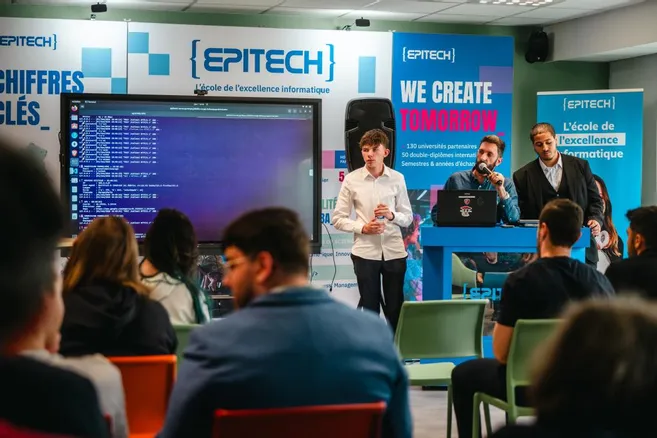
The bottleneck in cybersecurity is not code; it is human capital. When practical educational institutions organize localized prevention initiatives and targeted training programs, they are addressing a systemic market failure. The demand for qualified security practitioners outstrips supply by orders of magnitude.Traditional computer science curricula are too theoretical to address immediate operational threats. While a university student learns the math behind cryptography, a student in a hands-on technical program is learning how to isolate a compromised domain controller in real time. This practical training is the only way to build a reliable defense pipeline.
For growing enterprises, this talent deficit represents a major strategic hurdle:
- Wage Inflation: Recruiting top-tier security talent requires competing with tech giants on compensation packages, which prices out regional mid-market players.
- Operational Drag: Companies are forced to outsource basic hygiene to expensive external consultants, degrading their long-term operating margins.
- The Rise of MSSPs: Managed Security Service Providers (MSSPs) are capturing the bulk of enterprise spend because they can pool scarce talent and amortize that cost across hundreds of clients.
Software alone cannot solve a human resource crisis. Security tools have become highly complex, requiring specialized operators to make sense of the noise. The true moat in modern cyber defense belongs to the organizations that control the talent pipeline from the ground up.
The Death of the Pure-Play SaaS Moat
We are witnessing the limits of pure-play SaaS in security. The market is saturated with point solutions that do not talk to each other. Founders who build another dashboard that alerts security operations centers without fixing the underlying issue are building on sand.
The value is shifting toward automated remediation and verticalized service integration. Investors are looking past simple software metrics to examine the actual reduction in mean time to detection and mean time to resolution. If your product requires a team of ten engineers to manage, your customer acquisition cost will eventually outpace your lifetime value as those customers realize they cannot staff the team.
"The ultimate metric in security is not how many alerts you generate, but how many decisions you automate."
This shift favors platforms that integrate deep automation with human-in-the-loop services. The old model of selling software and walking away is dead. The new model is co-managed security, where the vendor shares the operational risk of the client.
The Strategic Playbook
To survive this high-threat environment, operators and investors must reallocate capital toward structural solutions. The winners will not be the ones who buy the loudest marketing; they will be the ones who secure their foundations.
- Shift-Left Education: Funding and scaling regional talent pipelines to lower the cost of hiring entry-level analysts.
- Vendor Consolidation: Replacing fragmented point solutions with unified platforms that prioritize automated containment over mere detection.
- Supply Chain Auditing: Treating vendor access as a primary attack vector and enforcing zero-trust architecture across all external integrations.
I am betting against pure-play cyber detection startups that rely on high-touch human deployment. Instead, I am backing regional Managed Security Service Providers that own their talent pipelines, alongside software platforms that utilize agentic workflows to automate remediation without human intervention. The future of security belongs to those who can operationalize defense at scale.

Free PDF Editor — Edit, merge, compress & sign