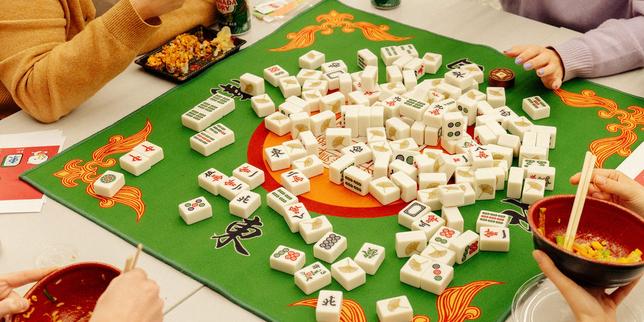
The Analog Counter-Offensive
Tech pundits spend their lives predicting which immersive headset or AI-driven social network will finally bridge the gap of human loneliness. They are looking in the wrong direction. In community centers and living rooms from Washington D.C. to Seattle, people are turning off their screens and sitting down to play Mahjong. This is not a quaint resurgence of a dusty relic; it is a calculated rejection of the frictionless, shallow engagement of modern software.
For the uninitiated, Mahjong is often dismissed as a Chinese version of Rummy. That is a lazy comparison. While both involve set collection, Mahjong is a masterclass in risk management, tactical observation, and statistical intuition. The game demands a level of cognitive presence that your smartphone is designed to erode. It is loud, tactile, and deeply social in a way that Discord servers never will be.
The Value of Real Friction
Founders frequently obsess over removing friction from every user experience. This works for utility, but it is poison for community. You cannot build a meaningful culture without a barrier to entry. Mahjong requires players to memorize complex patterns, understand intricate scoring systems, and navigate the physical logistics of getting four people to a table. This difficulty is the feature, not the bug.
In Washington, hundreds of players of all ages meet every week to share their passion for this Asian tile game related to rummy.
That quote highlights the cross-generational appeal that modern platforms fail to capture. TikTok creates silos; Mahjong creates bridges. When a twenty-something developer sits across from a retiree, the social hierarchy of the internet vanishes. They are bound by the mechanics of the game and the tactile clacking of the tiles, creating an environment where intellectual stimulation and physical presence coexist.
The Scarcity of Attention as a Commodity
We are currently witnessing a massive revaluation of where we spend our limited attention. The novelty of the digital world has worn off, leaving behind a craving for experiences that are finite and tangible. Mahjong offers a closed loop—a beginning, an end, and a physical set of pieces that cannot be updated, patched, or monetized via subscription.
Marketers should pay attention to this shift. The trend toward communal, skill-based hobbies suggests that the next big thing isn't a better algorithm, but a better way to facilitate high-quality human density. People are exhausted by the performance of social media and are seeking the authenticity of social play. You cannot fake your way through a hand of Mahjong, and you certainly cannot optimize it for a feed.
This resurgence is a reminder that the most durable technologies are often the ones that have already survived for centuries. While the latest trend in generative media will likely be forgotten in eighteen months, the four-player table remains an undefeated architecture for human connection. The tiles aren't just back; they never really left, and they are currently more relevant than anything coming out of a venture-backed incubator.