The Mathematics of a Near-Death Experience
In 2023, FC Sochaux-Montbéliard sat on the precipice of a total financial collapse that would have erased nearly a century of sporting history. After years of mismanagement under volatile foreign ownership, the club faced a deficit that traditional private equity refused to touch. While modern elite football tracks toward a multi-club ownership model—where individual teams function as satellite assets for global conglomerates—Sochaux chose a path that prioritizes structural stability over speculative growth.
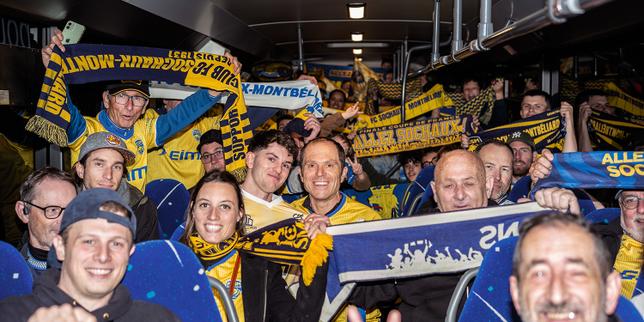
The recovery effort was not led by a billionaire benefactor but by a collective of supporters who raised millions of euros to secure the club’s license. This transition represents a shift from a top-down capital injection to a crowdsourced equity model. By turning the fan base into a legitimate stakeholder group, the club decentralized its financial risk, ensuring that no single exit strategy could threaten its existence again.
Quantifying the Value of Localized Ownership
The Sochaux experiment serves as a case study for mid-tier European clubs struggling to compete with state-backed giants. The financial logic is straightforward: localized ownership reduces the cost of capital by eliminating the need for high-interest debt often used by private owners to use acquisitions. Instead, funds are derived from a base that prioritizes operational longevity over quarterly dividends.
- Capital Retention: Revenue generated by the club stays within the local ecosystem rather than being extracted as management fees.
- Risk Mitigation: A diverse pool of small-scale investors prevents the 'single point of failure' risk inherent in individual ownership.
- Brand Loyalty as Equity: High fan engagement correlates with stable sponsorship cycles and predictable match-day income, regardless of league placement.
The club is now navigating the National 1 division with a budget that reflects reality rather than fantasy. This fiscal discipline has allowed them to maintain a famed youth academy that remains one of the most productive in France. By focusing on asset development—specifically player scouting and training—the club creates a sustainable pipeline of talent that can be sold for profit to fund operations.
The Structural Shift Toward Fan-Led Governance
Governance in the new Sochaux era is defined by transparency. Unlike the opaque balance sheets of the previous decade, the current administration operates with direct oversight from the fan collective. This model mimics the German '50+1' rule, which prevents external investors from gaining a majority stake, thereby protecting the club’s cultural identity from market volatility.
“We want to show that another path is possible in football,”
This sentiment is backed by the Socio-Financing movement, which has gained traction across Europe. In this framework, the club functions more like a public utility than a private plaything. The data suggests this leads to higher levels of community investment, as local businesses are 2.5 times more likely to sponsor a team that is perceived as a community asset rather than a corporate subsidiary.
The success of this model depends on maintaining a lean administrative structure. Sochaux has trimmed its non-sporting overhead by approximately 15% since the takeover, focusing every available euro on the pitch. This surgical approach to finance is what separates the new Sochaux from the debt-laden ghosts of its recent past.
By 2027, the Sochaux model will likely serve as the blueprint for at least five other French clubs currently facing liquidation. As the bubble of hyper-leveraged ownership begins to show cracks, the move toward fan-backed equity will transition from a desperate survival tactic to a preferred institutional strategy for mid-market sports entities.