The Script That Could Have Changed History
In 1932, a year before Adolf Hitler became Chancellor of Germany, a screenwriter named Herman J. Mankiewicz sat down to write a warning. Mankiewicz, who would later become famous for writing Citizen Kane, saw what many in the United States chose to ignore: the rise of a dangerous ideology that threatened to consume Europe. He titled his screenplay The Mad Dog of Europe.
We often think of 1930s Hollywood as a fearless beacon of storytelling, but the reality was far more complicated. At the time, the film industry was a business first and a political platform second. Mankiewicz wanted to use the medium of cinema to expose the antisemitism and violence of the Nazi party before they fully seized power. However, the film was never made. Its failure to reach the screen reveals a period of history where American studios were more concerned with international markets than with moral clarity.
The Mechanics of Censorship
To understand why this film vanished, we have to look at how Hollywood operated during the Great Depression. The Hays Office, formally known as the Motion Picture Producers and Distributors of America, acted as a gatekeeper for all content. Their primary goal was to ensure that American films remained profitable abroad. Because Germany was one of the largest markets for American movies, the studios were terrified of offending German officials.
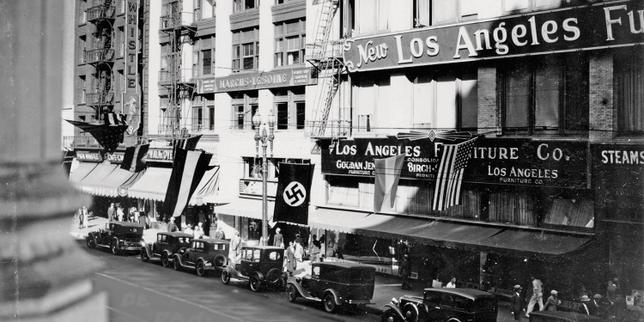
When the script for The Mad Dog of Europe began circulating, the German consul in Los Angeles, Georg Gyssling, did not just stay quiet. He actively pressured the studios. He warned that if any studio produced a film critical of the Nazi party, the German government would ban every single movie from that studio across Germany. This was not just a threat to one film; it was a threat to the entire financial stability of the major studios like MGM, Paramount, and Warner Bros.
The Strategy of Silence
The studios used several methods to keep the script from being filmed:
- Financial Boycotts: Producers were told that funding would dry up if they touched the project.
- Visa Threats: German officials suggested that American film executives of Jewish descent might face personal consequences or travel bans.
- Industry Blacklisting: Mankiewicz found himself fighting an uphill battle against his own peers who viewed his activism as a risk to their bottom line.
By the time the industry finally felt comfortable criticizing the Nazi regime, it was the late 1930s. By then, the events Mankiewicz had predicted were already unfolding. The window for a preventive warning had closed, and the world was already moving toward conflict.
Why the Warning Matters Now
The story of this lost film serves as a case study in how economic interests can override ethical responsibilities. It highlights the difference between reactive storytelling, which happens after a tragedy, and proactive storytelling, which attempts to prevent one. Mankiewicz was not just writing a movie; he was trying to use a mass medium to change the trajectory of global events.
Producers at the time argued that movies should be pure entertainment, a form of escapism from the harsh realities of the era. By treating the Nazi rise as a political nuance rather than a human rights crisis, they allowed a dangerous silence to persist. This episode in film history reminds us that the stories we choose not to tell are often as significant as the ones we do.
Today, we can view the script of The Mad Dog of Europe as a historical artifact of what might have been. It stands as a reminder that clarity in the face of rising threats is rare, and the courage to act on that clarity is even rarer. Now you know that even the most powerful medium in the world can be silenced by the simple fear of losing a market.