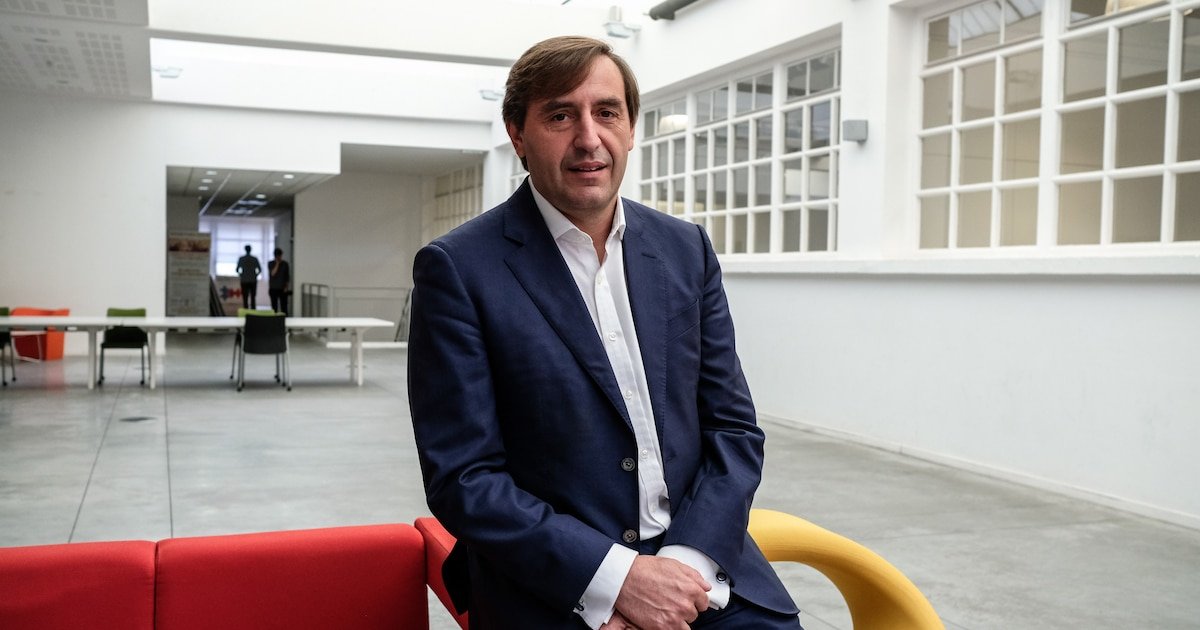
On a cold Tuesday afternoon in a converted brick brewery just outside Brussels, a software developer named Luc adjusted his glasses and watched a series of green dots dance across his monitor. He was not designing an app for food delivery or optimizing an advertising algorithm. Instead, he was training a neural network to recognize the subtle, heat-signature differences between a civilian vehicle and a military convoy moving through a dense forest canopy. When the program finally made the correct distinction, Luc took a sip of lukewarm coffee and remained silent.
His quiet focus reflects a broader, state-level awakening. Following the recent NATO summit in Ankara, which dramatically altered the geopolitical calculus across Europe, Belgium has quietly activated a massive financial apparatus. A fund of two billion euros is being injected into the country’s tech sector, specifically targeted at defense, cybersecurity, and aerospace. This is not merely a purchase order for hardware; it is an attempt to cultivate a sovereign pipeline of intellect and code within Europe’s capital.
The Architecture of Sovereign Software
For decades, European defense spending meant buying heavy metal from foreign conglomerates. Tanks, fighter jets, and radar systems arrived from overseas, pre-packaged and locked down with proprietary software. The new Belgian initiative, however, acknowledges that modern conflicts are fought on servers and through silicon. By funding local startups and research labs, the government is trying to build a self-reliant ecosystem that can write its own rules.
This means pouring resources into specialized artificial intelligence that can operate without a connection to the cloud. In a crisis, the internet is the first thing to fail. Soldiers in the field need devices that can think locally, making split-second decisions on the edge. The money is also flowing into secure quantum encryption, a technology designed to keep state secrets safe even when future supercomputers become powerful enough to crack today’s most secure codes.
We used to build walls to protect our cities, but today our entire infrastructure is held together by invisible threads of data. If those threads are cut, the city falls anyway.
From Academic Labs to the Flight Line
In Liege and Charleroi, aerospace hubs that once smelled of coal dust and grease are now being scrubbed clean for precision engineering. The fund is targeting advanced drone development and satellite communications, areas where Belgium has quietly maintained niche expertise. Instead of competing with global aerospace giants on heavy manufacturing, local firms are focusing on the nerves of the aircraft—the sensors, the transponders, and the code that keeps them flying.
Moreover, the initiative aims to bridge the historical chasm between academia and national security. Young researchers who once dreamed of working in Silicon Valley are being offered complex, well-funded projects closer to home. They are being asked to solve problems of high-altitude navigation and electromagnetic jamming, effectively turning university campuses into incubators for national resilience.
Yet, this shift brings its own cultural friction. Many engineers who entered the tech sector to build open-source tools or creative platforms now find themselves grappling with the ethical reality of defense contracts. The lines between civilian utility and military capability have blurred, leaving a generation of creators to reconcile their personal ideals with the defense of their borders.
The Human Cost of the Digital Shield
Indeed, the transformation is as much cultural as it is technological. In the quiet corridors of Brussels ministries, policymakers are realizing that a two-billion-euro investment cannot simply buy safety; it requires a new kind of civil servant. These are people who understand both the bureaucracy of government procurement and the volatile, rapid lifecycle of software development.
Behind the grand announcements and the strategic white papers lie the quiet, everyday habits of the people tasked with this modernization. In suburban office parks, far from the spotlight of international diplomacy, they sit in front of glowing screens, writing the invisible code that will define the country\'s safety for the next generation. They are building a shield made of algorithms, hoping all the while that it will never have to be tested in earnest.
As the sun sets over the flat fields of Flanders, casting long shadows across the wind turbines and old stone farmhouses, Luc shuts down his workstation. The green dots disappear from his screen. He walks out into the cool evening air, aware that the digital line he spent his day drawing is now part of a much larger, invisible border stretching across the continent.