The Fragility of the Digital Ledger
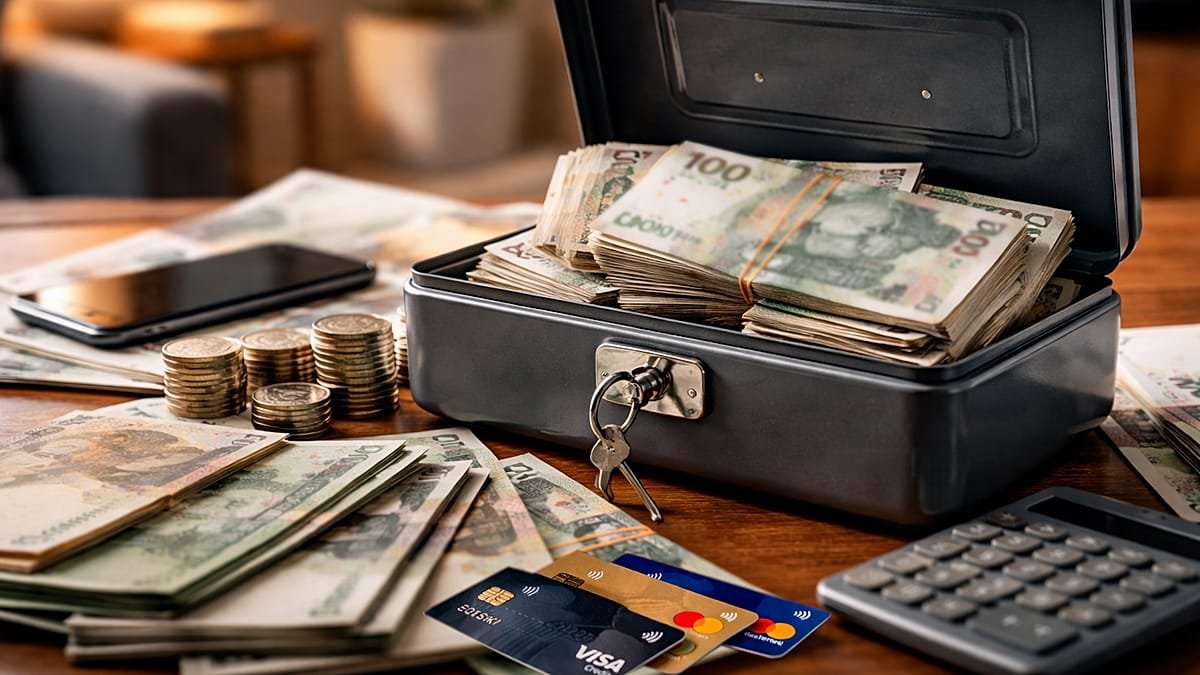
The official narrative coming out of Warsaw suggests that physical currency is no longer a relic of the past, but a critical insurance policy for the future. While the rest of the European Union pushes for seamless digital integration, Poland’s Finance Minister, Andrzej Domański, is taking a sharp detour. He isn't just suggesting that people keep a few bills in their wallets; he is actively recommending that citizens maintain cash reserves at home to mitigate systemic risks.
This directive exposes a growing anxiety among state officials regarding the stability of the grid. We are often told that digital banking is faster, safer, and more efficient than paper money. However, Domański’s warning points to a reality where uptime is not guaranteed. When the power fails or a server farm goes dark, the digital economy ceases to exist for the end user. By urging the public to hoard physical złoty, the ministry is admitting that our reliance on code and electricity has created a single point of failure.
The Minister stated that maintaining a certain amount of cash at home is a prudent measure in the face of potential payment system failures, cyberattacks, or prolonged power outages.
This admission is a rare moment of honesty from a high-ranking financial official. It strips away the veneer of the invulnerable tech stack. Most central banks spend their time promoting the convenience of contactless payments, yet Poland is highlighting the unspoken vulnerability of a cashless society. If a state cannot guarantee the availability of digital transactions during a crisis, it loses its primary mechanism for social stability.
Following the Cyber Trail
The timing of this recommendation is not accidental. Poland sits on the front lines of a changing geopolitical climate where state-sponsored cyber warfare is no longer a theoretical exercise. The ministry's concern about cyberattacks suggests that the banking sector is under more pressure than the public is led to believe. If the national payment switch is compromised, the economy doesn't just slow down; it freezes.
Security experts have long argued that a diversified payment ecosystem is more resilient than a monoculture. When every transaction flows through the same few digital pipes, those pipes become high-value targets. By encouraging the use of cash, the Polish government is effectively decentralizing the risk. Physical currency doesn't require a handshake with a remote server to settle a debt. It operates offline, providing a frictionless fallback that no software update can replicate.
Critics might argue that this move encourages tax evasion or the gray market, but the Finance Ministry seems to have calculated that the risk of total system collapse is greater than the risk of lost tax revenue. This pivot suggests that the high-level threat assessments landing on Domański's desk are increasingly grim. The push for cash is a defensive posture, a recognition that the digital infrastructure is a glass house in a world of stones.
The Cost of Total Connection
There is a hidden cost to the convenience of the digital wallet. Every transaction leaves a trail, and every trail requires a functioning network. When a finance minister tells you to keep cash under the mattress, they are telling you that the network is not to be trusted. This goes against the grain of the global fintech movement, which has spent a decade trying to convince us that cash is expensive, dirty, and obsolete.
Financial institutions hate cash because it is difficult to track and impossible to monetize through transaction fees. By siding with physical currency, the Polish government is signaling a break from the corporate banking consensus. They are prioritizing citizen survival over bank efficiency. It is a pragmatic, if slightly paranoid, approach to national security that views the digital economy as a luxury that may not always be available.
The ultimate test of this policy will be the public's reaction. If citizens begin withdrawing significant sums, it could create liquidity pressure on the very banks the government is trying to protect. The success of this strategy hinges on whether the Polish people view this as a sensible precaution or a signal to run for the exits. The government is betting that a little bit of physical paper can prevent a total digital panic.