




The Mirror and the Mask: When the Observer Becomes Part of the Story
The Shadow in the Library
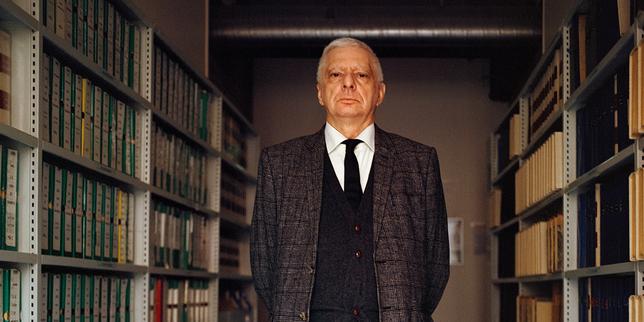
Jean-Yves Camus sits surrounded by decades of paper. In the quiet halls of French political research, his name once carried the weight of an undisputed oracle. For forty years, he tracked the fringe, the radicals, and the movements that polite society preferred to ignore. He watched as a small, jagged collection of outcasts slowly polished their rough edges into a political machine known as the Rassemblement National.
But lately, the air around Camus has grown heavy with a different kind of scrutiny. It is no longer just about what he sees through his magnifying glass, but how he describes it to the world. A growing chorus of his peers suggests that the line between clinical observation and quiet validation has started to blur. They argue that by treating once-toxic ideas as standard political fare, the scholar might be helping to build the very house he was supposed to be surveying.
This tension reached a boiling point in the corridors of Parisian academia. Former colleagues and researchers have begun to whisper, and then speak loudly, about an perceived ambiguity in his public appearances. They see a man who, in his attempt to be an objective witness, has inadvertently become a tailor fitting the far-right for a respectable suit. Camus, for his part, remains defiant, pointing to a lifetime of work that serves as his shield.
The Weight of a Definition
In the world of political science, words are the currency of power. When an expert uses a term like normal or mainstream, it carries a stamp of approval that social media influencers could only dream of possessing. The debate surrounding Camus isn't about his data, which remains vast and meticulous, but about his tone. His critics suggest his language has softened, shifting from the alarmist bells of the past to the steady hum of a commentator who finds nothing particularly shocking anymore.
To his detractors, this isn't just a matter of academic style. It is a fundamental question of responsibility. If the person tasked with identifying the edges of democracy begins to say those edges are actually part of the center, the map itself changes. They fear his interventions provide a sort of intellectual cover, allowing movements with radical roots to claim they have finally arrived at the table of reasonable adults.
The danger for any chronicler of the extreme is that, over time, the unthinkable starts to look like just another Tuesday at the office.
Camus rejects these accusations with the sharpness of a veteran who has seen it all. He views his role as a realist, someone who refuses to look away from the facts just because they are uncomfortable. To him, the evolution of the Rassemblement National is a political reality that must be analyzed on its own terms, not through the lens of moral panic. He argues that his job is to describe the world as it is, not as his colleagues wish it to be.
The Long Game of Proximity
There is an old saying that if you stare into the abyss long enough, the abyss stares back. In political journalism and research, this manifests as a kind of Stockholm syndrome for the subject matter. You spend so many hours interviewing the players, reading their manifestos, and drinking their coffee that their internal logic starts to sound like common sense. It is the occupational hazard of the deep-dive specialist.
The controversy surrounding Camus serves as a warning for a new generation of digital marketers and political analysts. It highlights the difficulty of maintaining a neutral stance when the subject matter is designed to move the goalposts of what is acceptable. In the digital age, where every quote is clipped and every podcast appearance is a permanent record, the nuance of a forty-year career can be flattened into a single headline of complicity.
As the French political climate continues to shift, the debate over Camus's legacy remains unsettled. It forces us to ask whether an expert can ever truly be detached from the impact of their own expertise. If the person who mapped the minefield eventually says the path is safe to walk, does that make him a guide or part of the danger? Camus continues his work, a man standing between his archives and a future that looks remarkably like the past he spent his life documenting. He seems content to let history decide, even as his contemporaries demand an answer today.
UGC Videos with AI Avatars — Realistic avatars for marketing