




The Indian Cinema Playbook: Why French Regional Subsidies Are Chasing Bollywood
Regional Ambition Meets Global Logistics
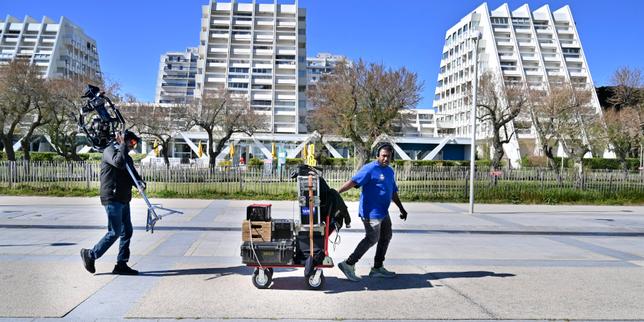
The recent arrival of a major Indian film crew in La Grande-Motte is being cheered by local officials as a breakthrough. They see the unique pyramid architecture of the coastal town and the sprawling horizons of the Occitanie region as the ultimate selling points for international cinema. While the visual appeal is undeniable, the real story isn't about the scenery; it's about the aggressive infrastructure play happening behind the curtain.
Occitanie is attempting to pivot from a picturesque backdrop to a functional industrial hub for the audiovisual sector. This involves a coordinated effort to streamline the bureaucratic nightmare that usually accompanies filming in France. By simplifying administrative hurdles and pouring capital into dedicated studio spaces, the region is effectively bidding for a larger slice of the global production budget that traditionally stays locked within Paris or Hollywood.
The region is betting on its landscapes and the development of studios to intensify the arrival of foreign film shoots, which are still too infrequent.
That recognition of being 'too infrequent' is the most honest part of the strategy. For years, regional France has been a set piece rather than a partner. To change that, the local government understands that aesthetics only get you the first meeting; technical capacity and ease of business secure the contract.
The Practicality of the Pyramid
Choosing La Grande-Motte is a tactical decision that highlights a shift in how filmmakers view European locations. It offers a specific, futuristic aesthetic that is difficult to replicate elsewhere in the Mediterranean. For an Indian production looking for scale and distinctiveness, this isn't just a trip to the beach; it is a search for visual assets that justify the cost of moving a crew thousands of miles.
Success in this sector is measured by the stickiness of the ecosystem. If a production arrives, uses the local lighting technicians, rents the local cameras, and edits in local suites, the region wins. If they merely fly in, capture the sun, and leave, the economic impact is ephemeral. The current push for local studio development suggests that Occitanie wants to avoid the 'postcard trap' where they provide the view but none of the high-value services.
Infrastructure as the Ultimate Moat
Publicly funded incentives are often criticized as a race to the bottom, but in the film industry, they are the entry price. However, Occitanie is trying to build something more durable than a mere tax rebate. By investing in physical soundstages and post-production facilities, they are creating a friction-filled exit for any producer who might consider moving to a cheaper neighbor.
- Centralized administrative support to bypass national red tape.
- Direct financial backing for creative projects with local ties.
- Aggressive expansion of technical training for local crews.
The challenge remains the fierce competition from Eastern Europe and other Mediterranean hubs that offer similar climates at a lower cost of living. To compete, France cannot just be cheaper; it has to be better. This means the technical staff must be world-class and the logistics must be invisible to the director. The goal is to make the transition from 'a place with nice weather' to 'a place where movies simply get made better.'
The development of studios and the lightening of administrative procedures are key to attracting both French and foreign shoots.
This focus on 'lightening' the load is what startup founders would call optimizing the funnel. Every permit that takes three weeks instead of three days is a reason for a studio head to take their business to Italy or Spain. Occitanie’s leadership seems to have finally realized that they are in a service industry, not just a tourism business.
The Long Game for Regional Media
We see this pattern across various tech and media sectors: the struggle to decentralize talent away from a primary capital city. For France, moving the needle away from Paris requires more than just a few Indian blockbusters. It requires a consistent drumbeat of mid-to-high budget productions that can sustain a year-round workforce of skilled tradespeople.
The presence of a Bollywood crew is a proof of concept, not a victory lap. It proves that the logistical hurdles are surmountable and that the visual language of the region translates to a global audience. But the real test will be whether these crews return. If the region can turn these one-off events into a recurring pipeline, they will have successfully diversified their economy away from seasonal tourism and into the high-margin world of media exports.
Time will tell if Occitanie can maintain the political will to keep funding these initiatives. The film industry is notoriously fickle, and today's favorite location can become tomorrow's forgotten relic. For now, the focus on building physical infrastructure suggests they are playing a smarter, more grounded game than those who rely on beauty alone.
UGC Videos with AI Avatars — Realistic avatars for marketing